
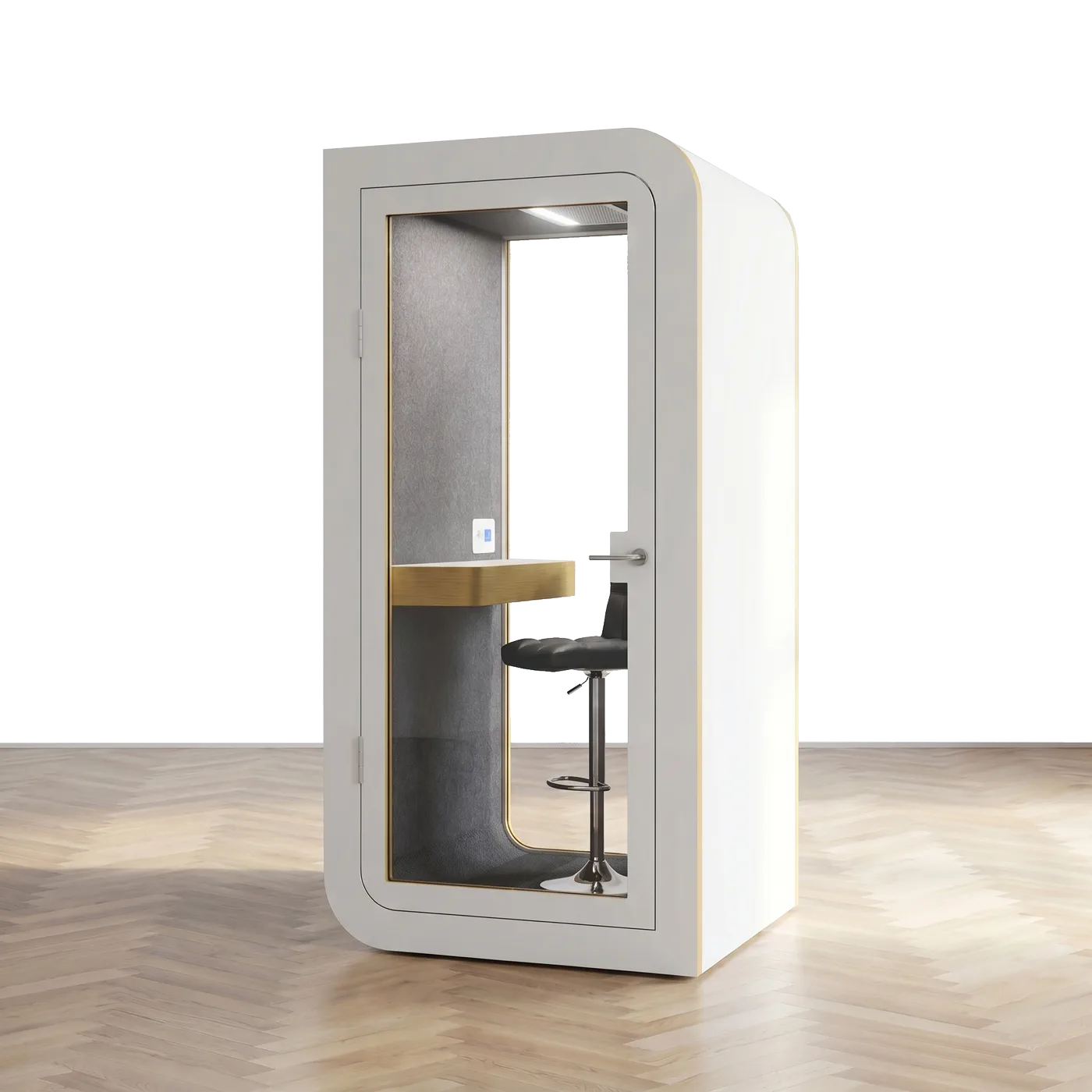
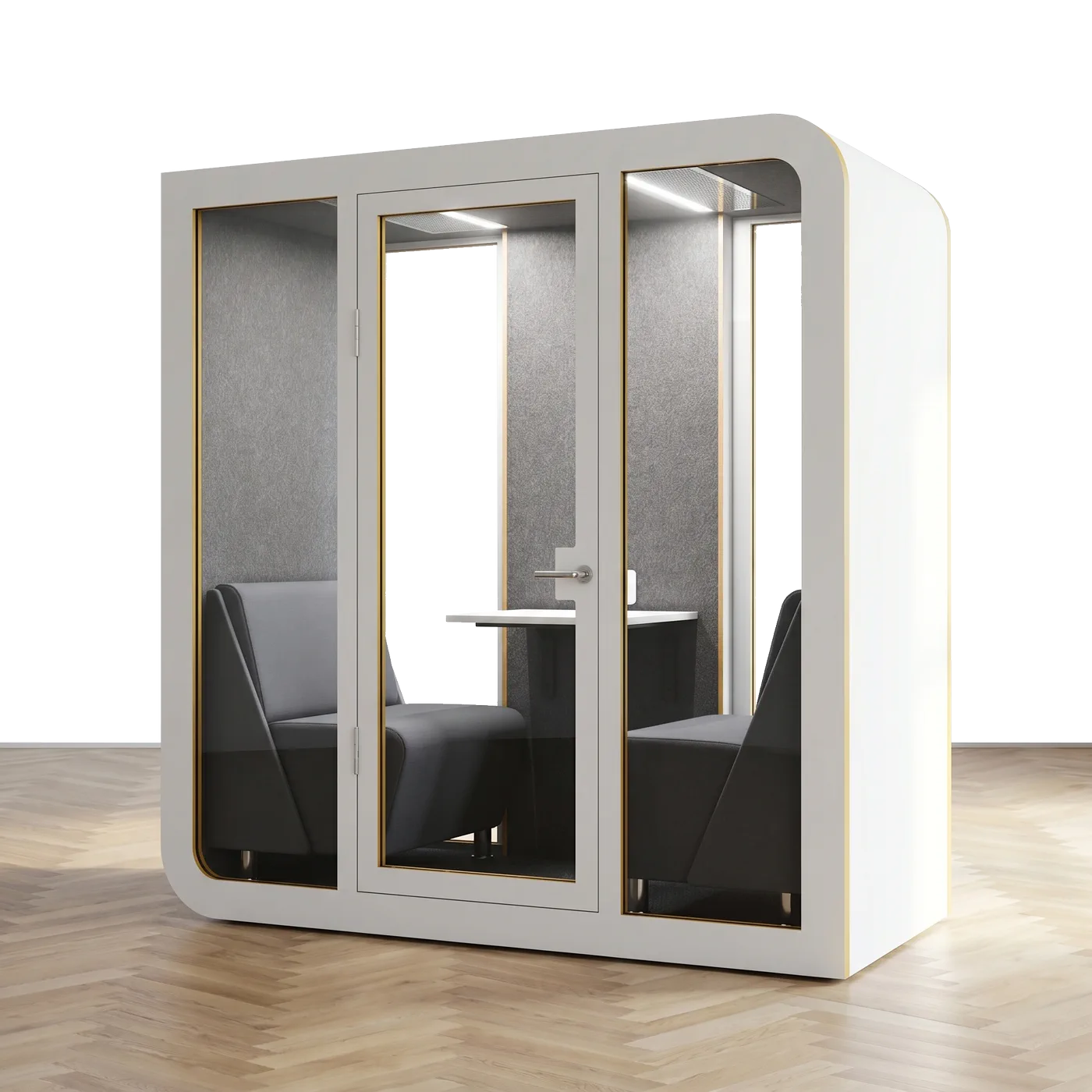
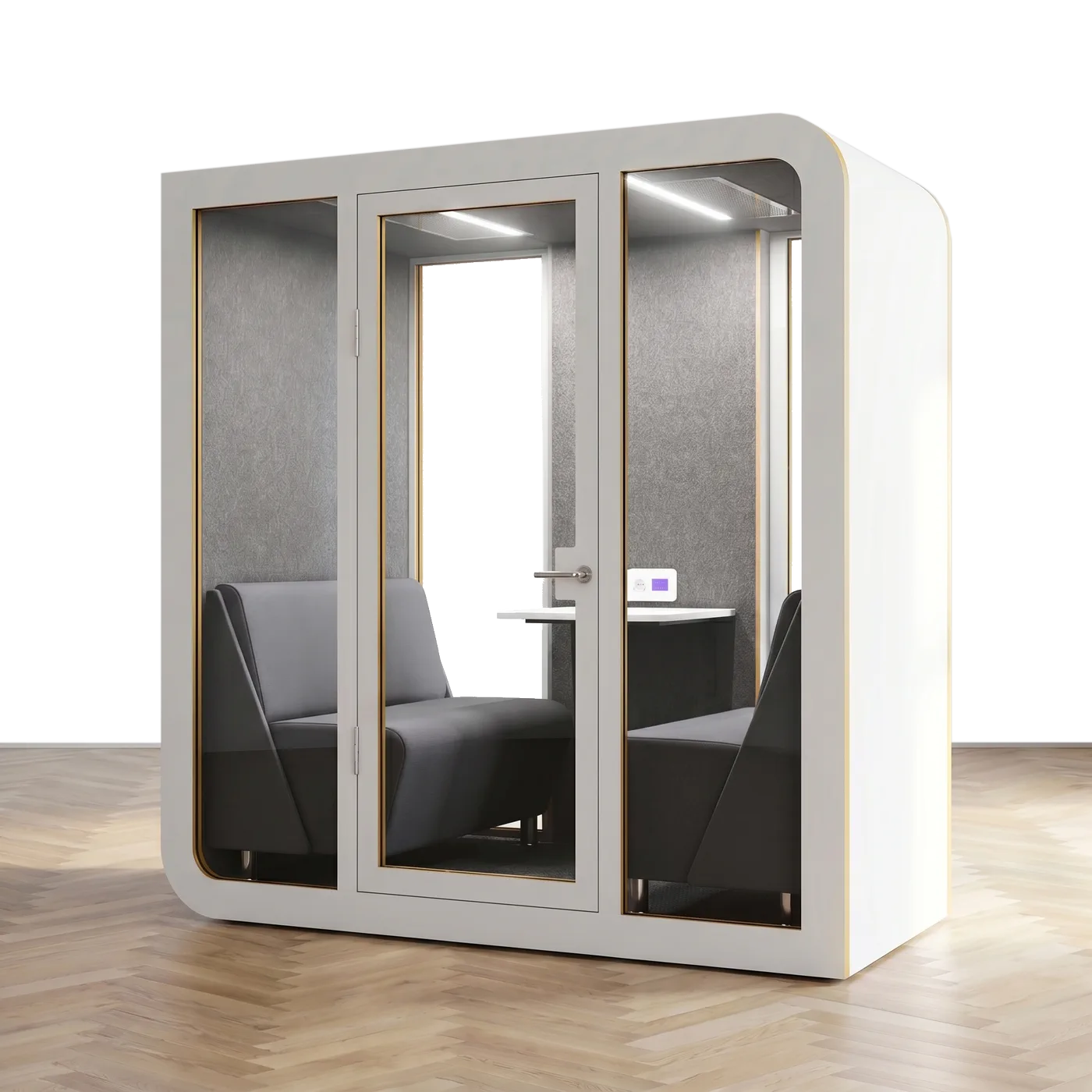
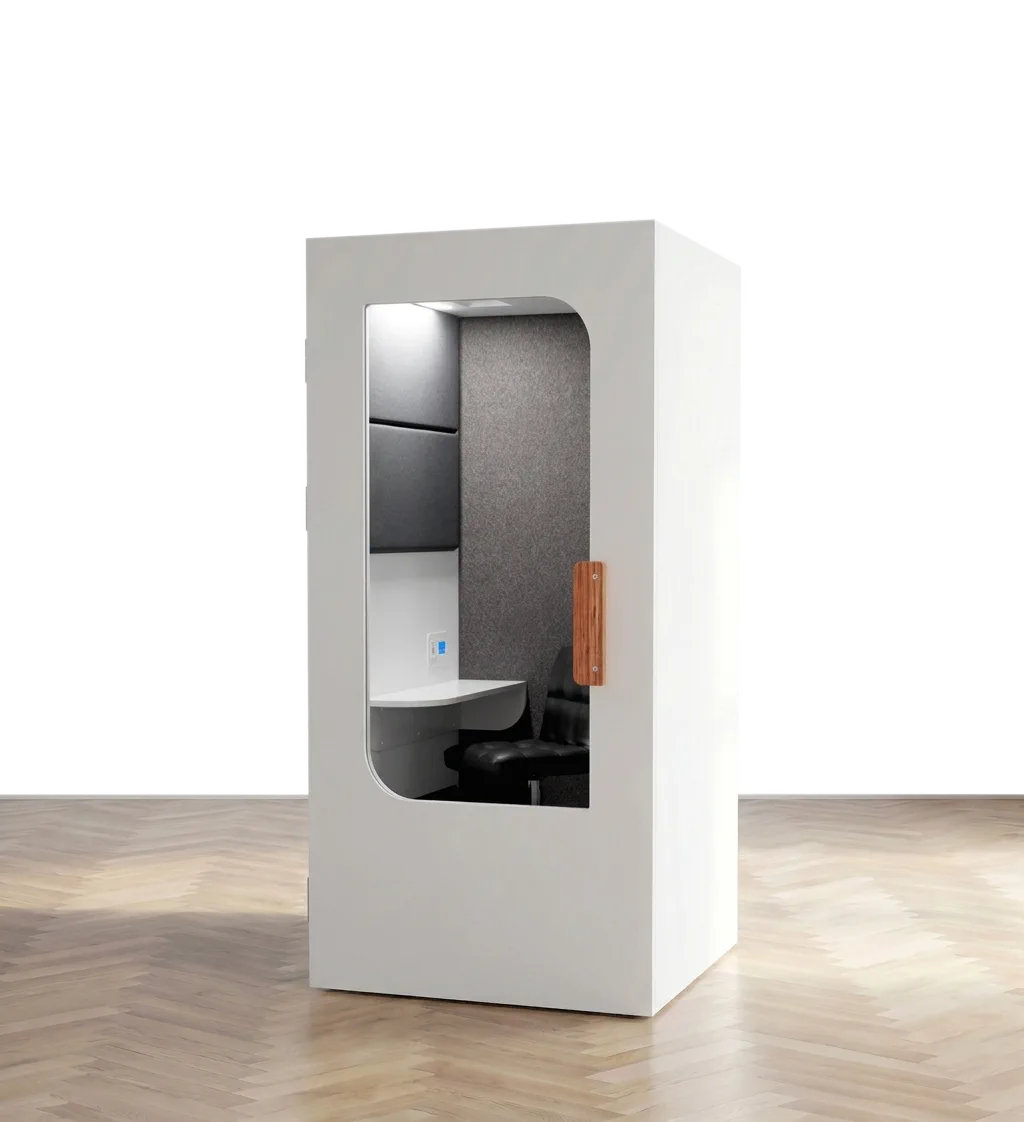
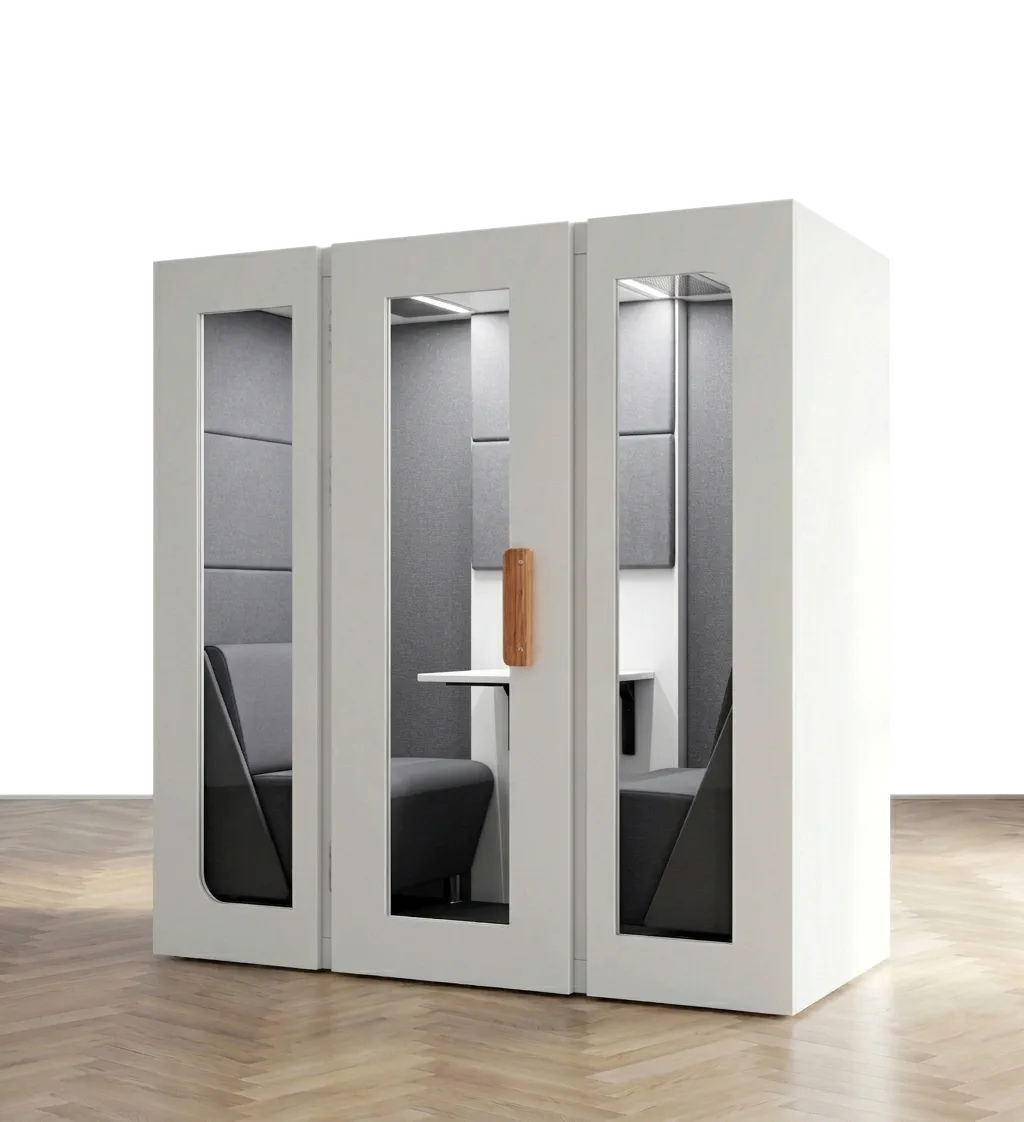
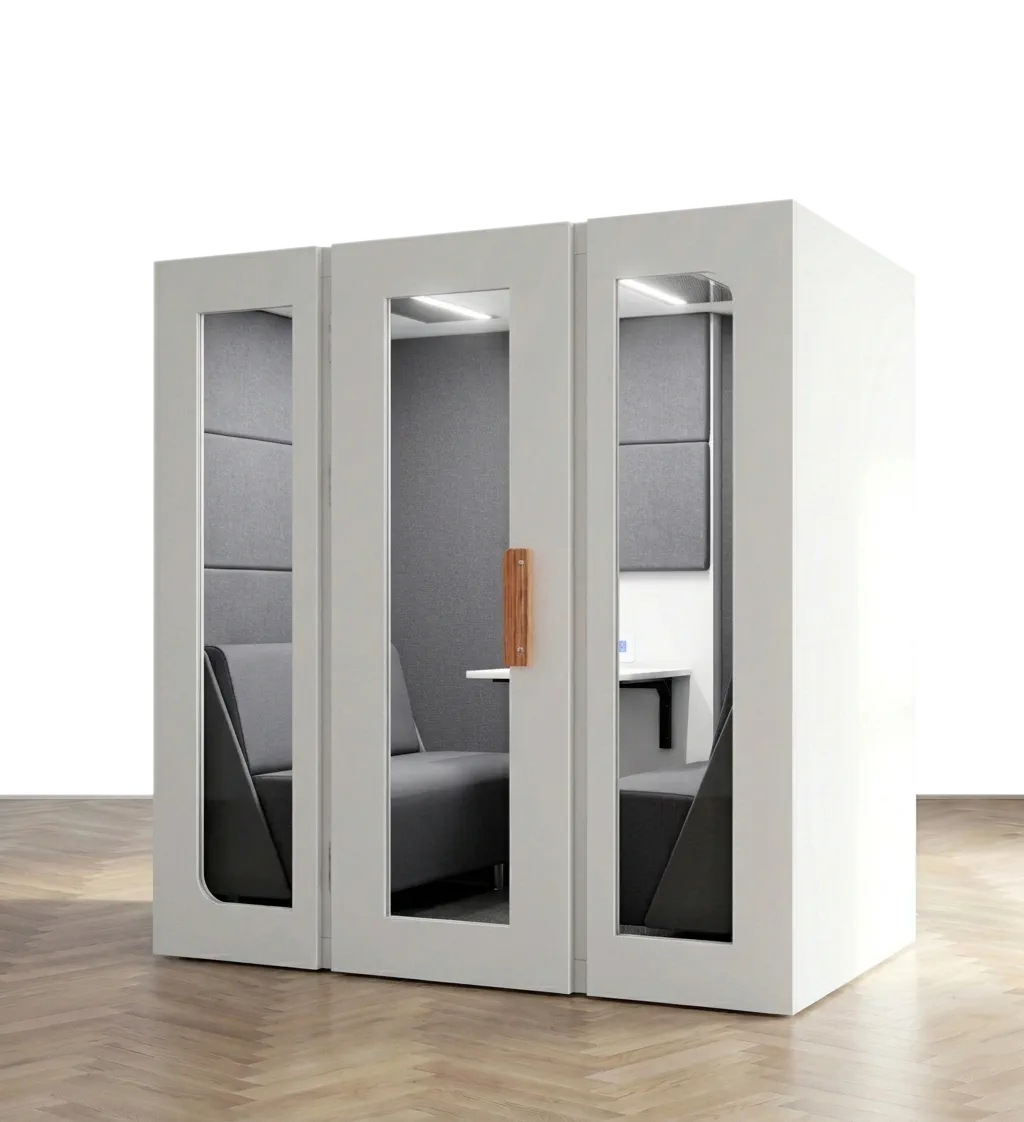
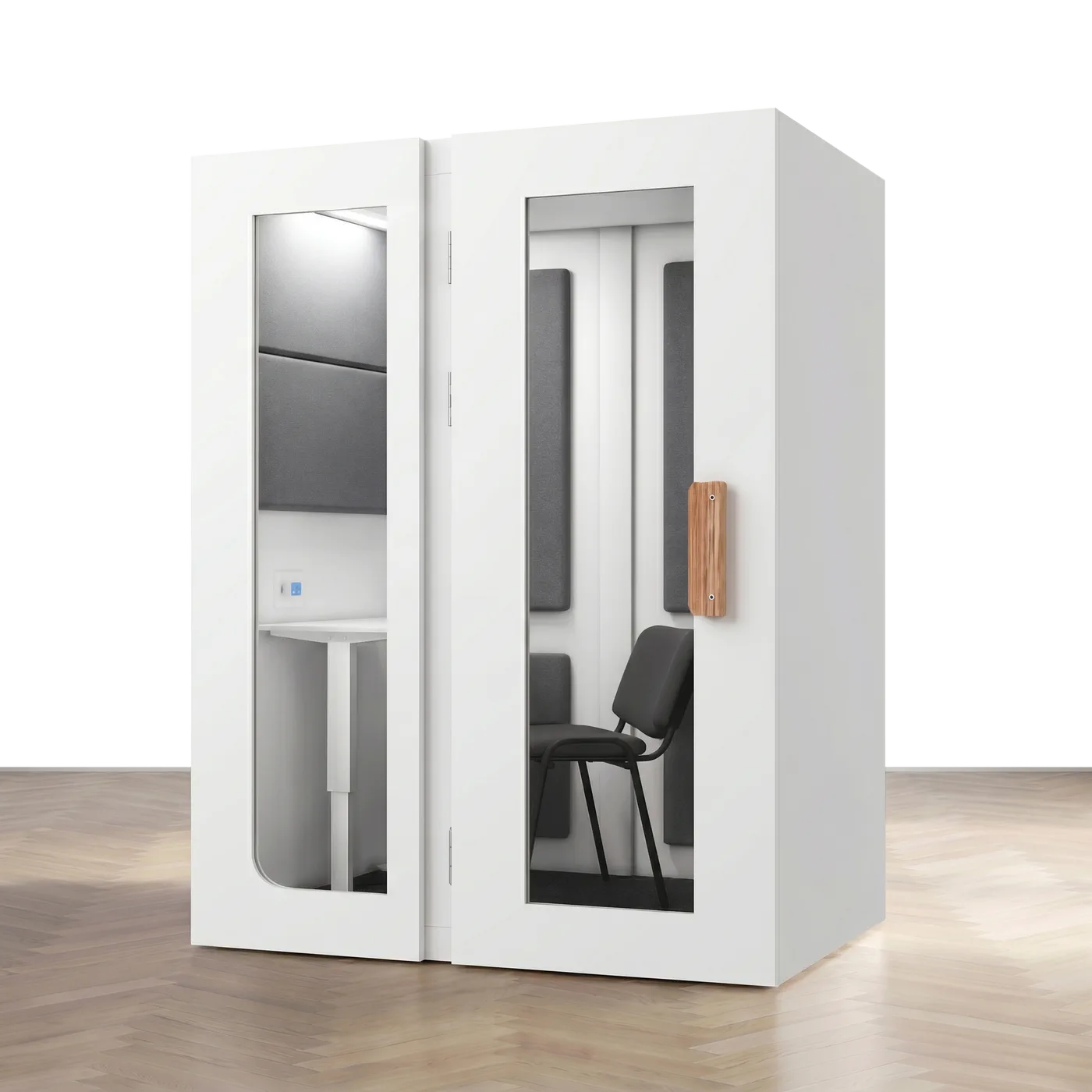
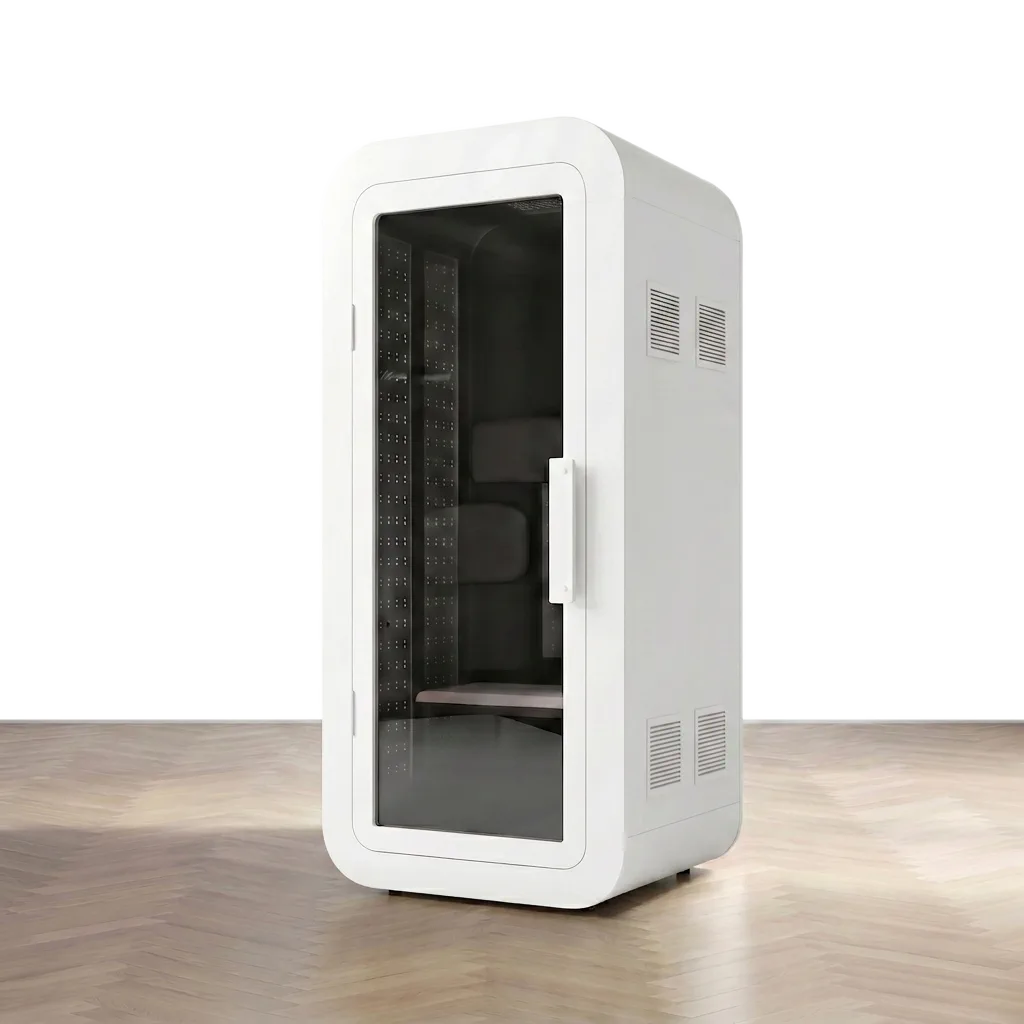
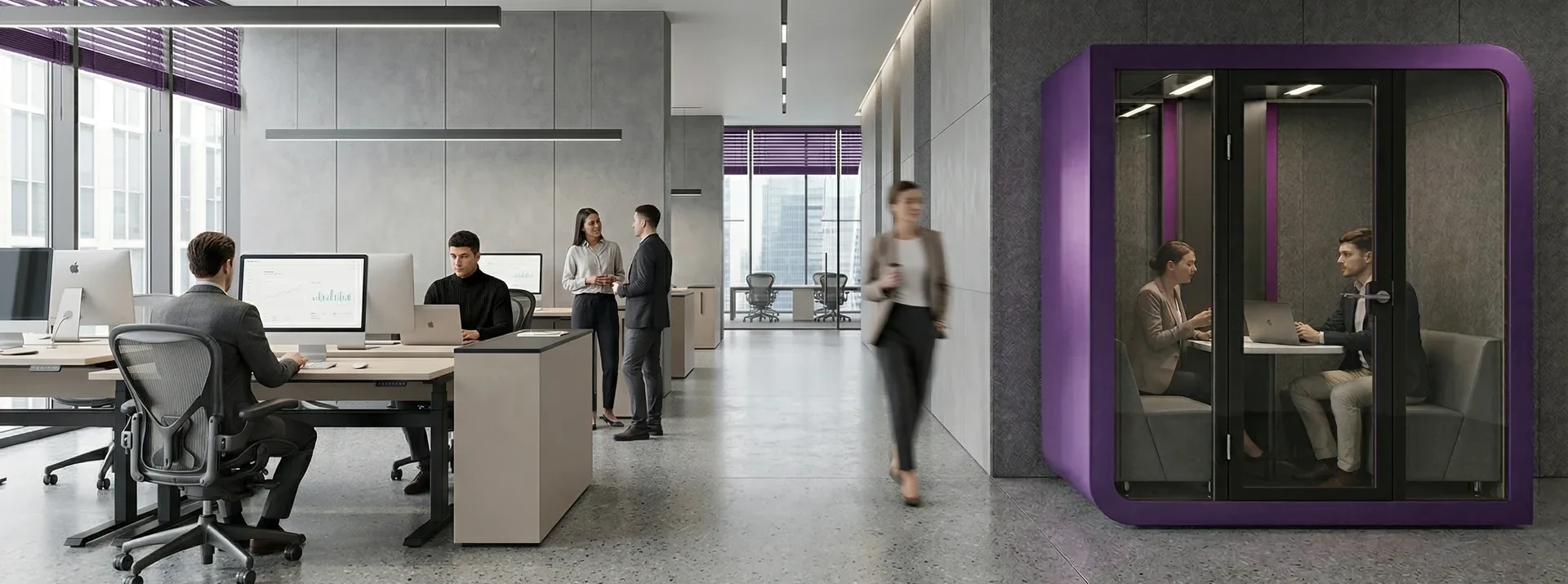
The most common mistake when choosing a booth is to look only at insulation and forget about ventilation. Yet ventilation decides whether you will ever want to step inside a second time.
Why it matters
A closed booth without ventilation turns into a stuffy box within ten minutes. CO₂ levels rise, concentration drops, and the whole idea of a quiet place to work collapses under the discomfort.
How it works in a Silentbox
A dedicated supply-and-extract system moves 250–600 m³/h depending on the model. Fresh air enters from above, stale air leaves below, and the air is replaced completely every 2–3 minutes. An occupancy sensor switches ventilation on automatically when someone walks in.
- 250–600 m³/h system output
- Complete air change every 2–3 minutes
- Fan noise below 30 dB — it stays out of the way
- Optional HEPA filter — traps dust, pollen and PM 2.5
Acoustic silencers
One engineering detail matters more than the rest: the ventilation duct is fitted with acoustic silencers. Without them the duct would be a hole for sound to travel through. The silencers preserve the insulation even while ventilation is running.
Need a consultation?
We will match a booth configuration to your office and provide a quote within 24 hours.