The first decision when moving to a hybrid schedule is almost always the same: cut the number of desks. The logic is clear — if half the team is in the office on an average day, half the workstations sit idle. A few months later it turns out the problem has simply moved: there are enough desks, but nowhere to talk.
What changes is not headcount, but load distribution
A hybrid office is rarely evenly half-empty. People come in on the days their meetings are scheduled, and during the hours those meetings happen. So average occupancy falls while peak occupancy stays the same or rises. Planning around the average is exactly what produces the paradox: plenty of free desks, and not one free meeting room.
Why there are more calls in the office now
The second change is more fundamental. A meeting used to mean everyone walked to the same room. Now some participants are on a screen, so the conversation happens wherever the person sits: at their desk, in the open space, next to colleagues trying to concentrate. The number of out-loud conversations in the office has gone up; the number of places to hold them without disturbing anyone has not.
The gap between those numbers is the whole problem: an open space with active video calls sits steadily above the recommended level, and no amount of "quiet hours" policy changes that — such rules last until the first urgent call to a client.
Why hot-desking makes it worse
Unassigned desks are a typical companion of the hybrid schedule, and they amplify the acoustic problem. At an assigned desk you know your neighbours and moderate your voice accordingly. At a hot desk the neighbour is different every day, no unspoken agreement exists, and the habit of speaking quietly never forms. On top of that, the option of "going to talk at my own place" disappears, because nobody has one.
What people do about it
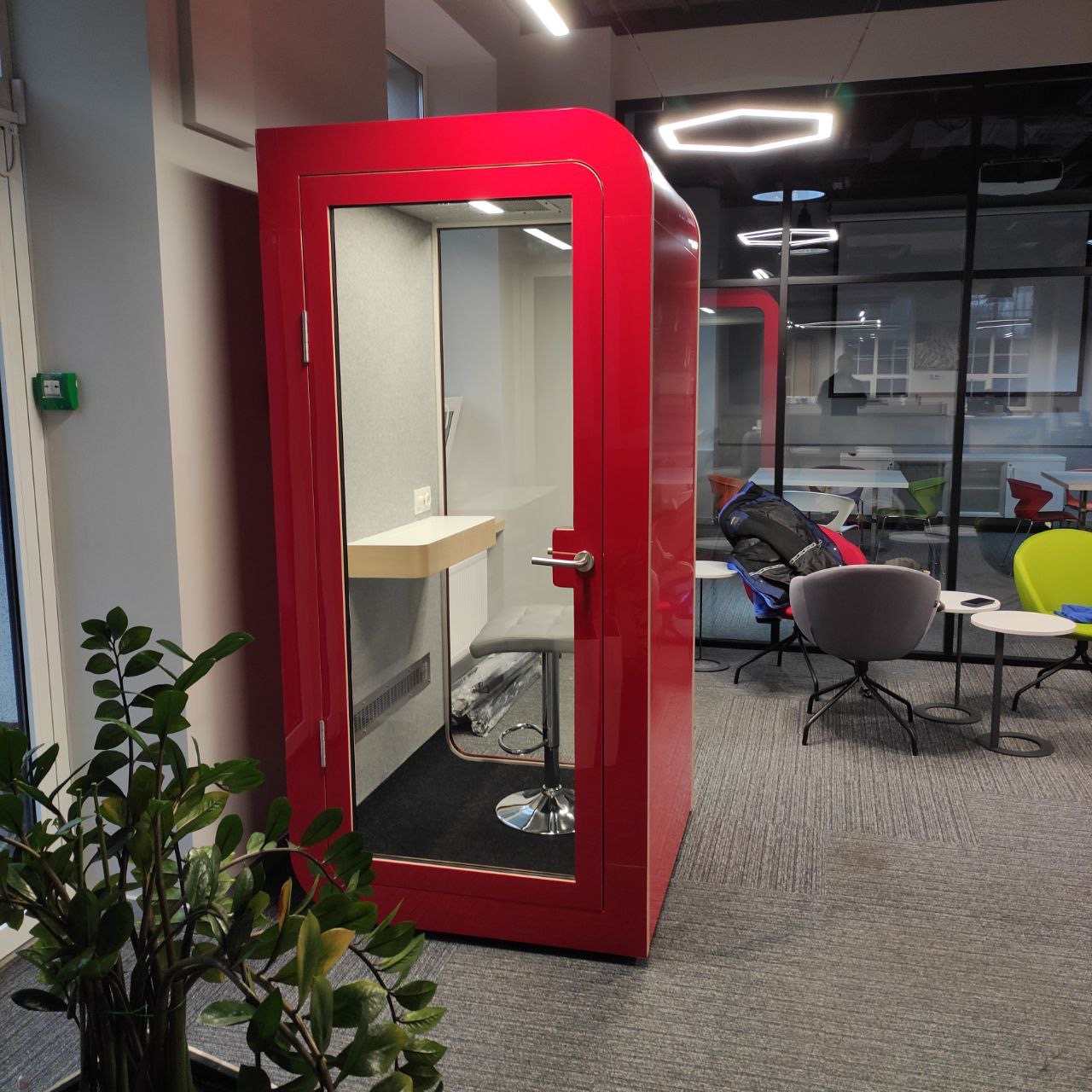
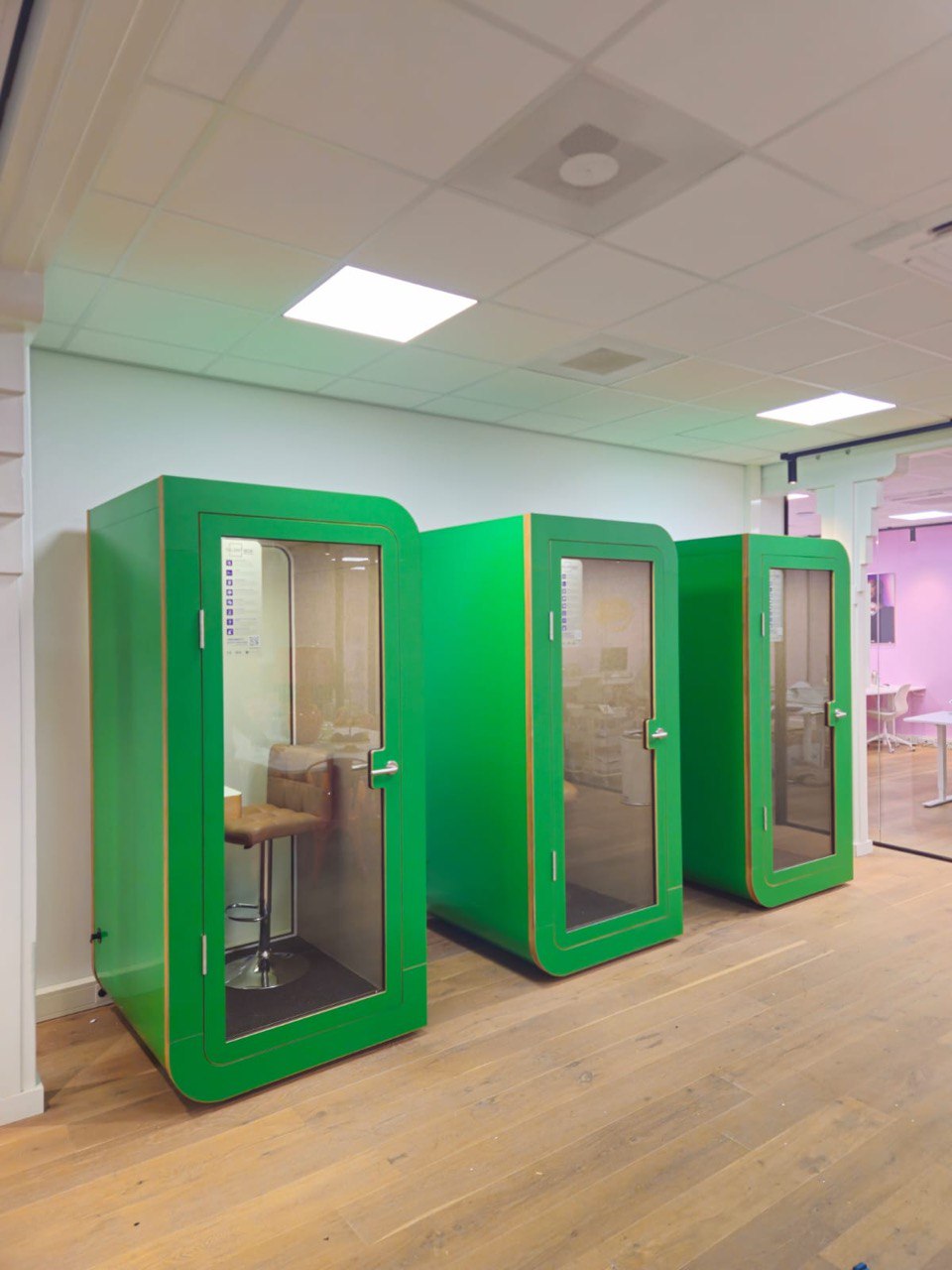
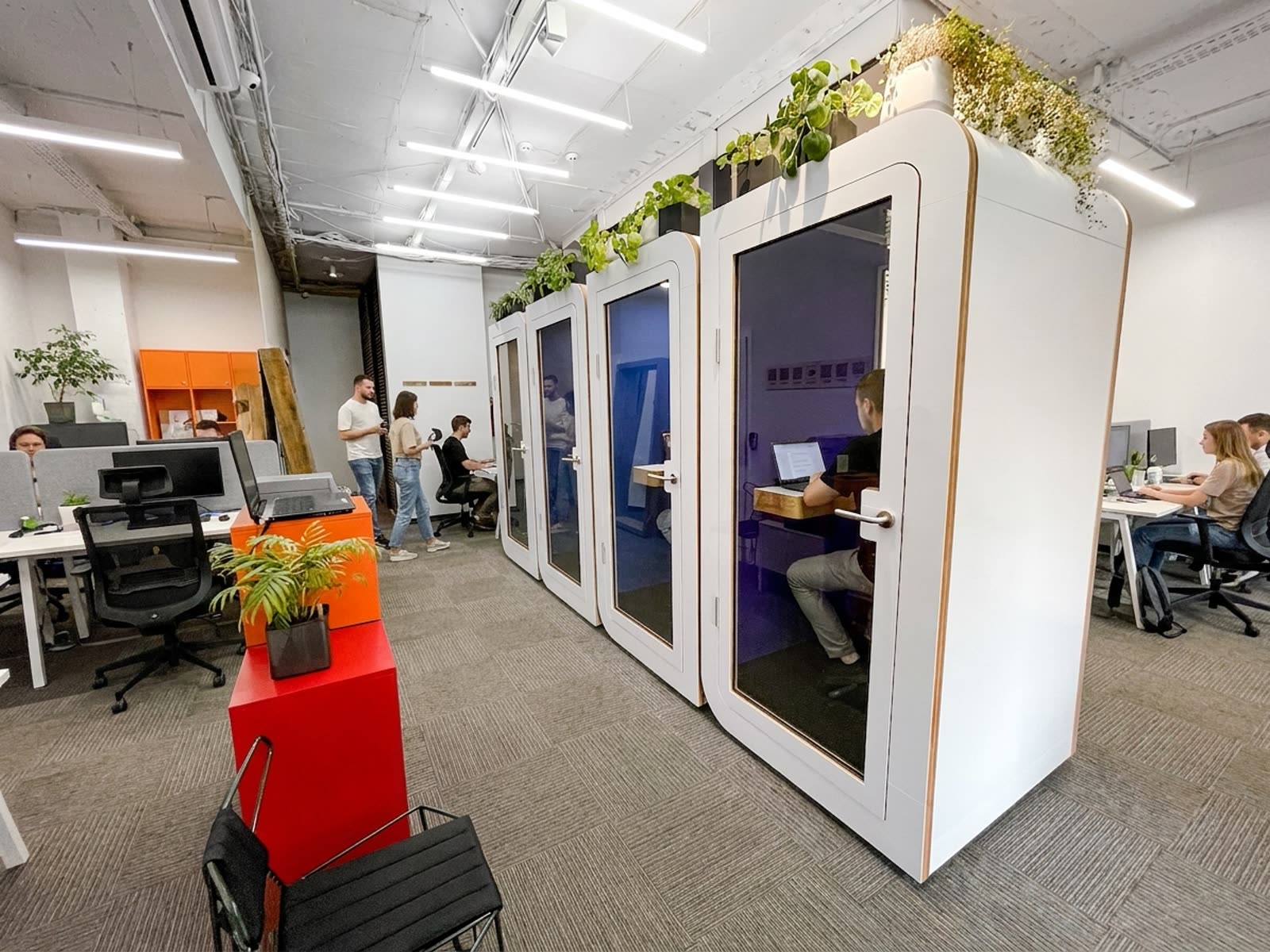
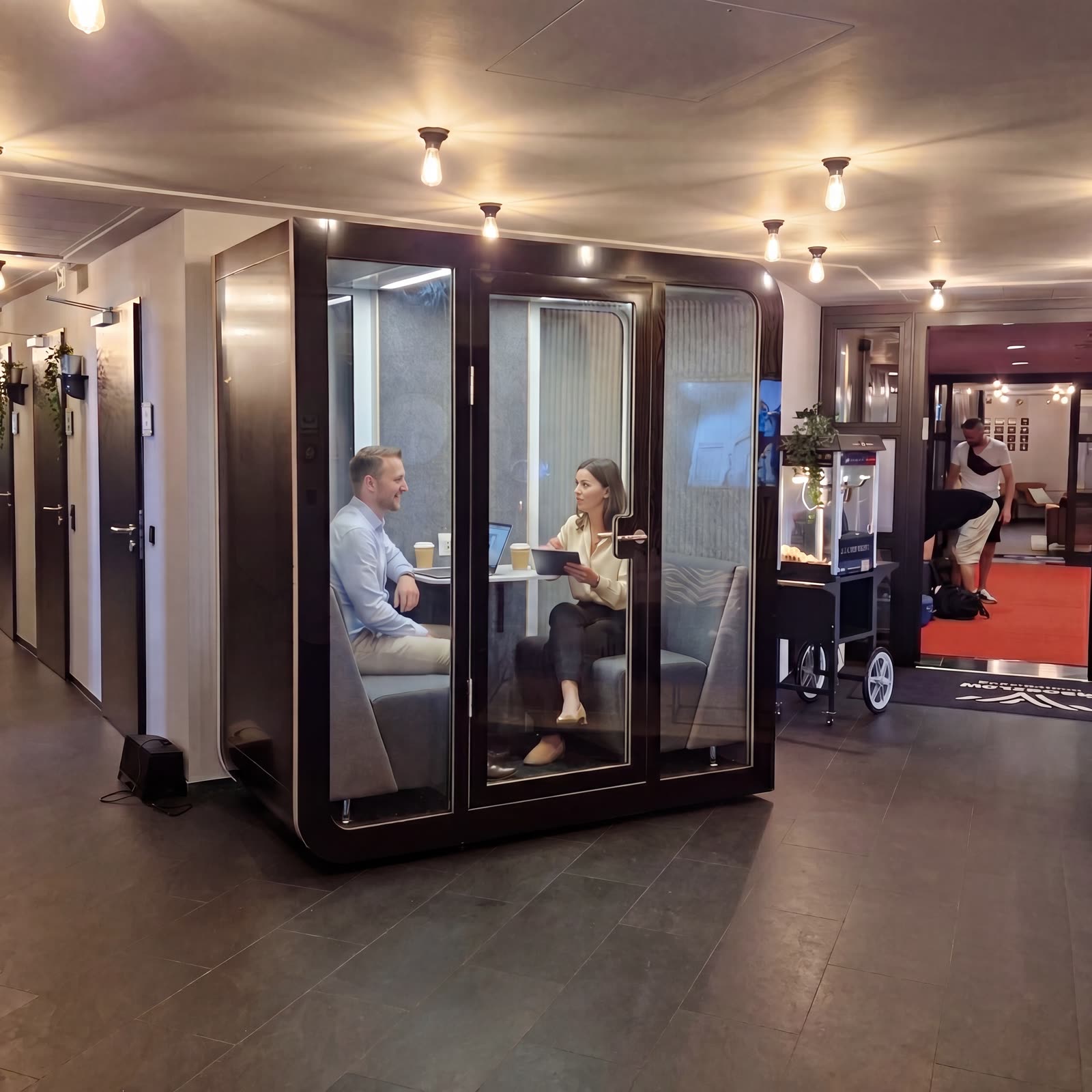
Replanning solves the problem, but requires renovation, approvals and lettable area — and hybrid ratios will keep shifting, which a built wall cannot follow. Acoustic panels lower the general hum but do not make a conversation private: the neighbour still hears the content. A booth addresses precisely the scenario that has become more common: one or two people talk, and the rest of the office does not hear it.
How many booths you need
Count from the peak, not from headcount. A practical method: look in the calendars for how many video meetings fall in the busiest hour of the busiest day, and how many of those are taken from the open space. That is the number of booths you need. Then split them by scenario.
As a sanity check there is an industry benchmark: one individual booth per 8–10 workstations and one team booth per 15–20. Hybrid offices typically keep one desk per 1.5–2 employees, so the same headcount needs more booths than an office with assigned seating.
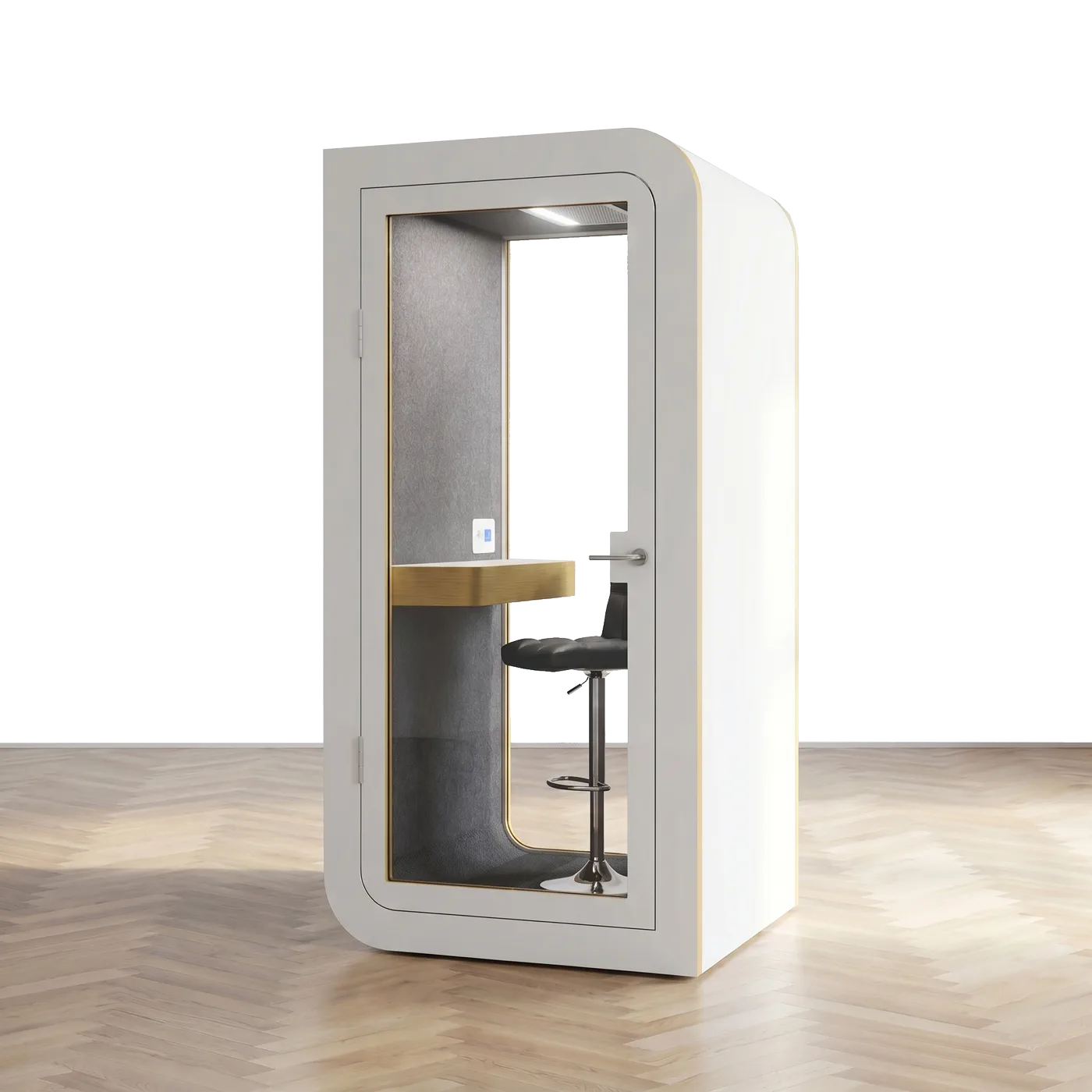
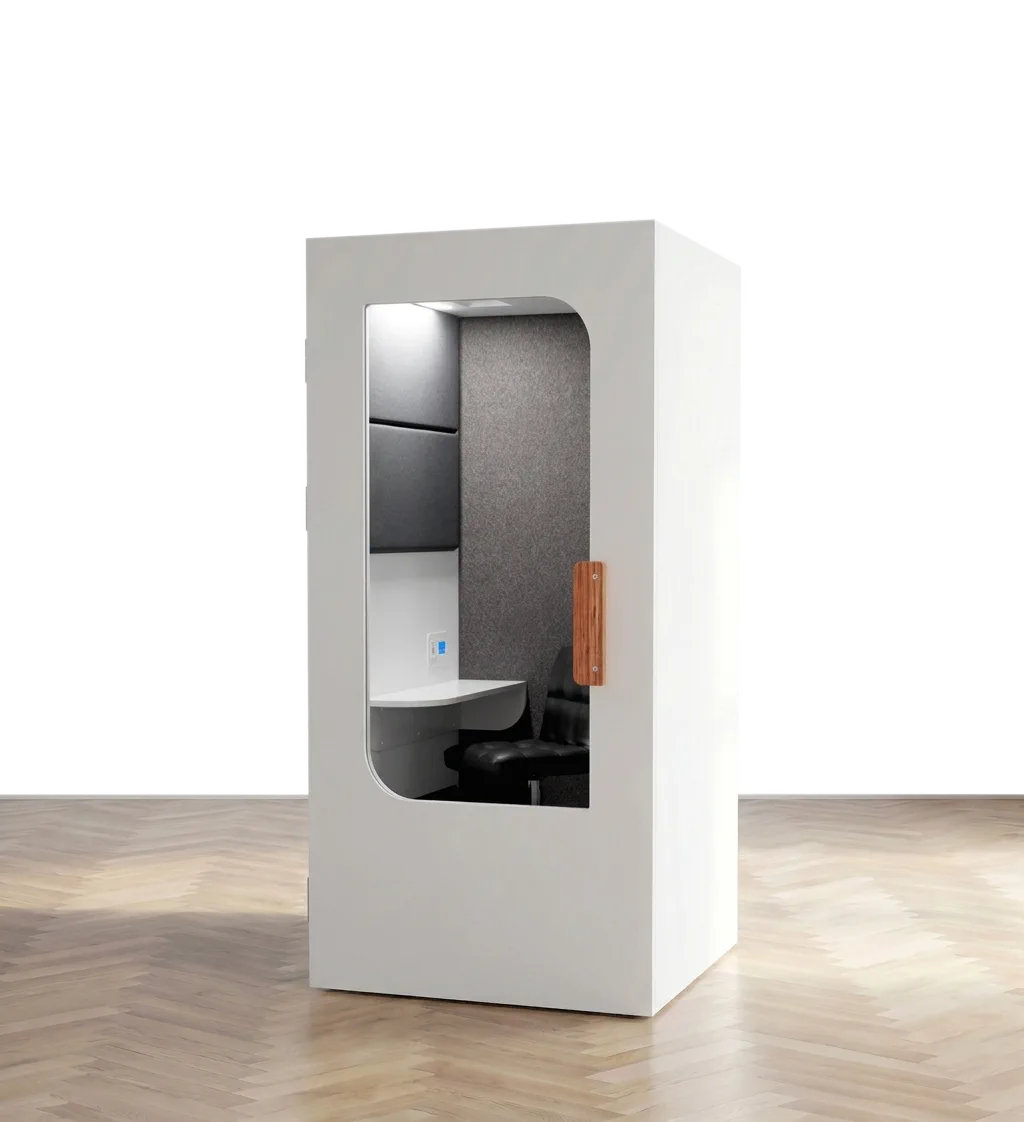
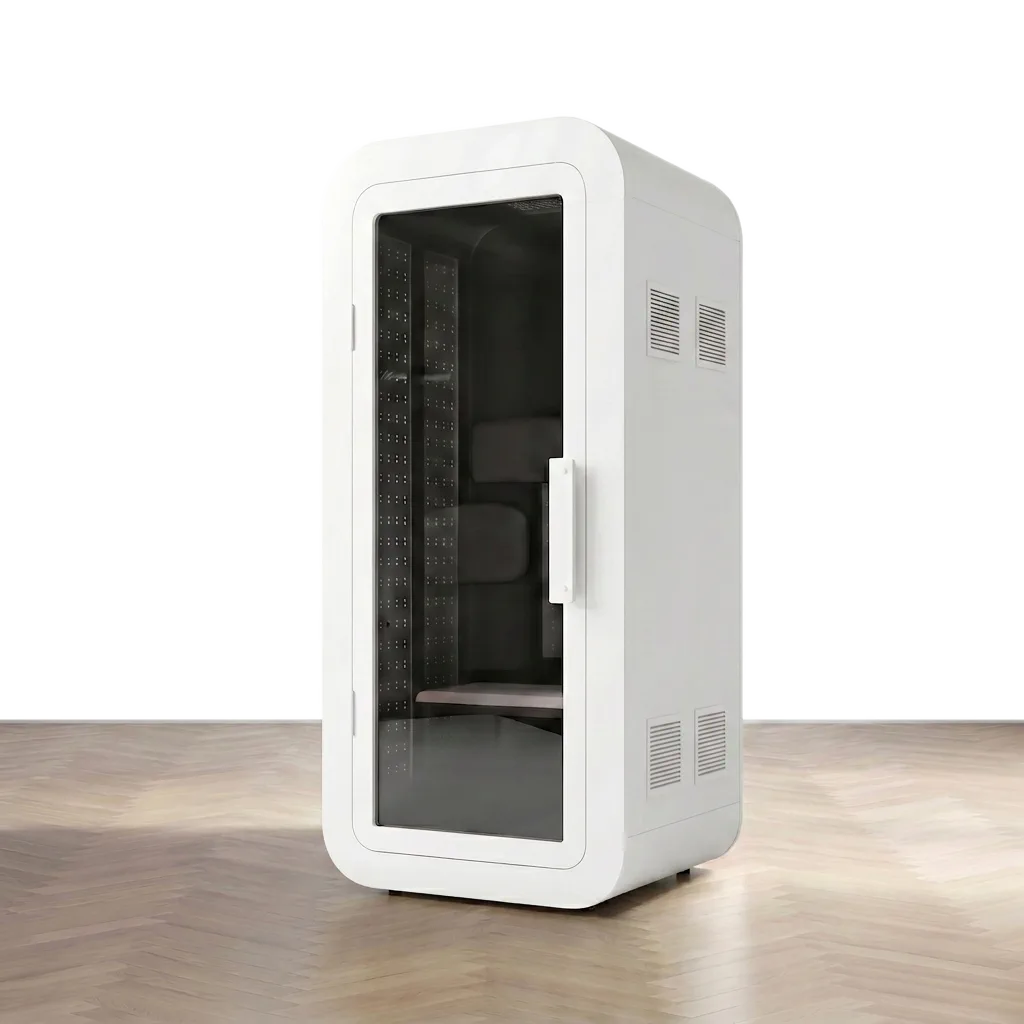
- Solo — 1 person: calls and video meetings, the most common hybrid-office scenario
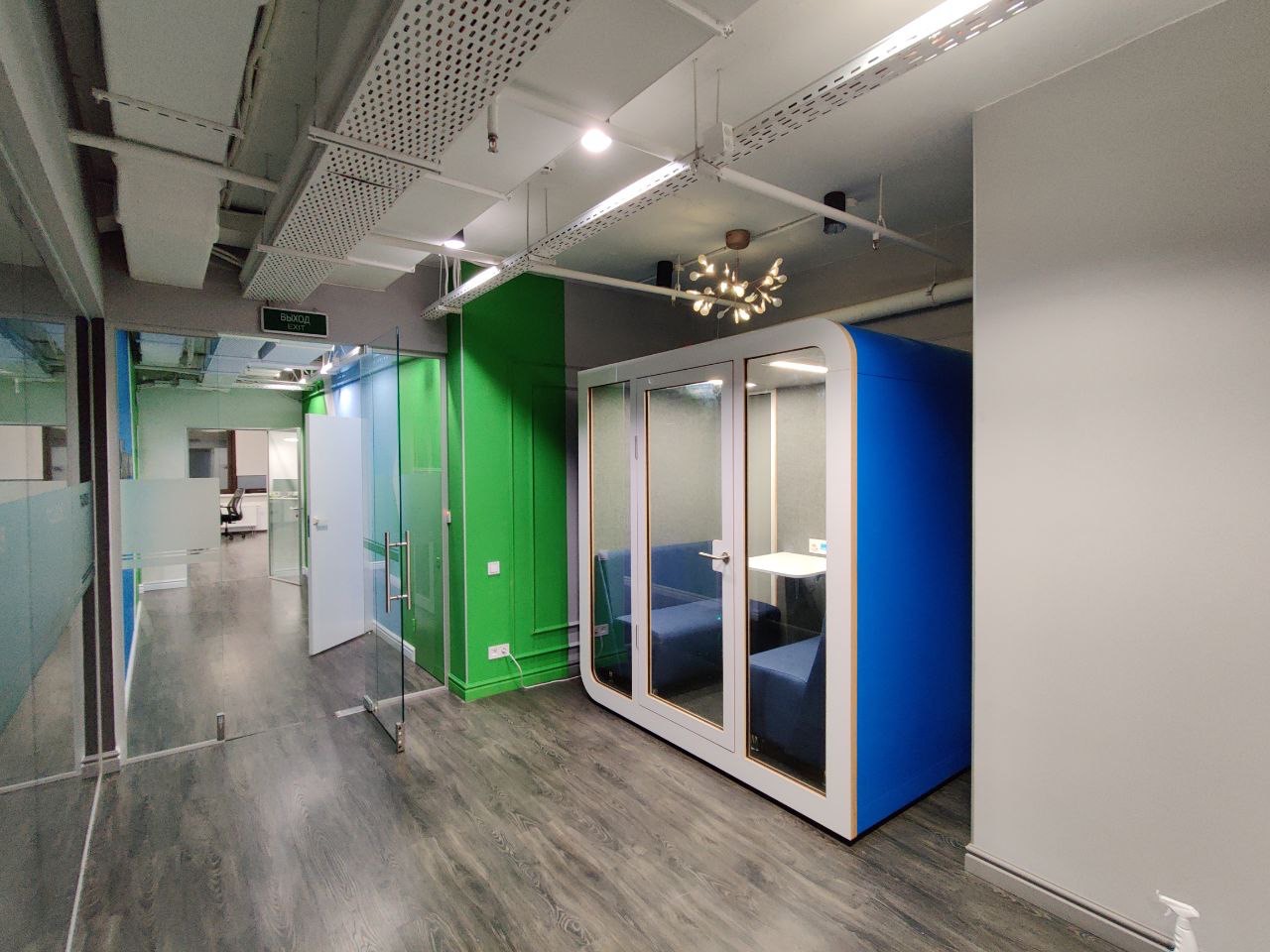
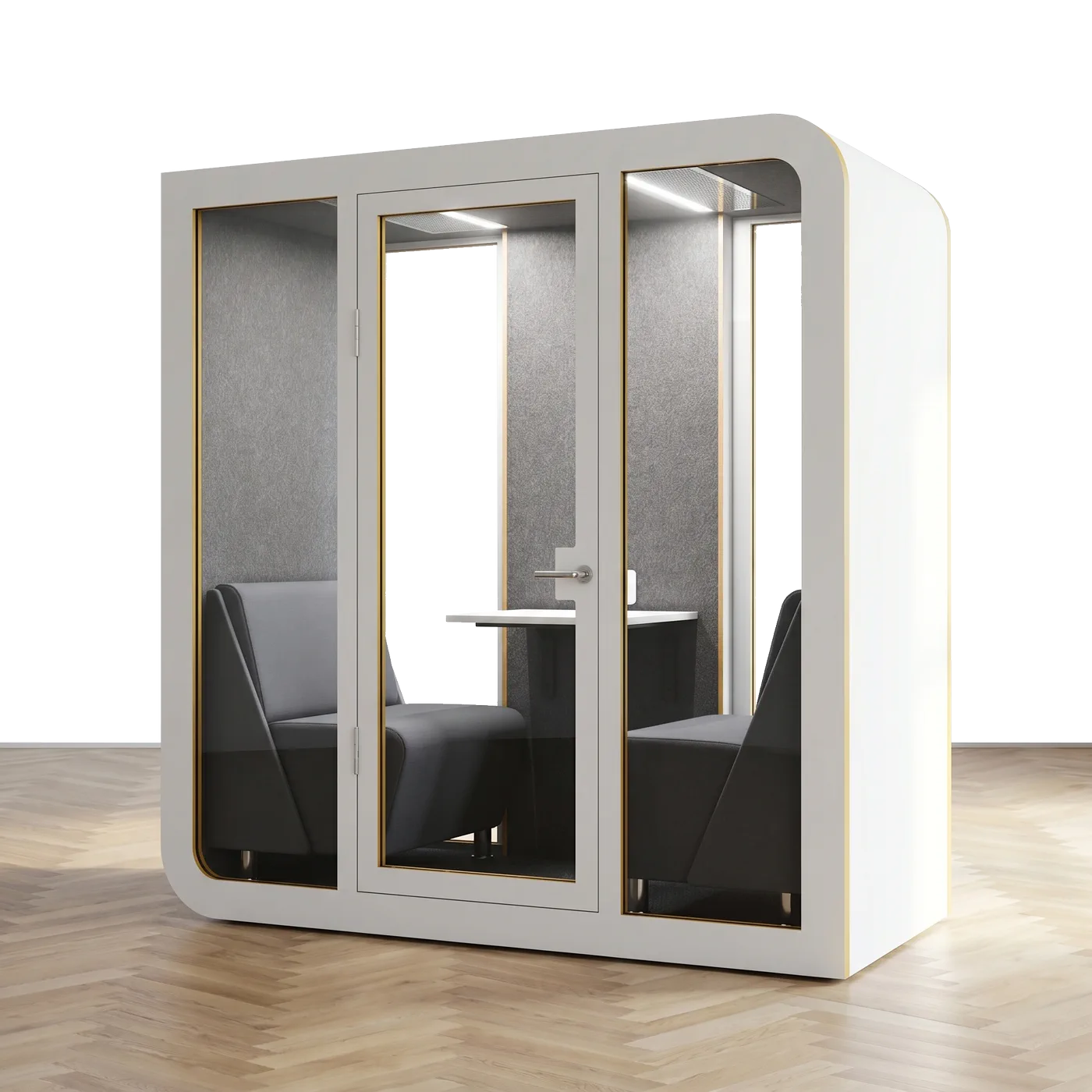
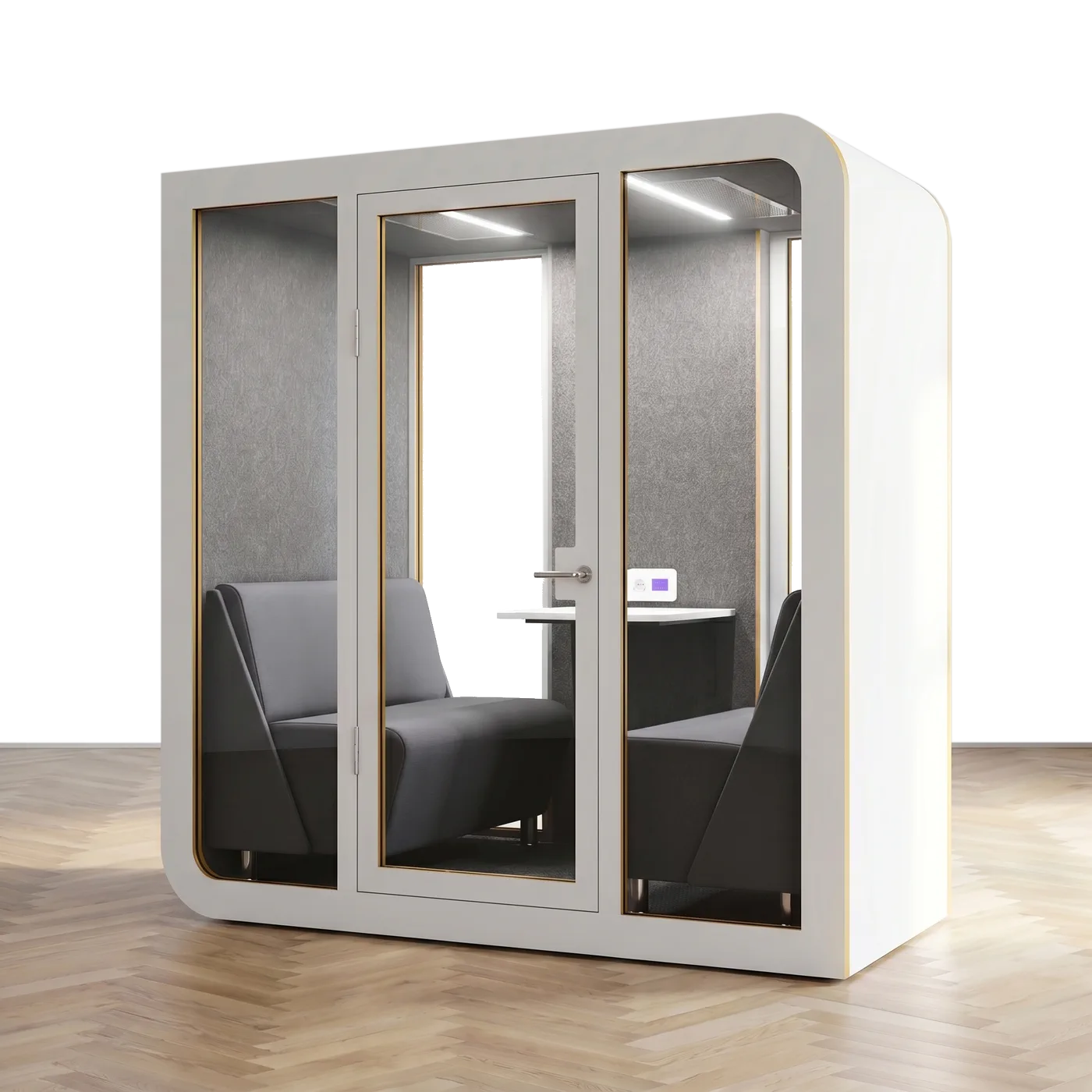
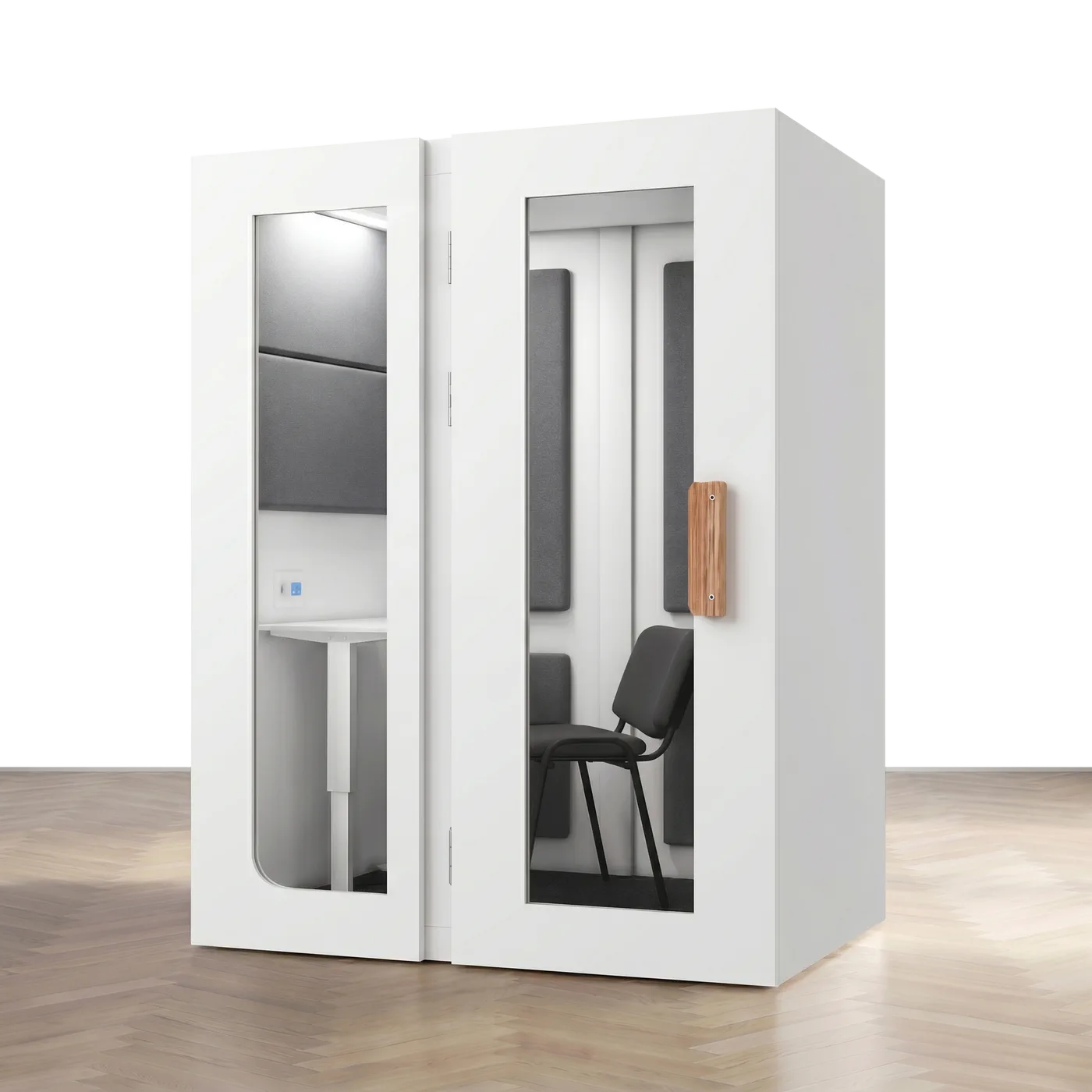
- Duet — 2 people: a conversation with a colleague, an interview, a confidential discussion
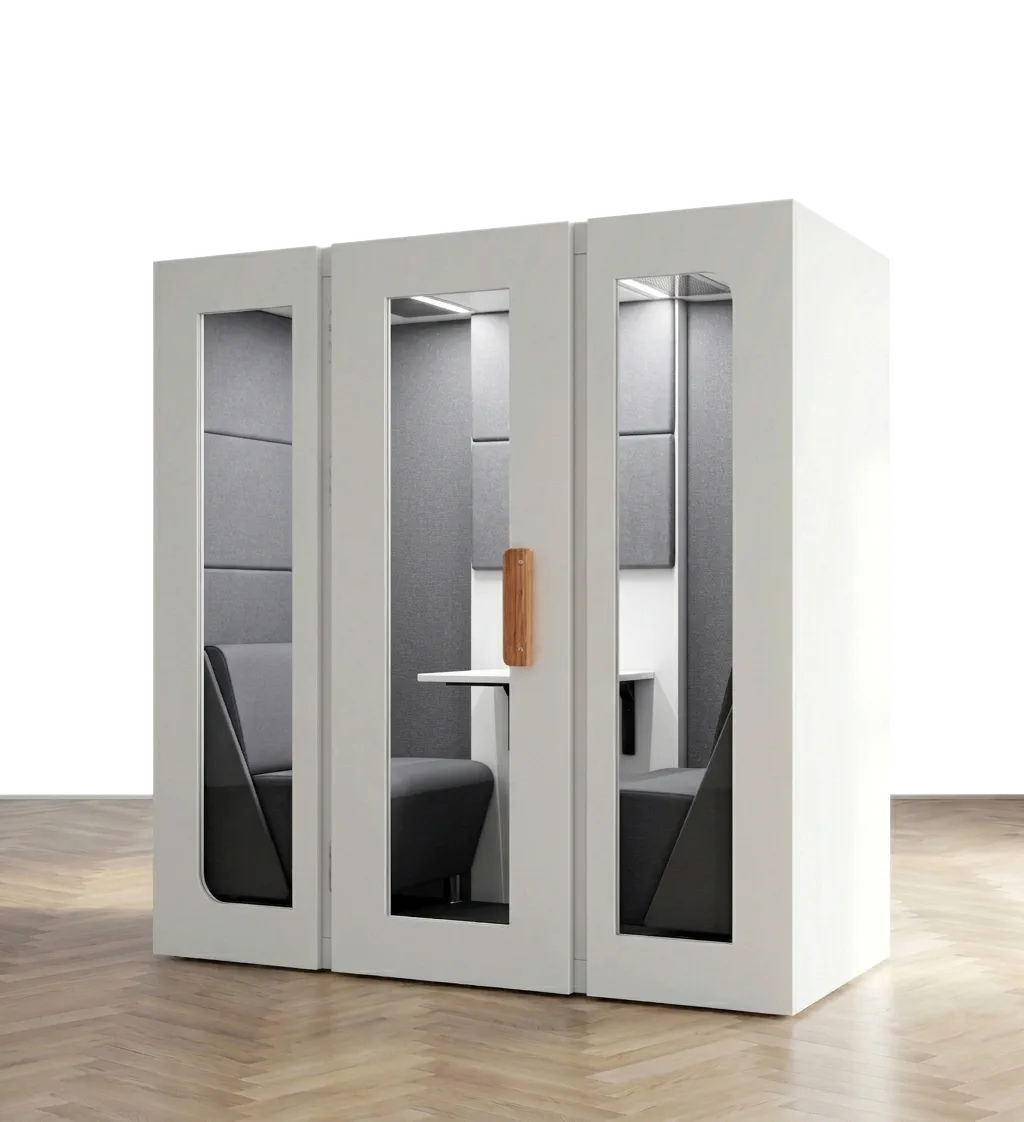
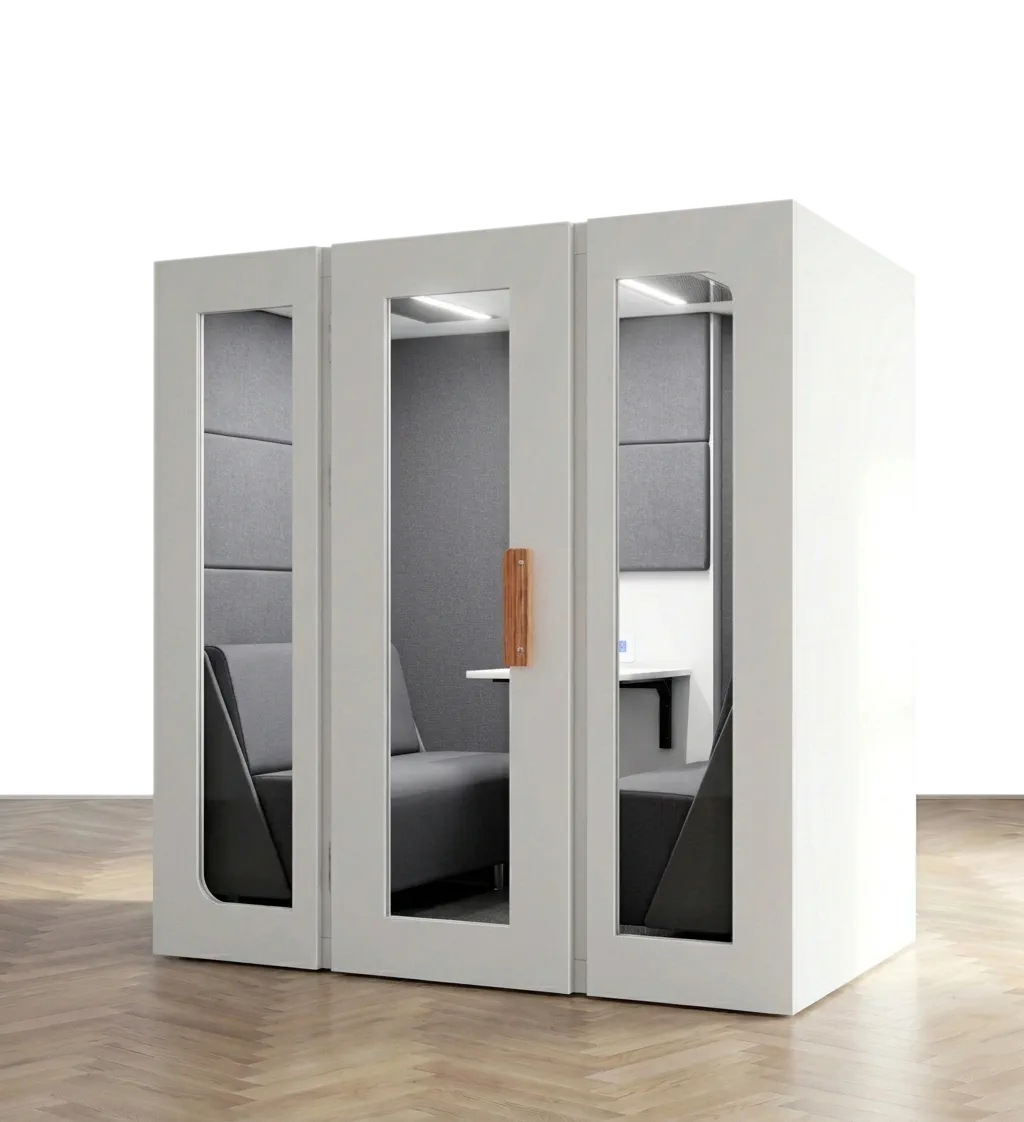
- Quartet — 4 people: a team meeting where some participants are on screen
- Installation takes a few hours with no renovation; the booth can be relocated when the layout changes
Silentbox has installed more than 500 booths in 28 countries. If your office has already moved to a hybrid schedule and calls are being taken from the open space, we will send a quote and a 3D visualisation in your space, so the count and the models are based on your numbers.
Frequently asked questions
How many booths does a hybrid office need?
Count from the peak, not from headcount: look at how many video meetings fall in the busiest hour of the week and how many of those run from the open floor. As a cross-check, the industry benchmark is one individual booth per 8–10 workstations and one team booth per 15–20.
Why does a hybrid schedule need more booths than it seems?
With desk sharing you keep roughly one desk per 1.5–2 employees, so fewer people are in the office at once — but almost every second person is on a call or a video meeting. The load shifts from workstations to places to talk, and those are exactly what runs short.
Booth or meeting room — which comes first?
Start with a booth for 1–2 people: most meetings in a hybrid office are short calls, and those are what block the large meeting rooms. A four-person team booth is what you need when some participants are on screen and some are in the room.
Can the booths be moved when the layout changes?
Yes, that is designed in: a booth is not fixed to the walls and is not part of the fit-out. It can be dismantled and moved to another floor, or taken along when the office relocates — taking roughly as long as installing it, 2–3 hours for a Solo.
Would acoustic panels be enough instead of booths?
Panels take away the hum and the echo, but they do not make a conversation inaudible: they work on reflected sound, not on direct sound. A call or a confidential conversation needs an enclosed volume — panels and booths solve different problems and work well together.
Guides
Practical answers from the Silentbox blog