Every building manager hears it weekly: a tenant needs a quiet place for a call or a short meeting, and every meeting room is taken. Building another room means renovation, approvals and a loss of lettable area. Most of the time the request is met with "sorry, everything is booked right now".
Why meeting rooms are always taken
A conventional meeting room is designed for a meeting, not for a fifteen-minute call. So it sits occupied by someone who only needed to talk to a client without an audience. The second reason is the hybrid schedule: headcount in the building has become uneven, and peaks occur during the same two or three hours. Meeting-room capacity is planned for the average load, while requests arrive at peak times.
What the booth gives the operator, and what it gives the tenant
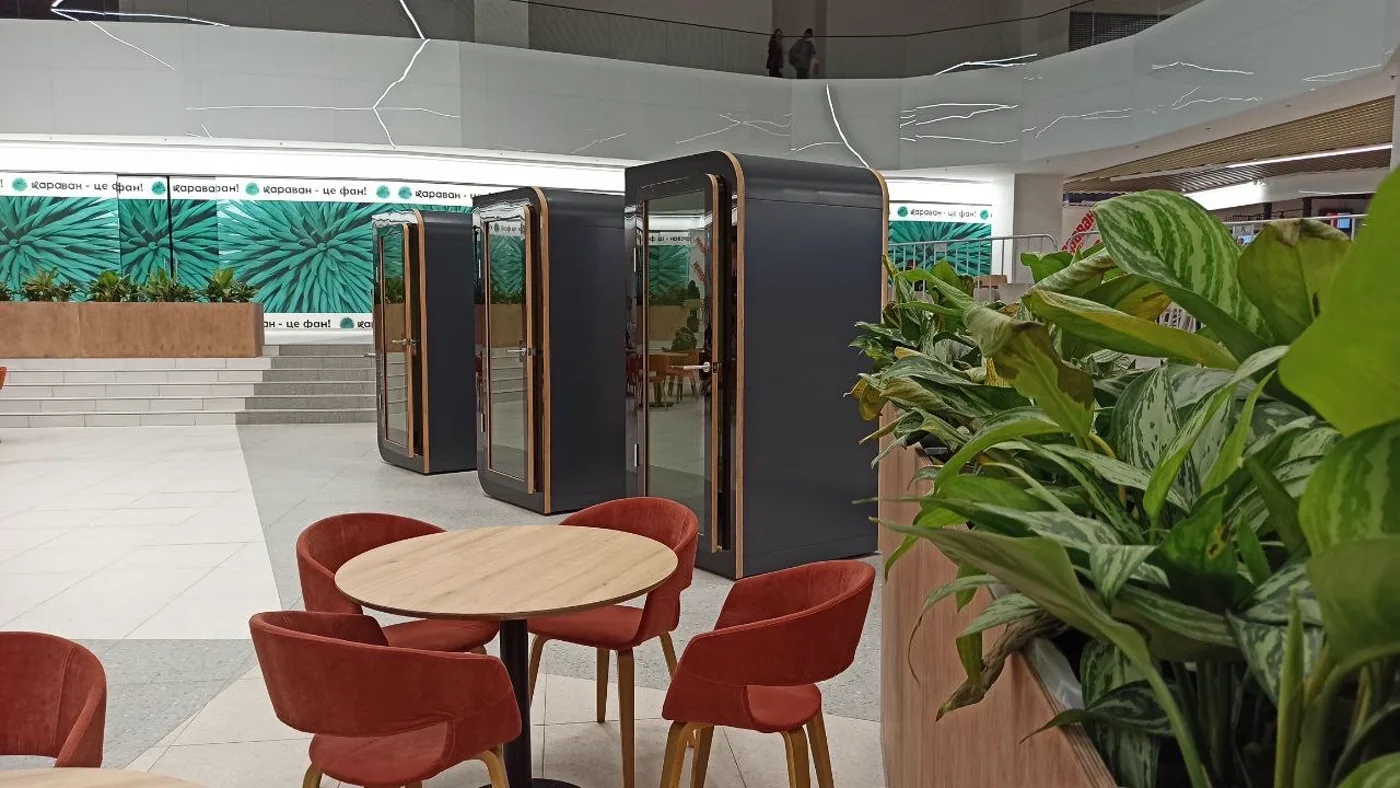
For the tenant, a booth turns a request that used to end in a refusal into a yes: it reads as a tenant amenity, not as furniture. For the operator there are two distinct scenarios, depending on who pays. First: the booth is part of the building's service offer and serves as a selling point at lease renewal, alongside parking and coffee. Second: the booth is connected to Silentbox Cloud, the tenant unlocks the door with an app and pays for the time actually used. Then the amenity does not add to running costs; it creates a separate revenue stream.
The Cloud model: when a booth earns money
Silentbox Cloud is pay-per-hour access to a booth through an app. The operator hires no attendant and keeps no booking log: the booth unlocks itself, and metering and payment happen in the app. For a building with heavy footfall this means the asset works during the hours when meeting rooms sit idle, while the tenant pays only for the time actually used. Payback depends on the footfall of your building, so we calculate it for the specific property rather than from industry averages.
Why this is faster than building a meeting room
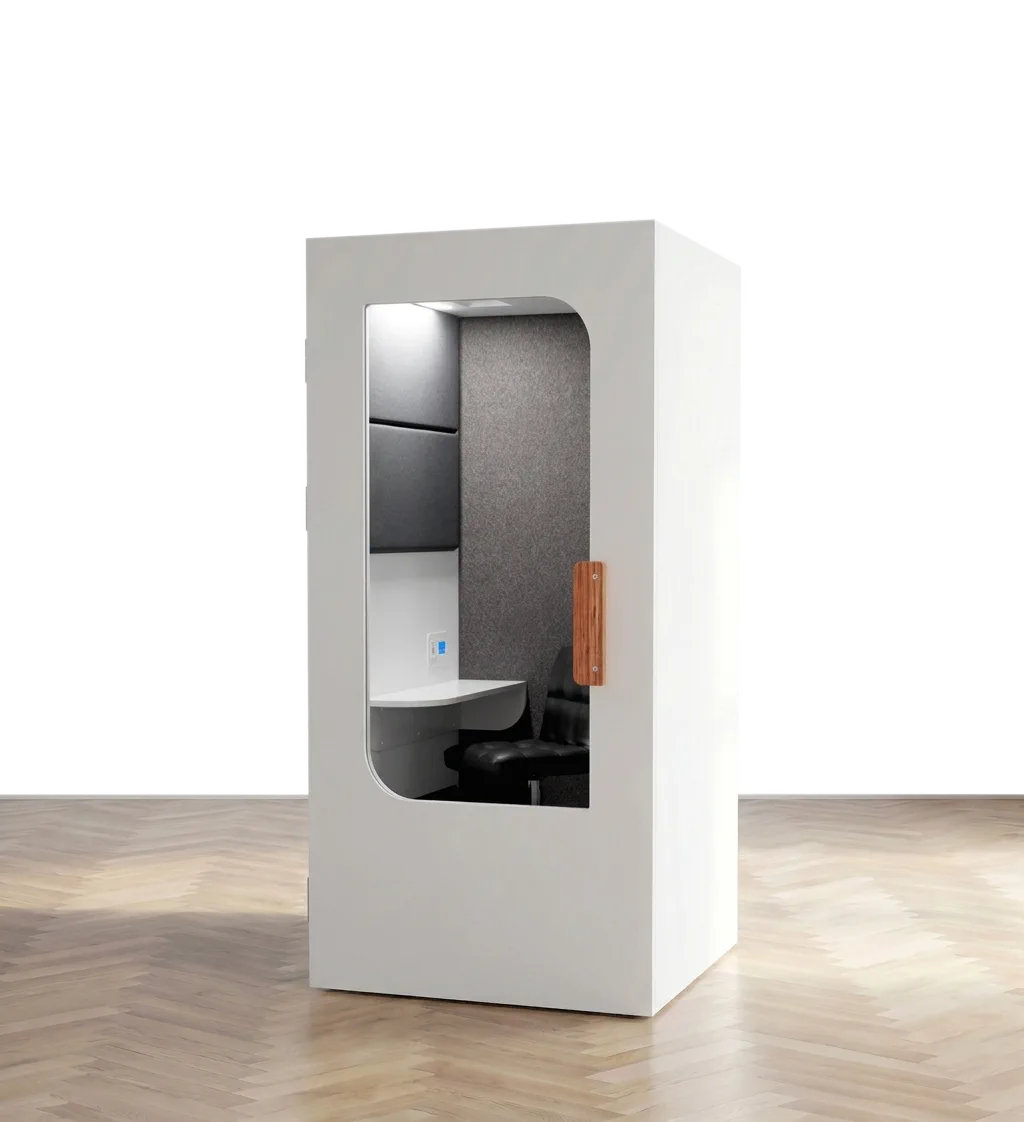
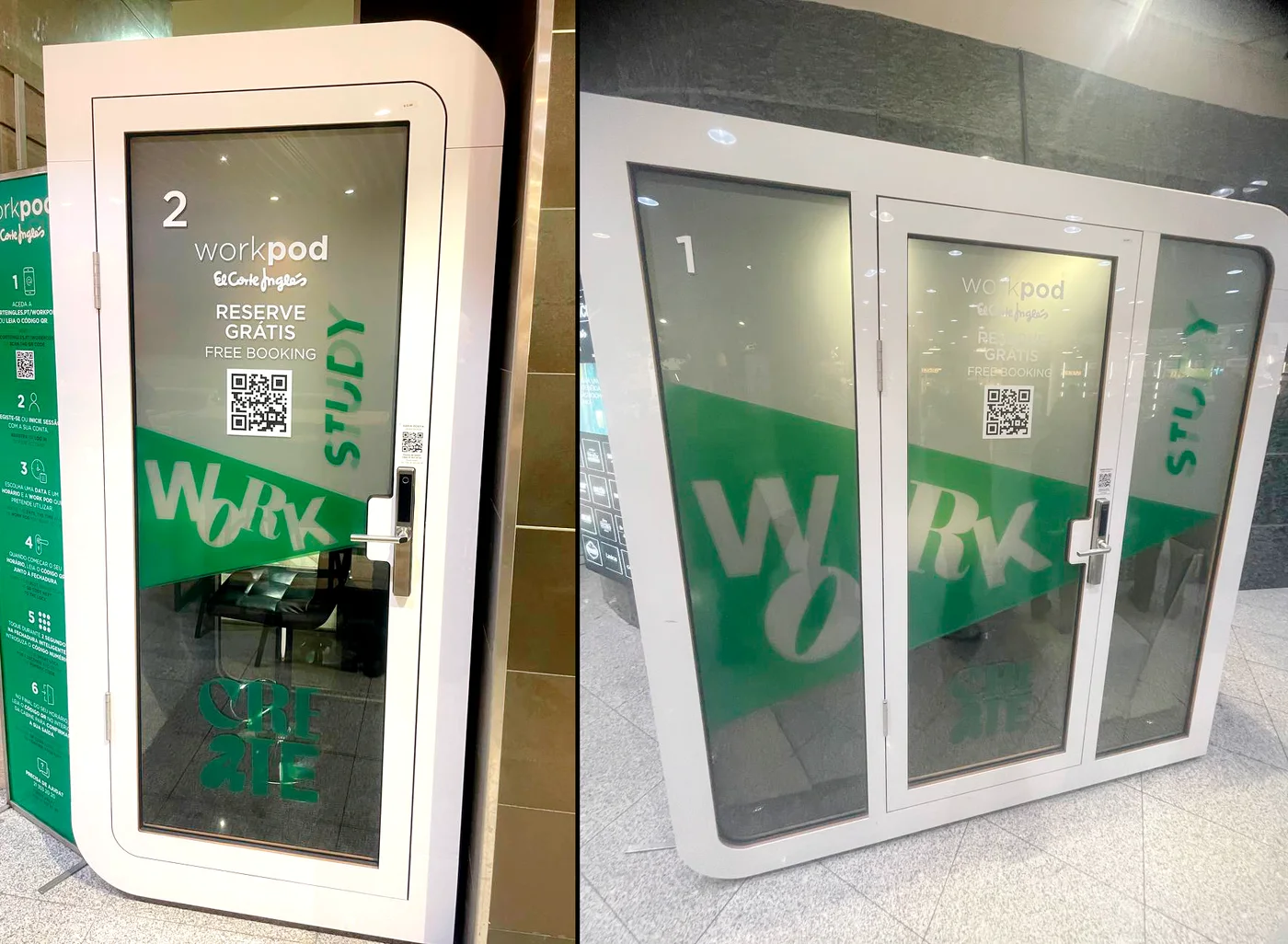
The booth arrives ready to install. Installing a Solo takes 2–3 hours, with no renovation, dust, approvals or interruption to the building. It does not need to be designed into the ventilation system: its own ventilation delivers 250–600 m³/h, and lighting and sockets are already inside. If a tenant moves floors or the operator reworks the lobby, the booth is relocated, unlike a permanent wall.
Which model to choose for a business centre
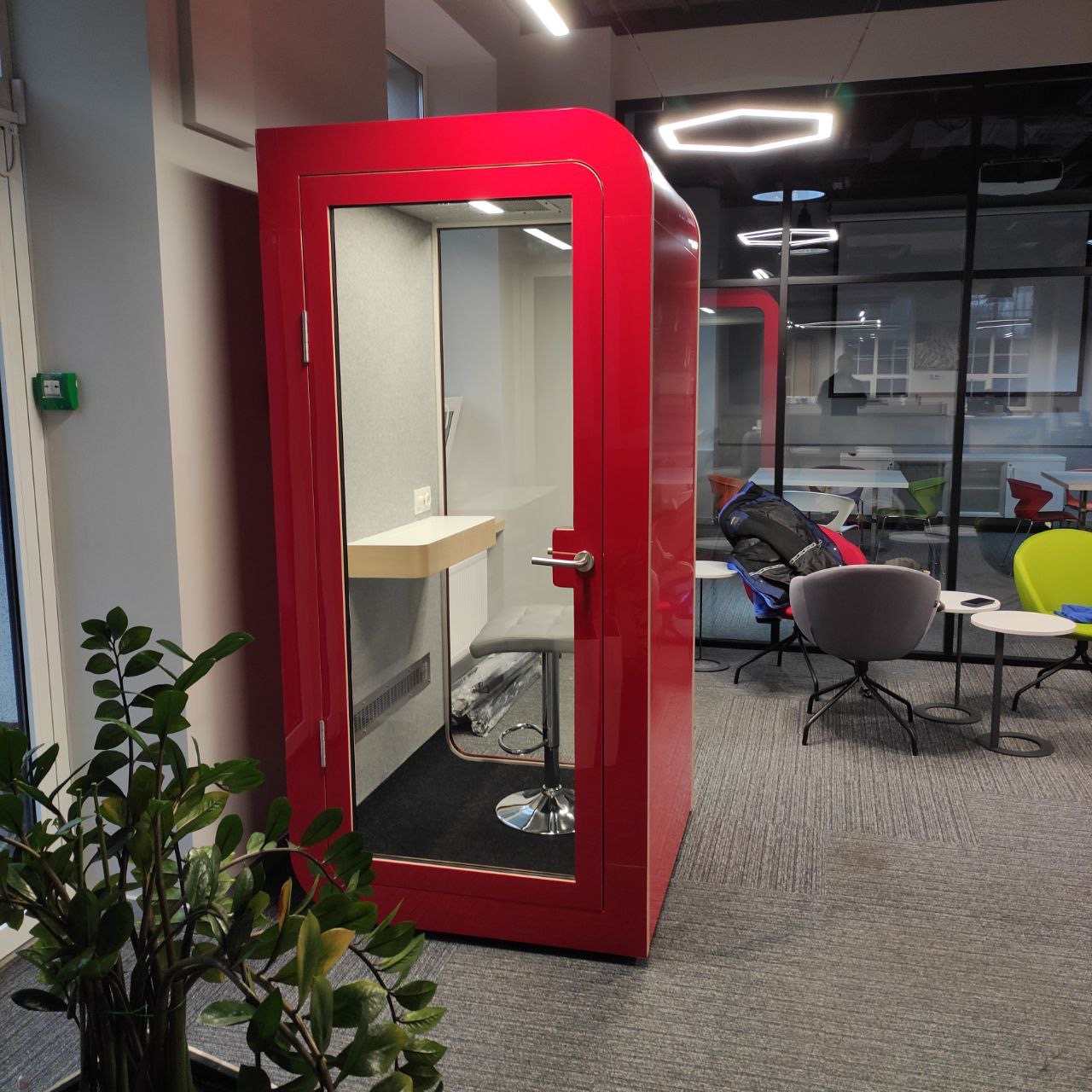
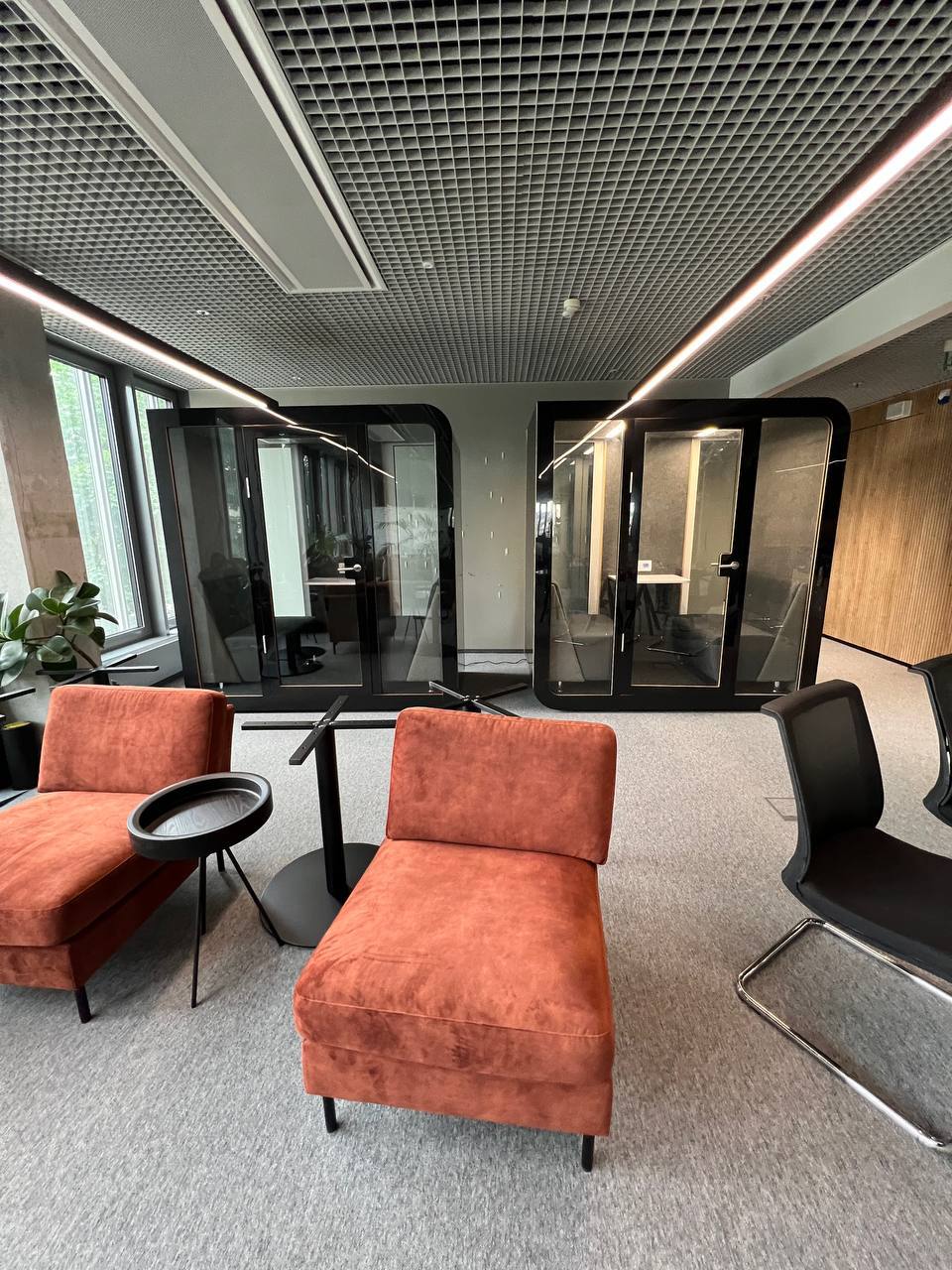
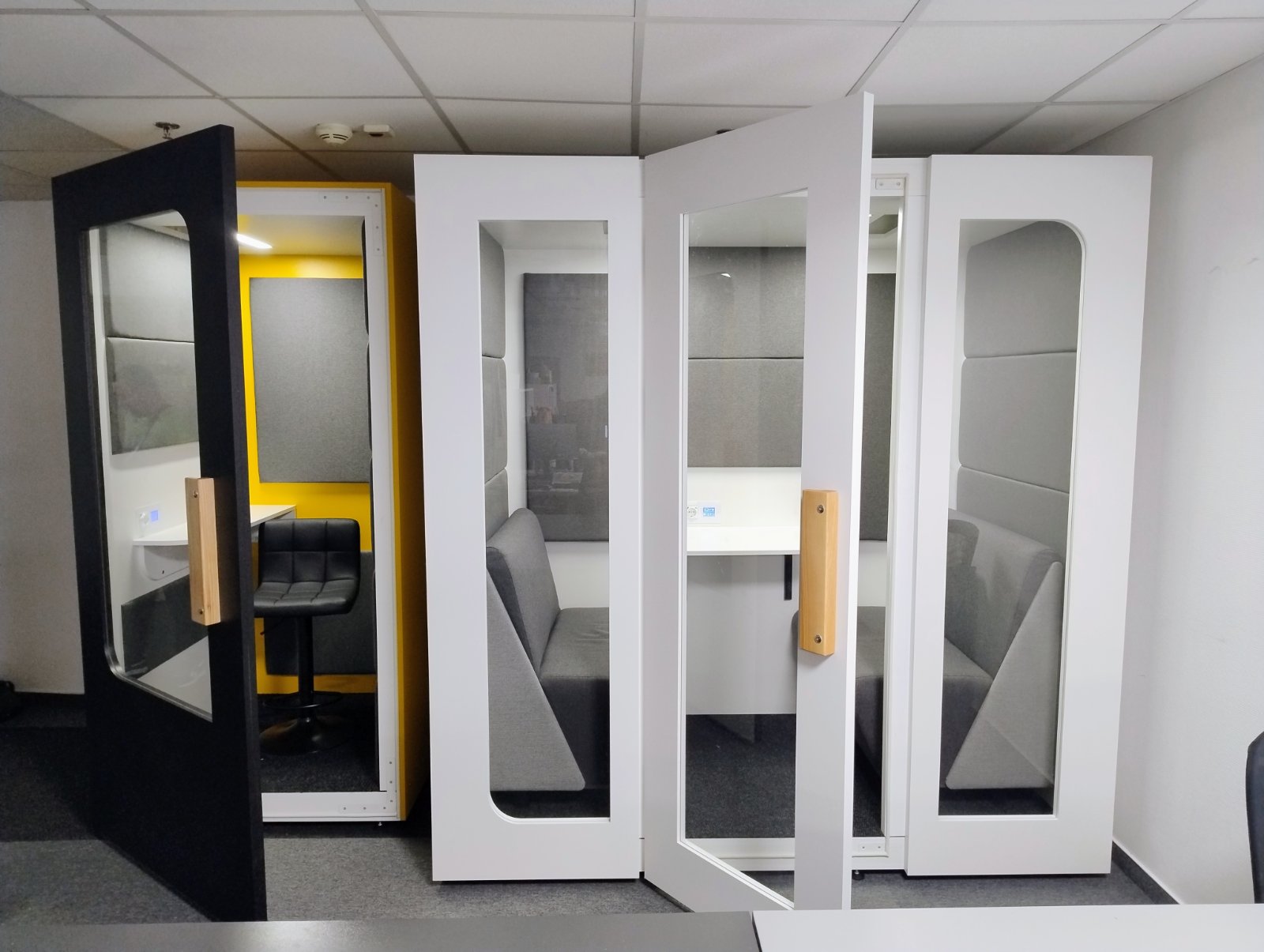
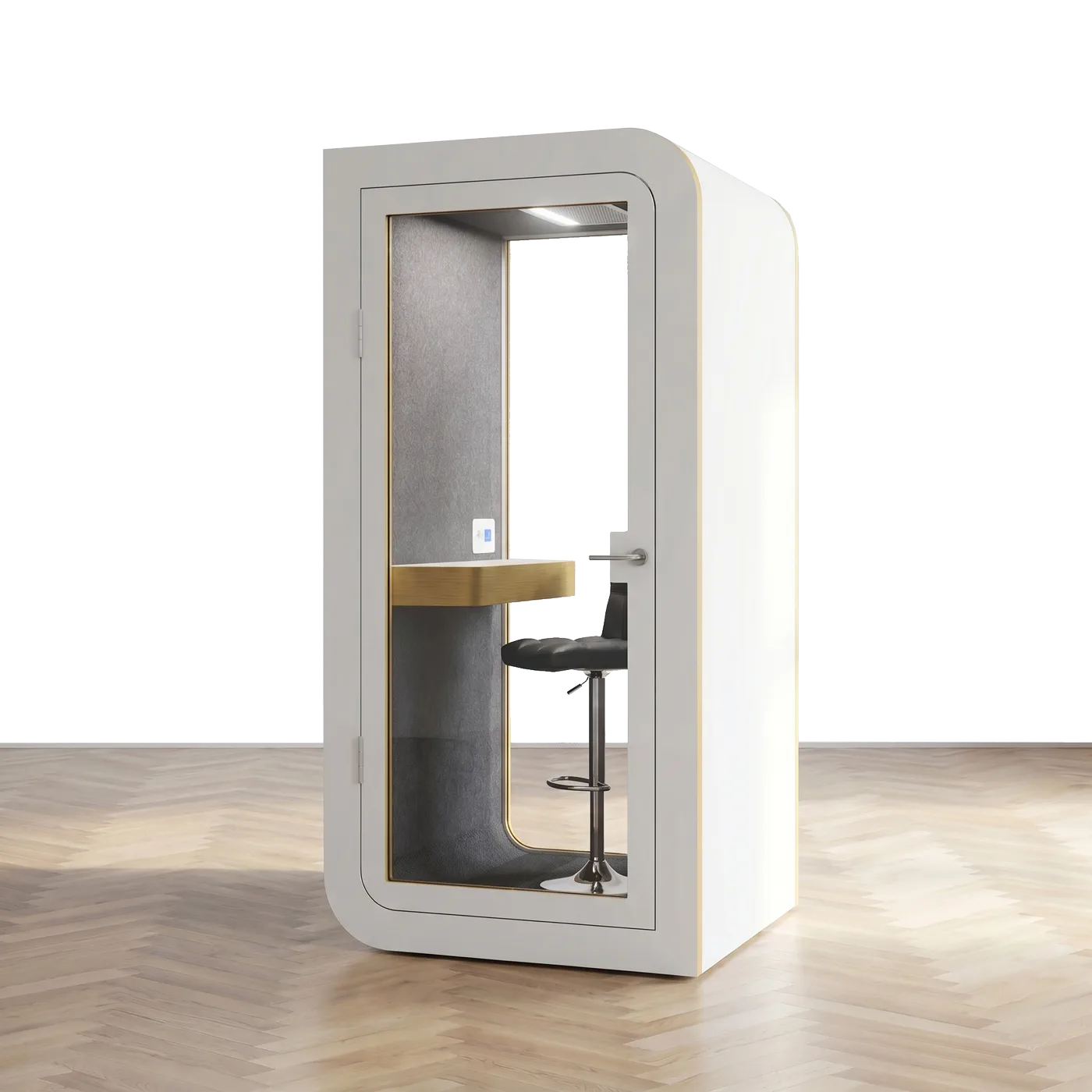
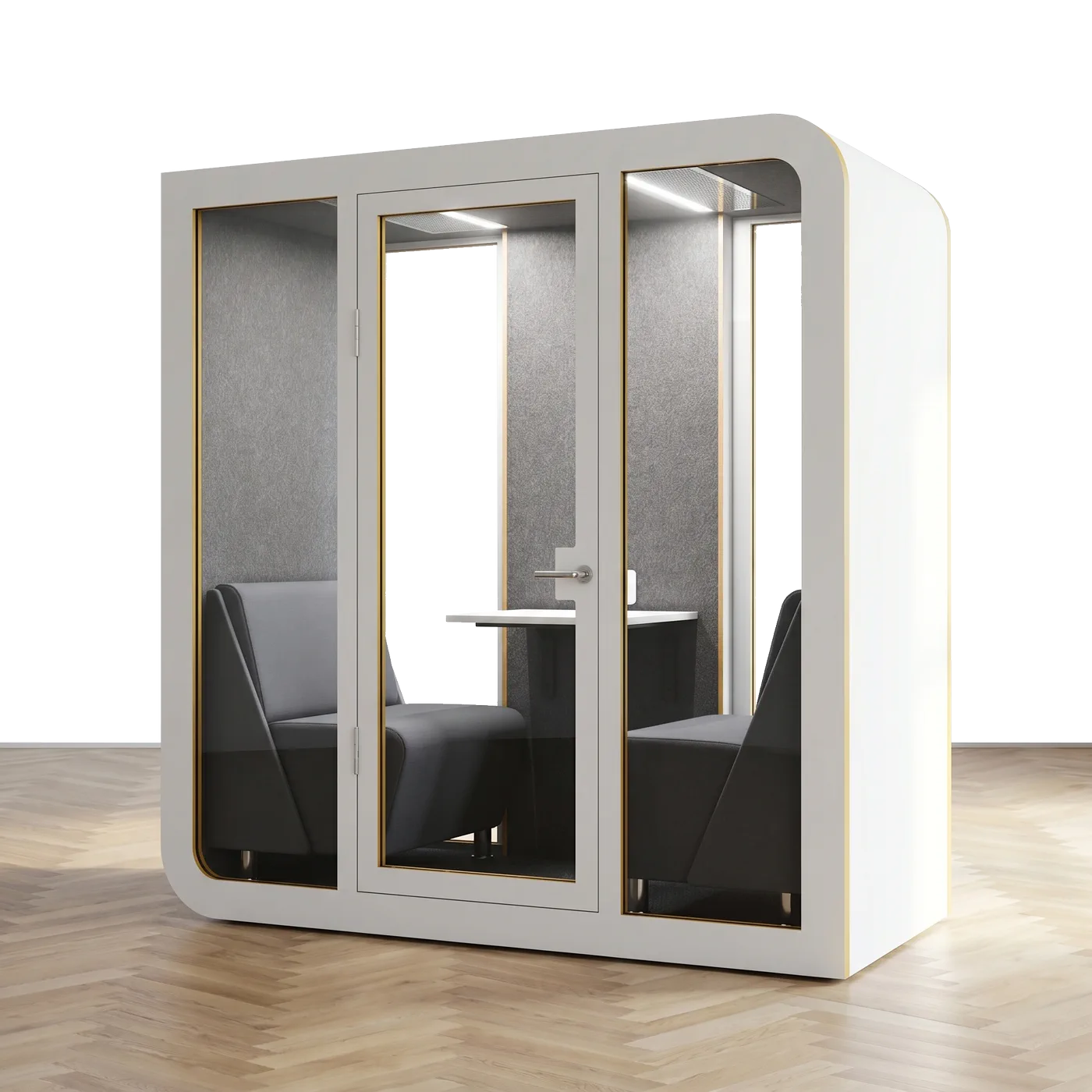
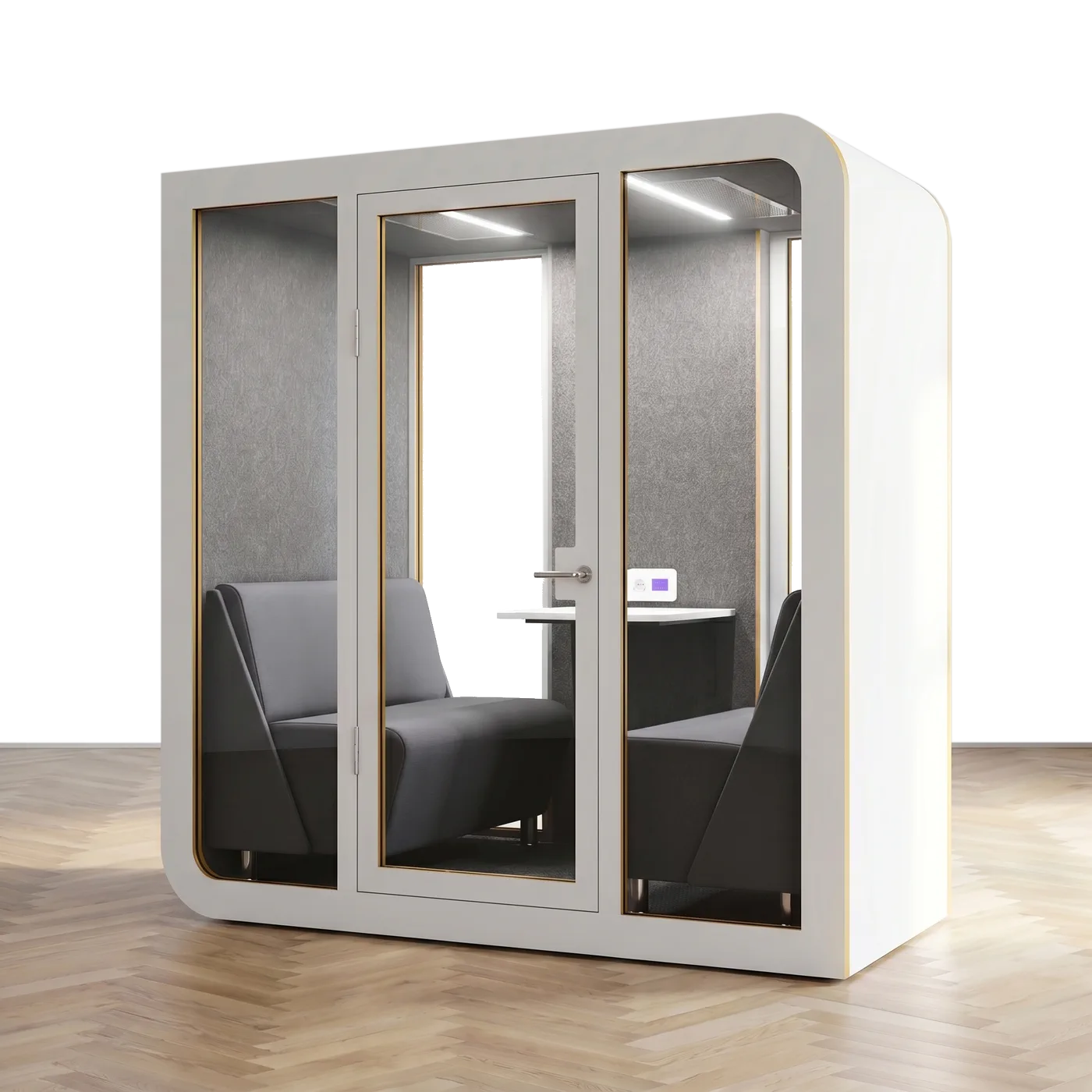
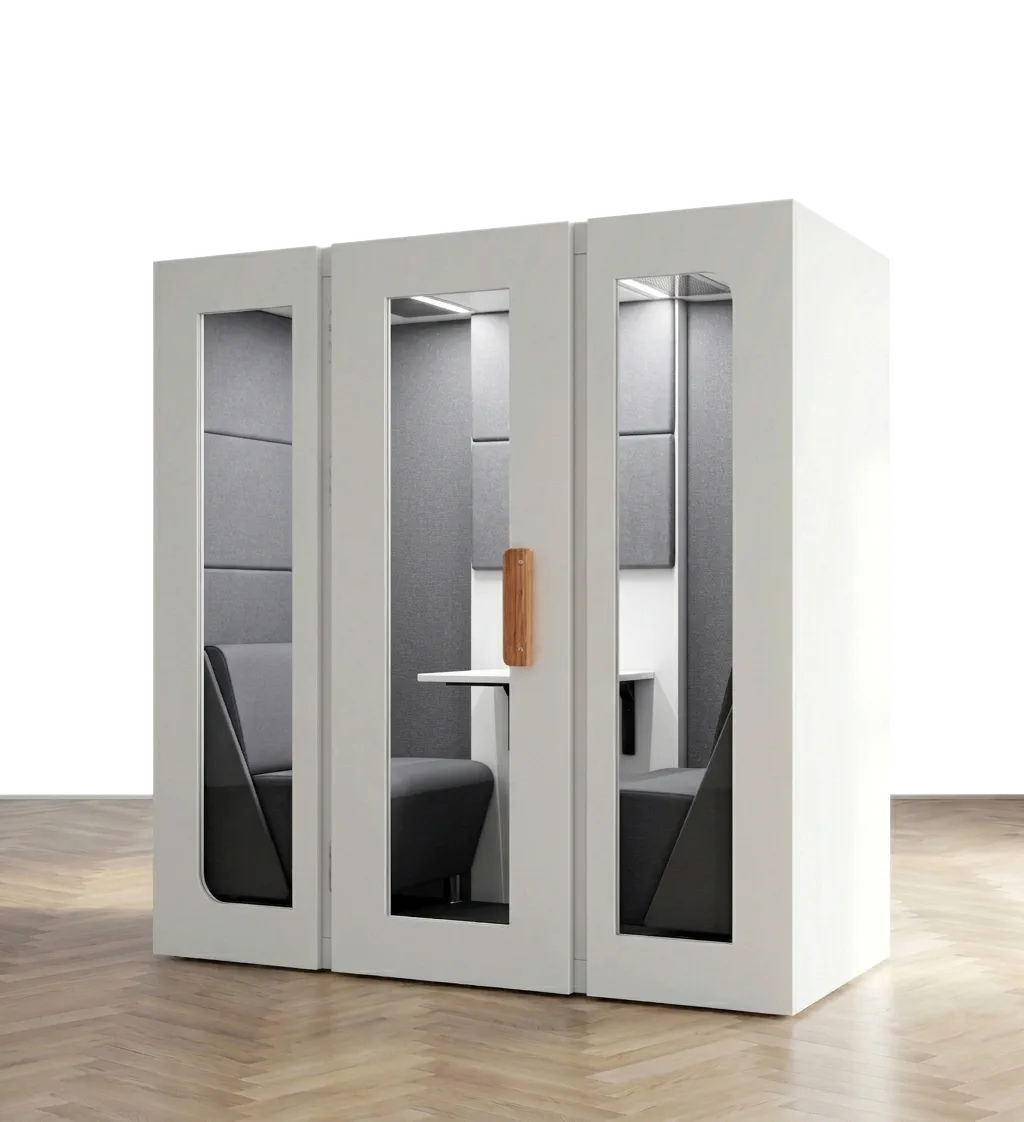
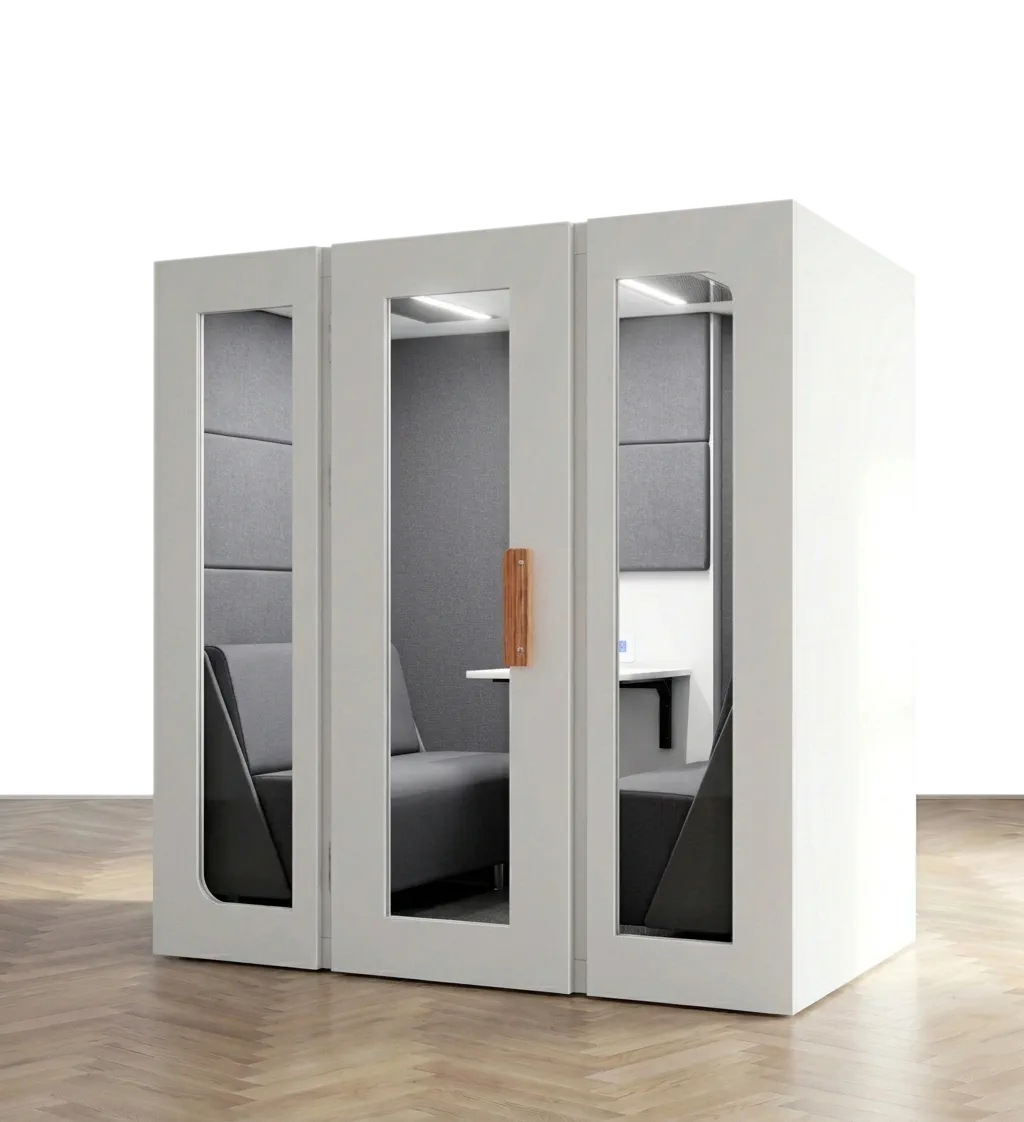
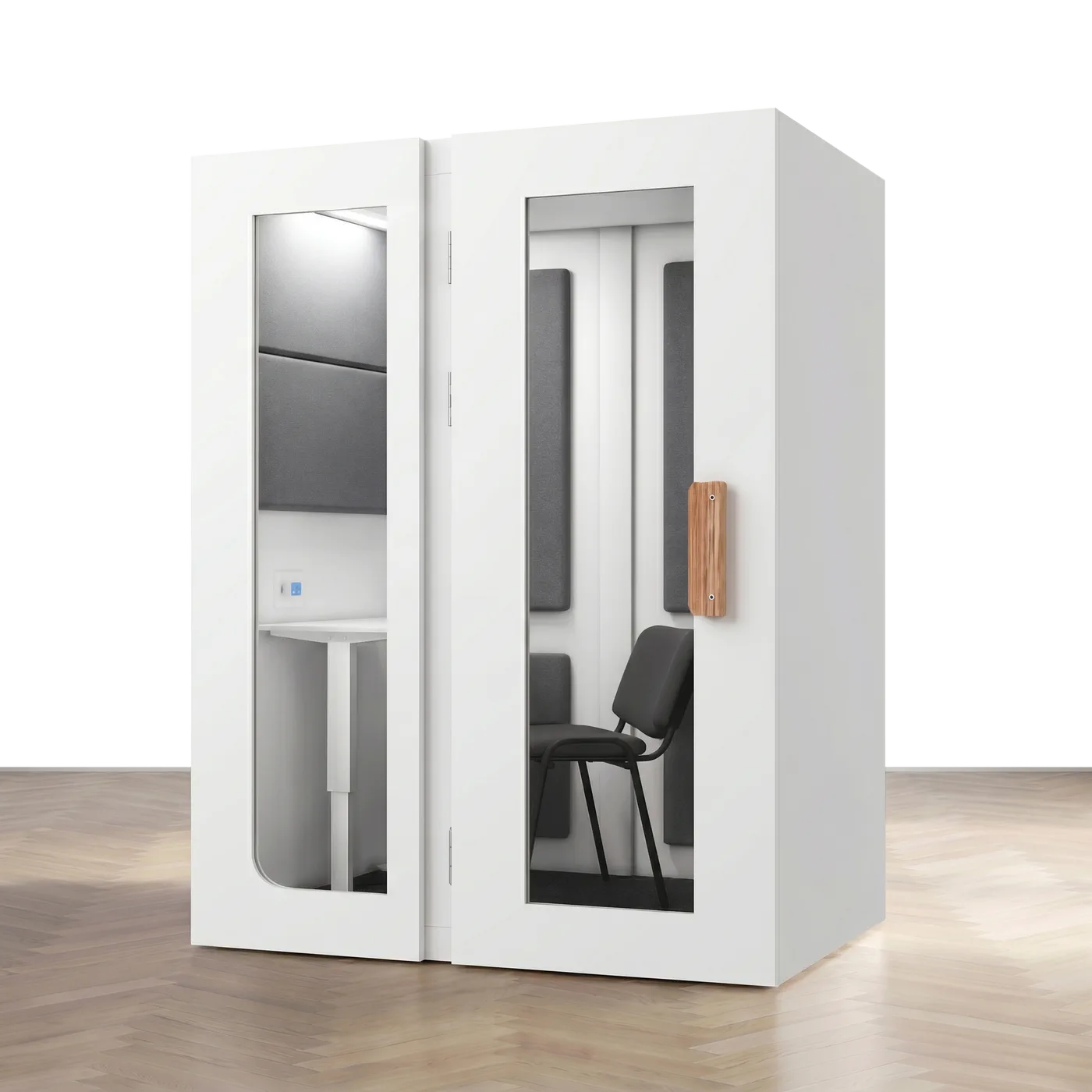
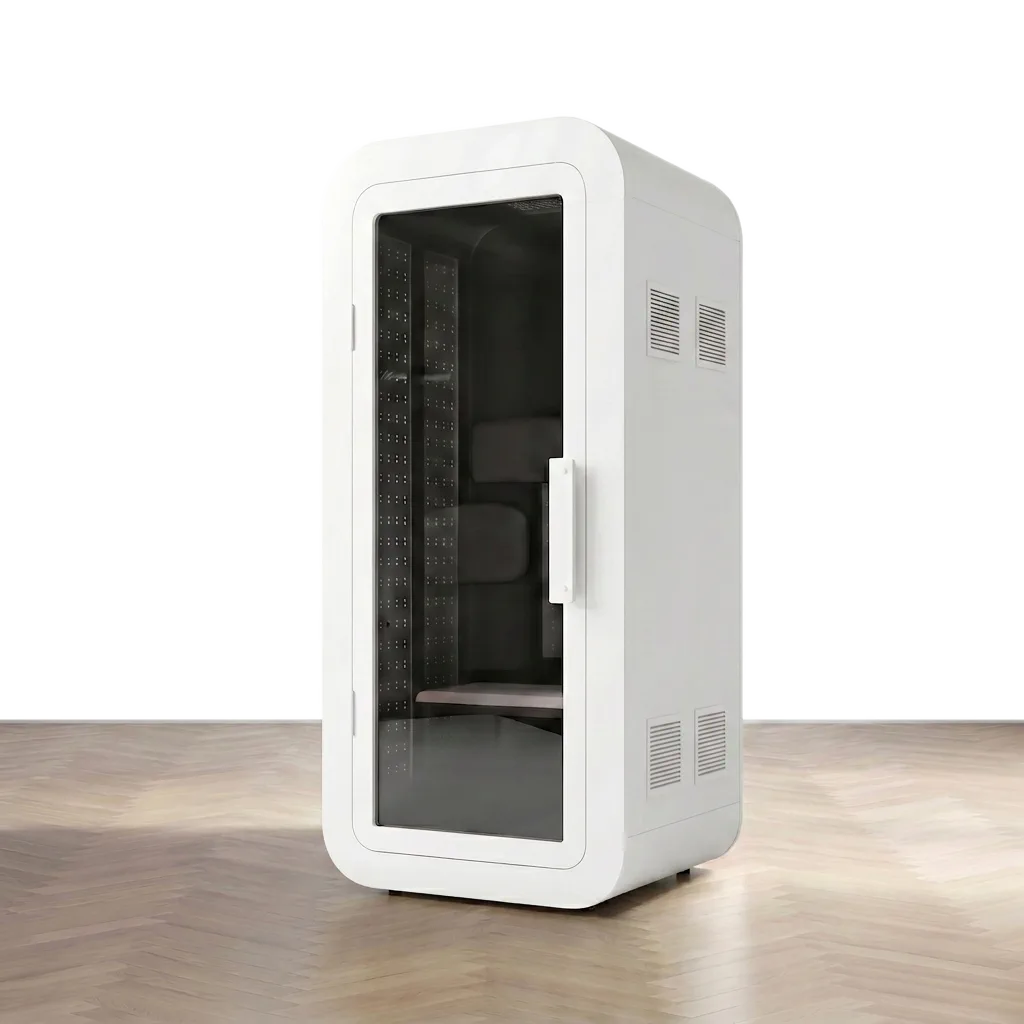
It depends on the scenario, not the floor area. For calls and short video meetings in the lobby or a coworking zone, a Solo is enough. For interviews, client meetings and conversations that must not leave the booth, you need a Duet. If the building lets small offices without their own meeting rooms, a Quartet covers a full team meeting.
- Solo — 1 person, 35 dB insulation (Premium): calls, focus sessions, video meetings in the lobby or coworking zone
- Duet — 2 people: interviews, client meetings, confidential conversations
- Quartet — 4 people: a full meeting room for tenants without one of their own
- Cloud connection is available for any model: app access, pay-per-hour, runs without staff
Where to start
The practical approach is this: count how many times a week tenants ask for a quiet room, and at which hours. Those two numbers determine both the number of booths and whether the Cloud model makes sense. Then pick the spot: a booth needs only a level floor and a socket. We will produce a 3D visualisation in your space and a quote including delivery, so the decision is made on your building's numbers.
Frequently asked questions
Do we need a permit to install a booth in an office building?
No. A booth is furniture, not a permanent structure: it is not fixed to the walls and does not interfere with the building's engineering systems, so no building permit or layout approval is required. You only need to agree the location with the property manager, as with any large piece of furniture.
Who pays for the booth — the operator or the tenant?
Both scenarios work. If the booth is part of the building's service offer, the operator buys it and the cost is included in the rent. If it runs on the Cloud model, the operator installs it and collects pay-per-hour revenue from users. A tenant can also buy a booth for their own floor and take it along when they move.
What happens to the booth when a tenant changes?
The booth stays and serves the next tenant — it is not part of a fit-out that has to be redone. If needed, it can be dismantled and moved to another floor; taking it apart takes roughly as long as installing it.
How many booths does a floor need?
The industry benchmark is one booth per 8–10 workstations and one team booth per 15–20. A more practical count starts from demand: how often tenants ask for a quiet room each week, and how many of those requests you turn down. That number is more accurate than a benchmark because it reflects your own tenant mix.
Could the booth itself become a source of noise?
The ventilation runs quieter than the office's background level, so the booth is not audible from inside or outside. Insulation is certified to ISO 11957 — 35 dB in Premium: a conversation cannot be understood one metre away from the booth.
Guides
Practical answers from the Silentbox blog