
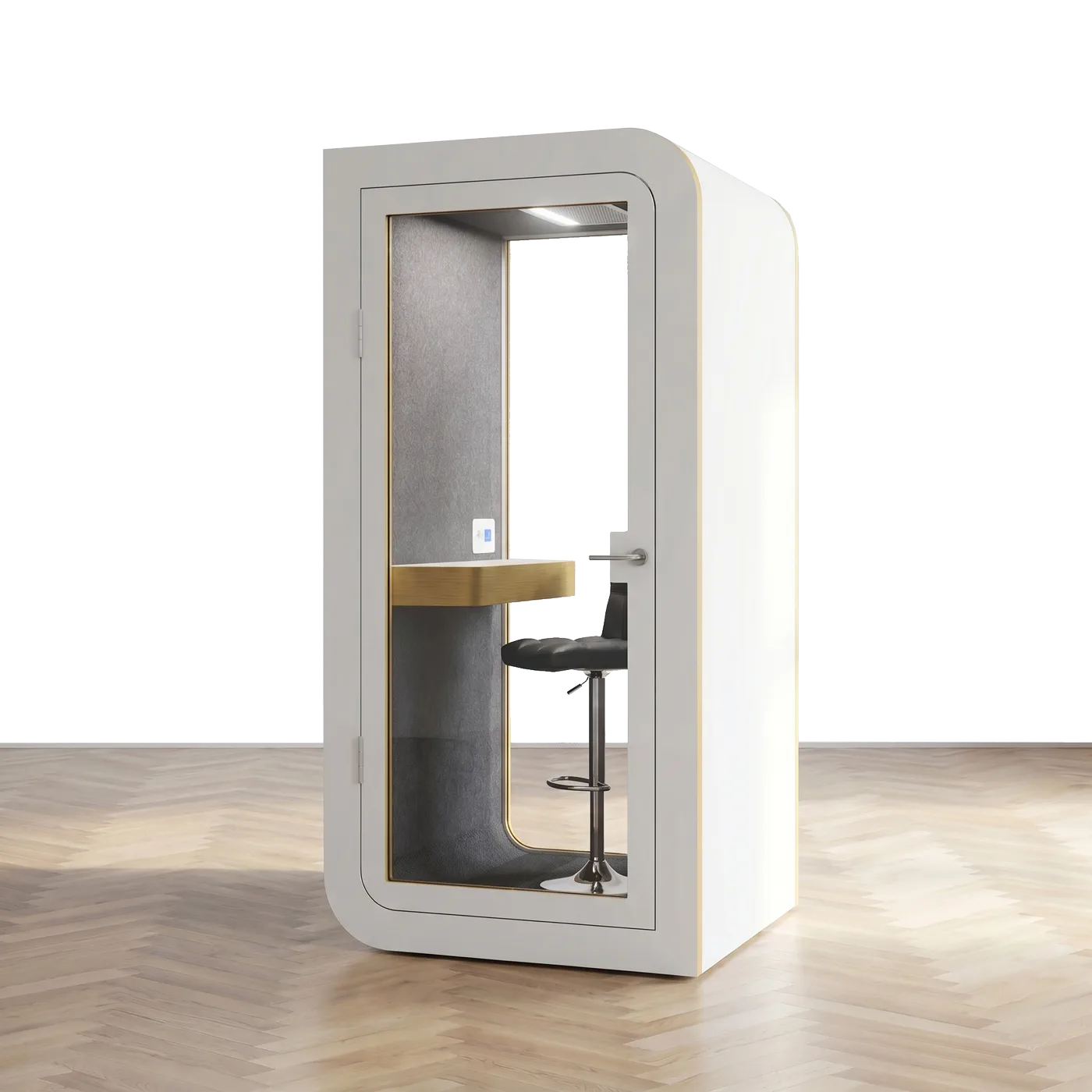
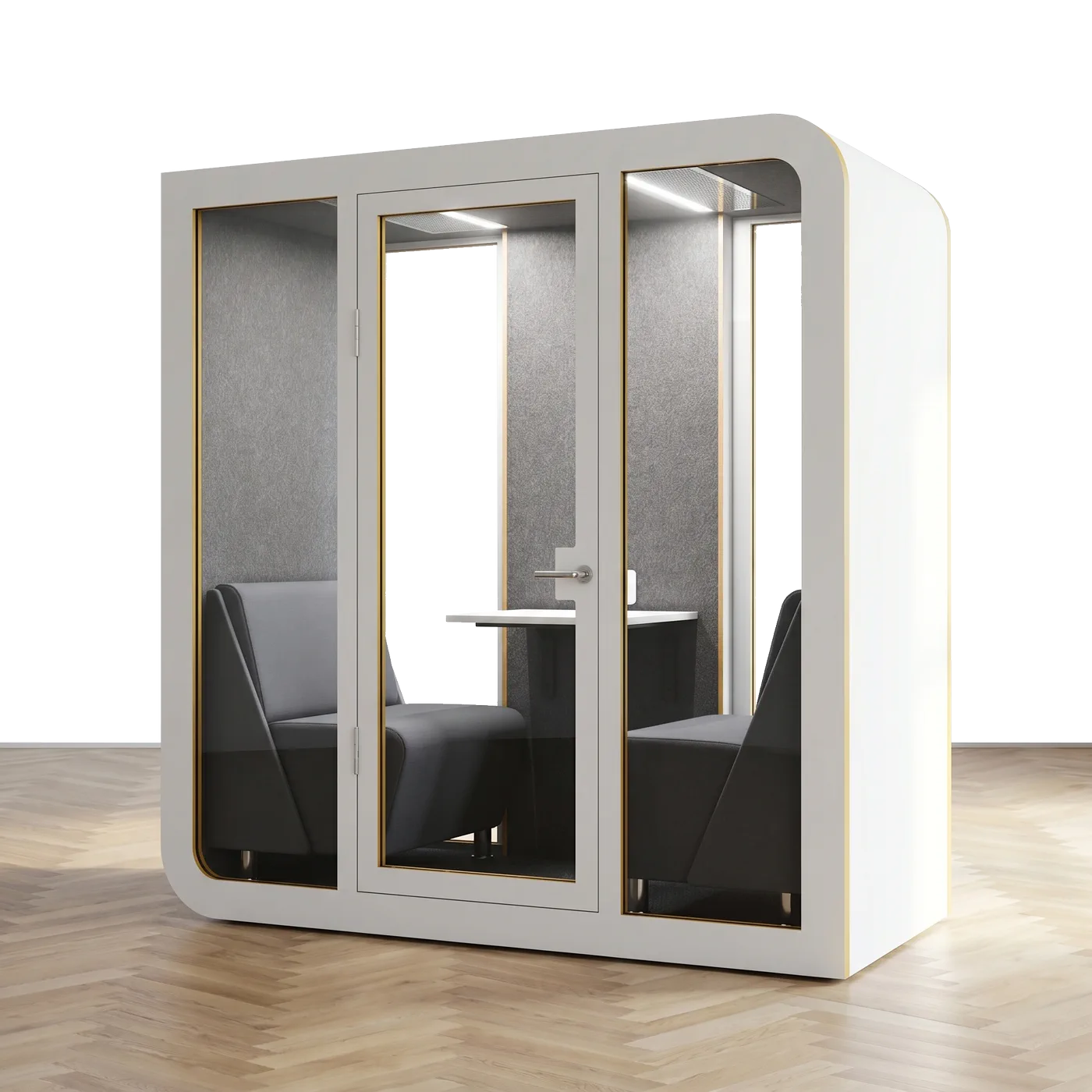
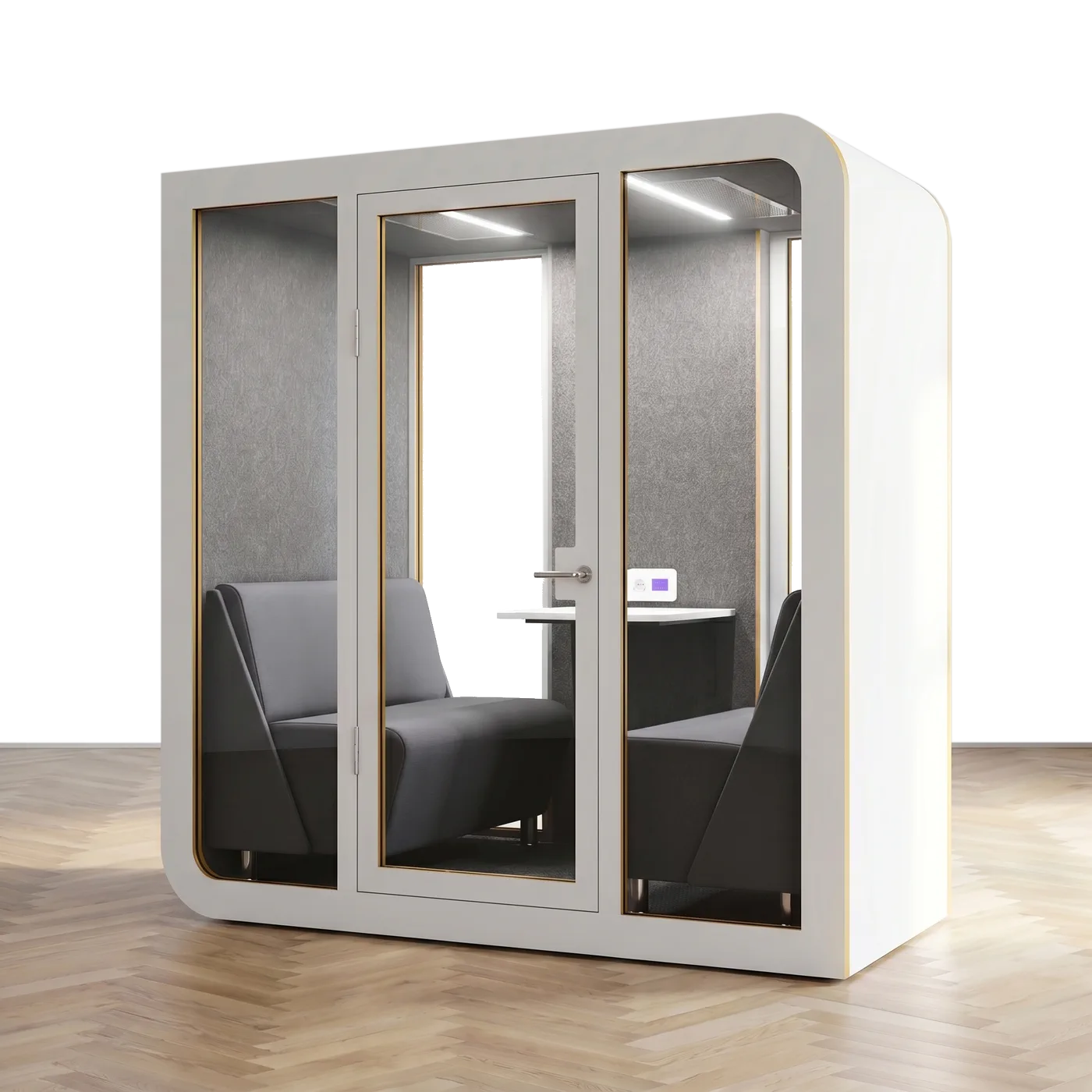
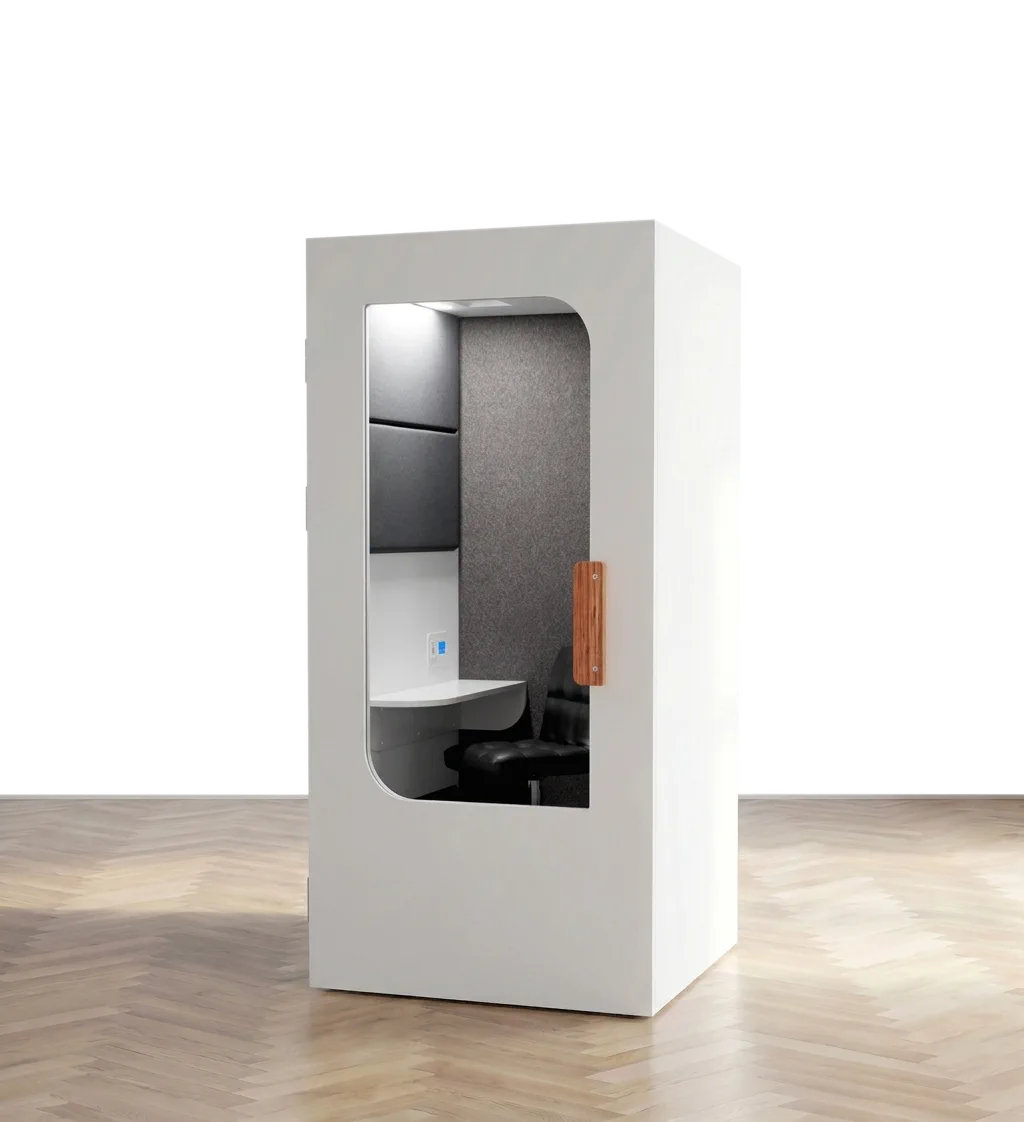
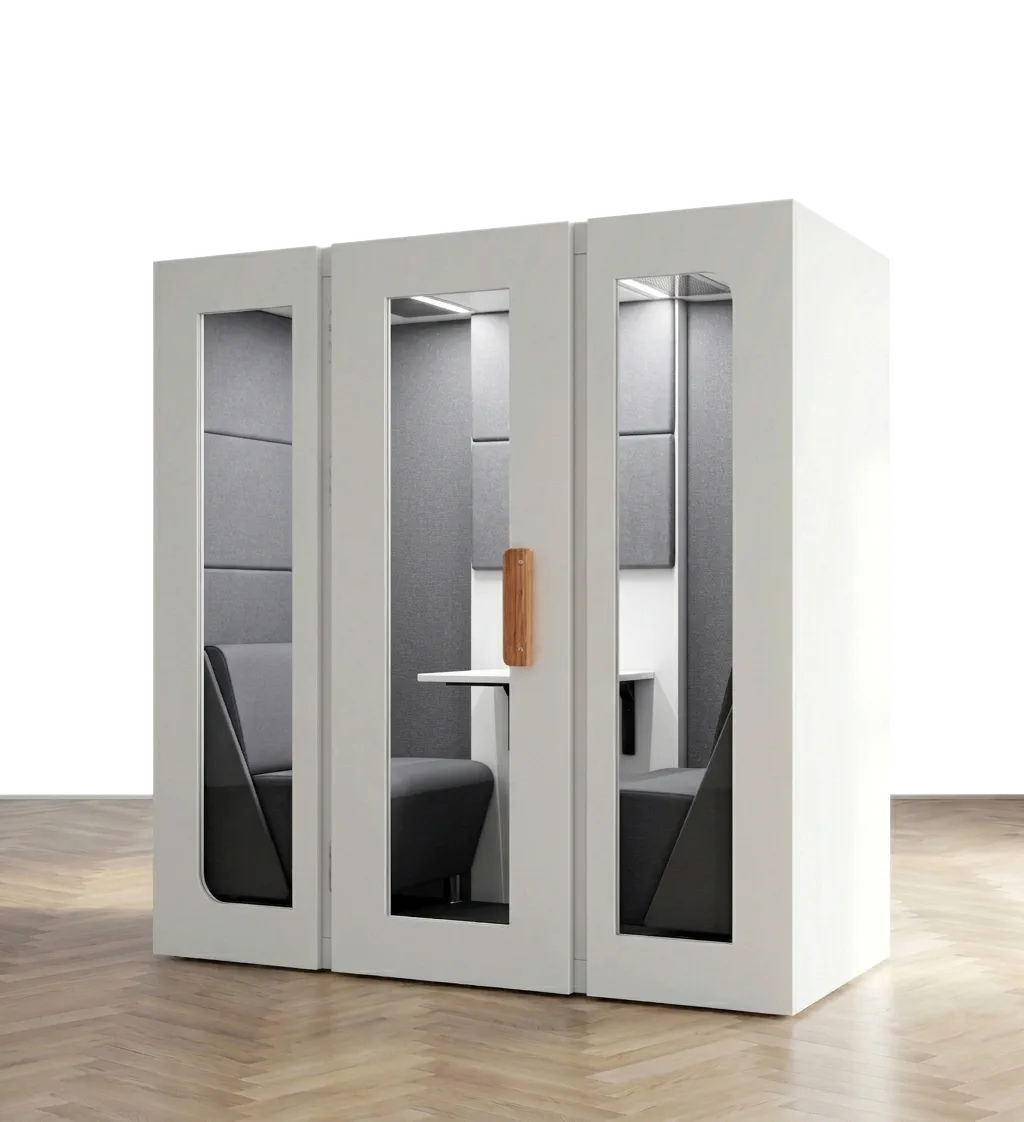
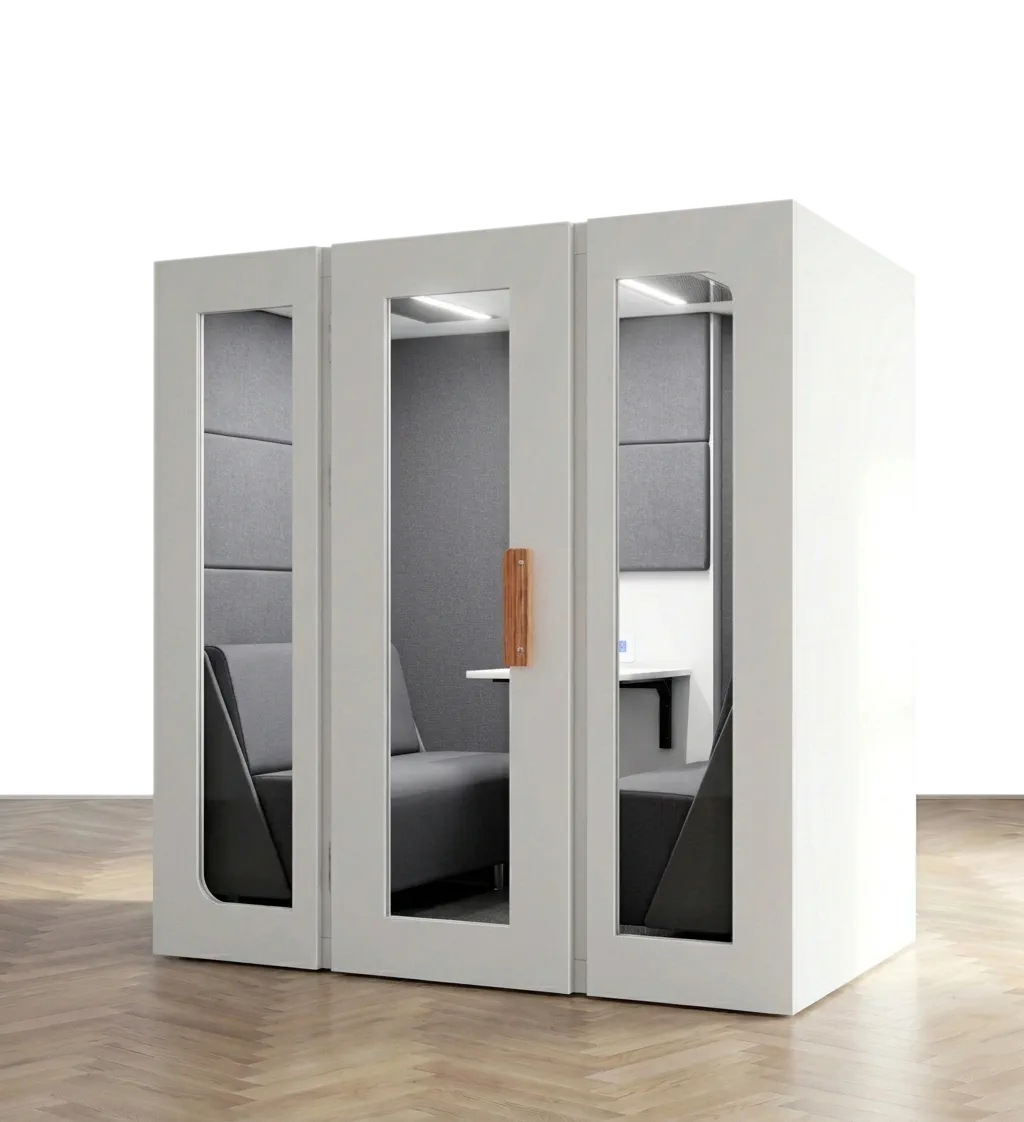
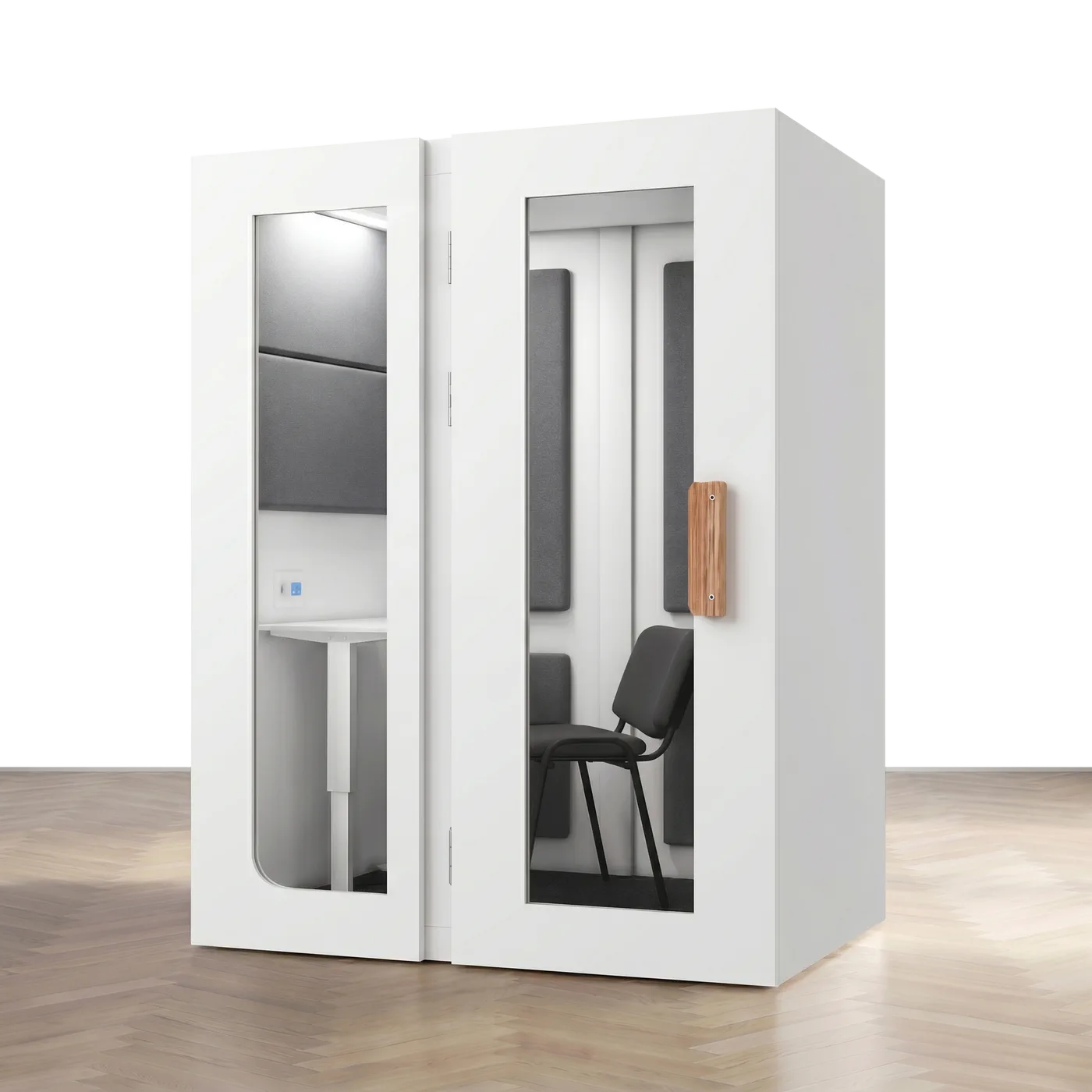
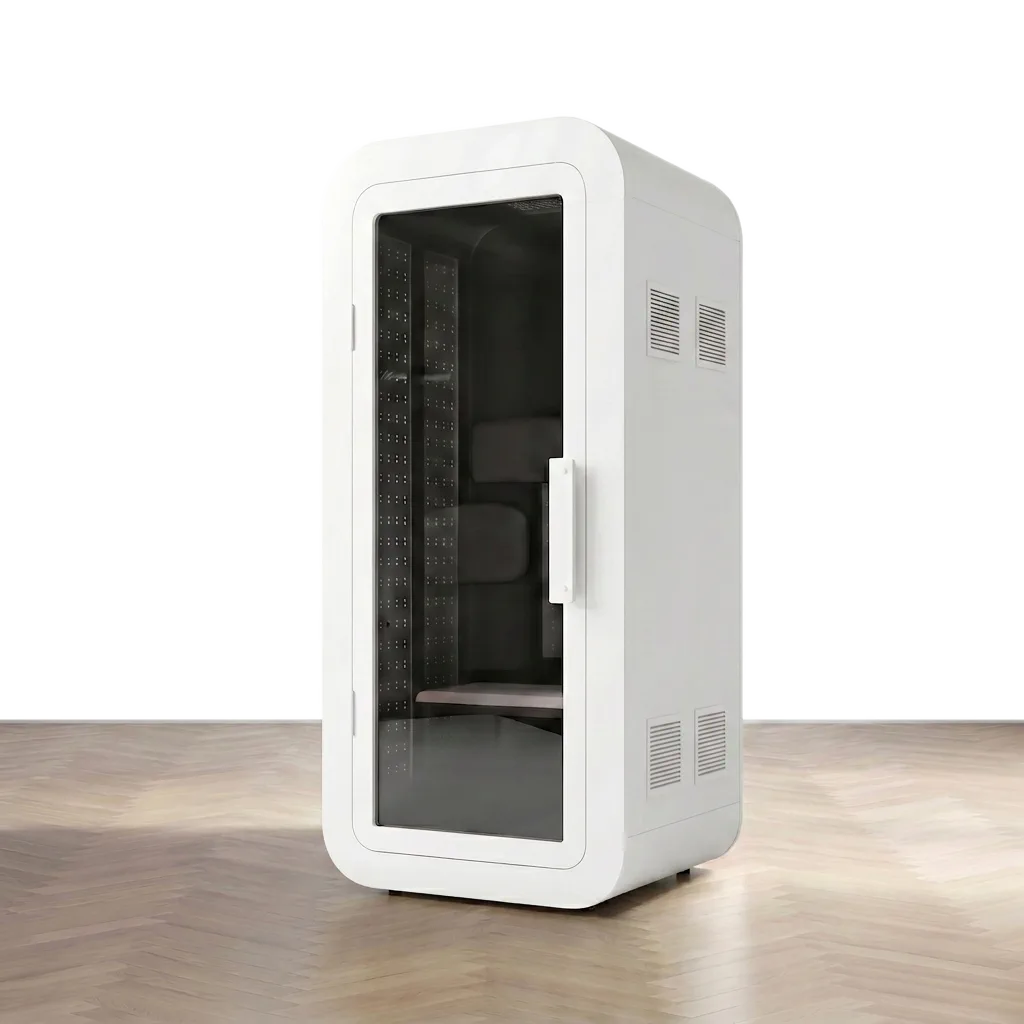
Real recordings
12 genuine scenarios from offices, homes and streets. No synthetic or studio-processed sound.
We recorded real office noise and recreated the isolation curve of Silentbox booths right in your browser. Pick a scenario, switch booths — and within seconds you'll hear exactly what 35 decibels of isolation buys you.
Pick a scenario, press Play — then step inside a booth to hear the same situation behind 35 dB of Silentbox Premium isolation.
For an accurate demo, listen with headphones.
The decibel scale is logarithmic: every 10 dB sounds roughly twice as loud. So "minus 35 dB" isn't a third of the noise — it's a completely different acoustic reality.
An open-plan office conversation is about 65 dB. Inside a Premium booth it sounds like roughly 30 dB — quieter than a library reading room.
A Silentbox wall is a multi-layer sandwich where each layer handles its own part of the spectrum: metal reflects, membranes dampen vibrations, and the air gap breaks the sound bridge.
A rigid aluminium frame with laminated-board panels reflects most of the sound energy.
A porous layer absorbs mid and high frequencies — exactly where human speech lives.
Breaks the mechanical bridge between layers: vibrations can't pass through directly.
A heavy layer that kills low frequencies and structural resonances.
The finishing acoustic layer evens out the sound inside the booth — no echo.
The wall works asymmetrically: high frequencies are damped almost entirely, low ones less so. That's why voices are the first thing to disappear.
12 genuine scenarios from offices, homes and streets. No synthetic or studio-processed sound.
A Web Audio algorithm reproduces the certified insulation curve: up to 35 dB for Premium and up to 25 dB for Lite.
Play the demo at a volume that suits you and judge the difference between «before» and «after».
For the most accurate impression, use headphones or listen in a quiet room.
We use real noise recordings and filters tuned to the isolation curve measured to ISO 11957. The exact sound depends on your headphones and room, but the scale of the difference is exactly what you hear in the demo.
Sound insulation reduces the noise level — it doesn't turn sound off. A 65 dB conversation sounds like roughly 30 dB inside a Premium booth: quieter than a library. That's more than enough for focused work or a call.
The Premium series has a five-layer wall and ~35 dB isolation — a conversation outside is practically inaudible. Lite is a lighter build with ~25 dB isolation at a noticeably lower price. You can compare both series by ear right in the demo.
Yes. Book a demo — we'll show you the booths live, let you measure the noise level with your own phone and compare the models side by side.