
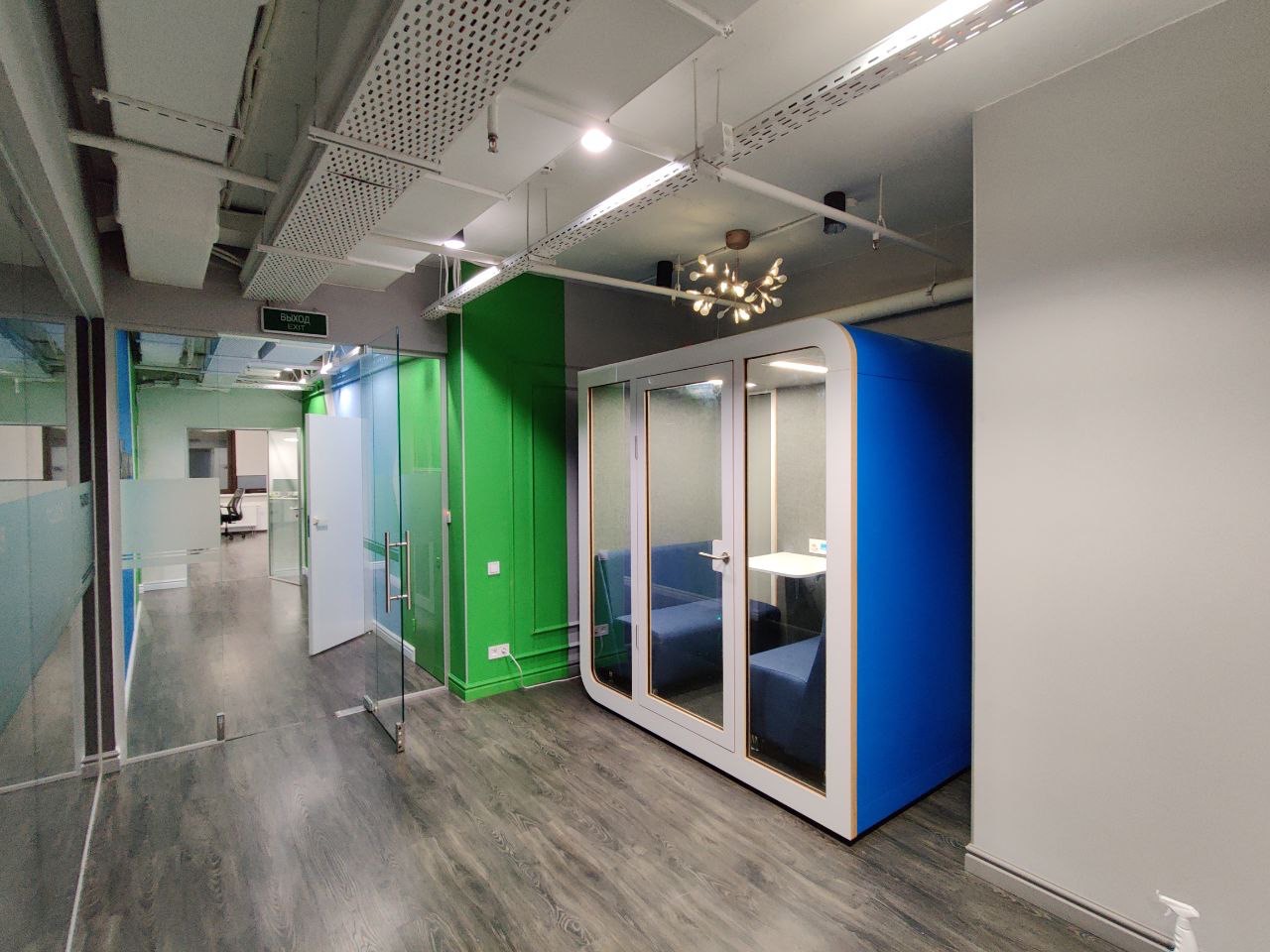
Competition for skilled people is no longer decided on salary alone. Benefits and career paths matter, but so does something more immediate: what the office feels like to work in for eight hours. A well-designed workplace has become a strategic asset in recruitment and retention — and acoustic comfort is one of the clearest signals a candidate reads. Here is what a modern office needs, and why booths keep appearing on the list.
A calm environment is a productive one
The central problem in a modern open space is noise: colleagues in conversation, traffic outside, notifications from every direction. It undermines concentration directly, and it wears people down over time. Anyone who has worked in a loud office knows within ten minutes of a tour whether they would be able to think in yours.
The scale of the effect is significant. 30% of open-plan workers say the layout hurts their productivity, against 11% in private offices (Savills, 2019) — which puts acoustic conditions on a par with the tooling and processes companies invest in far more readily.
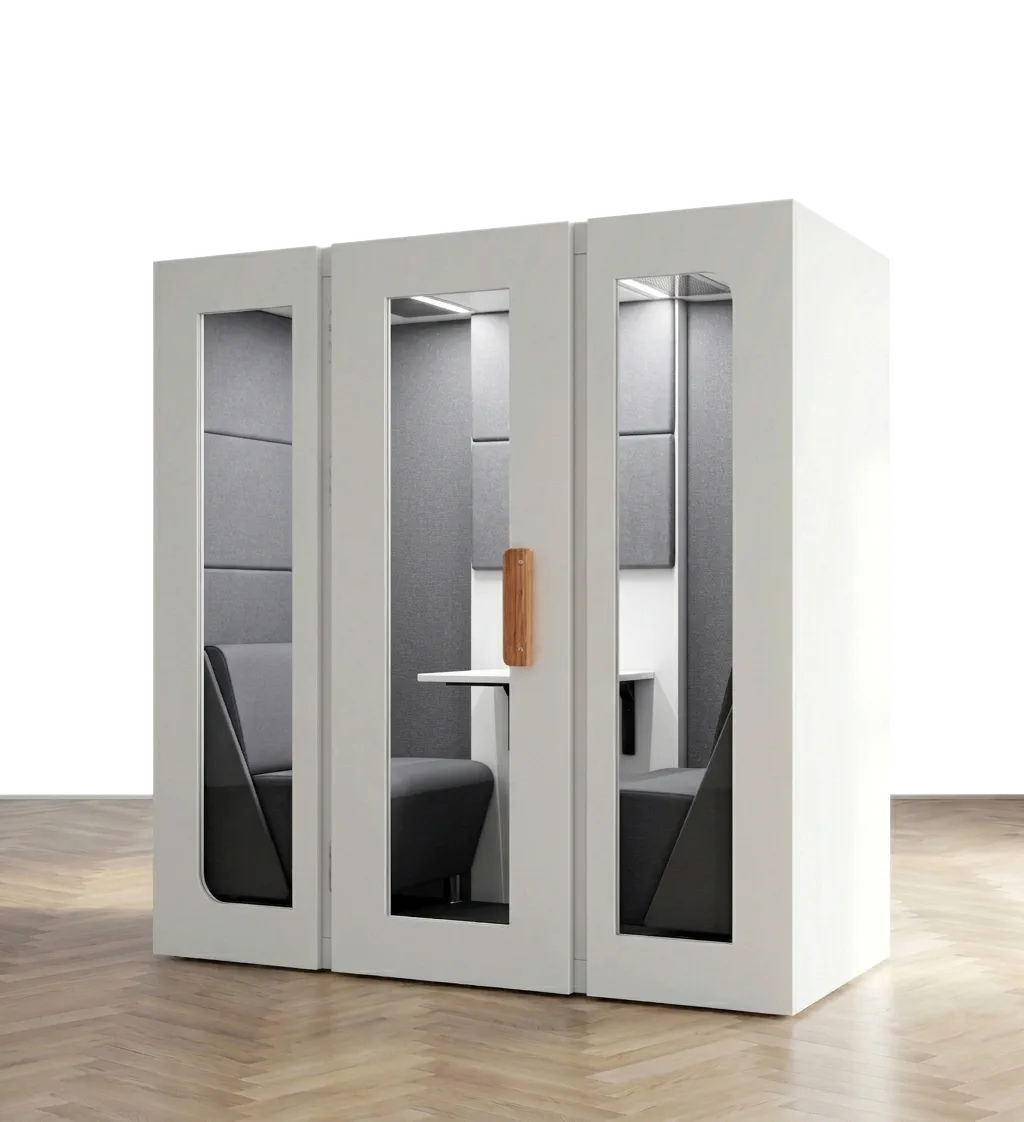
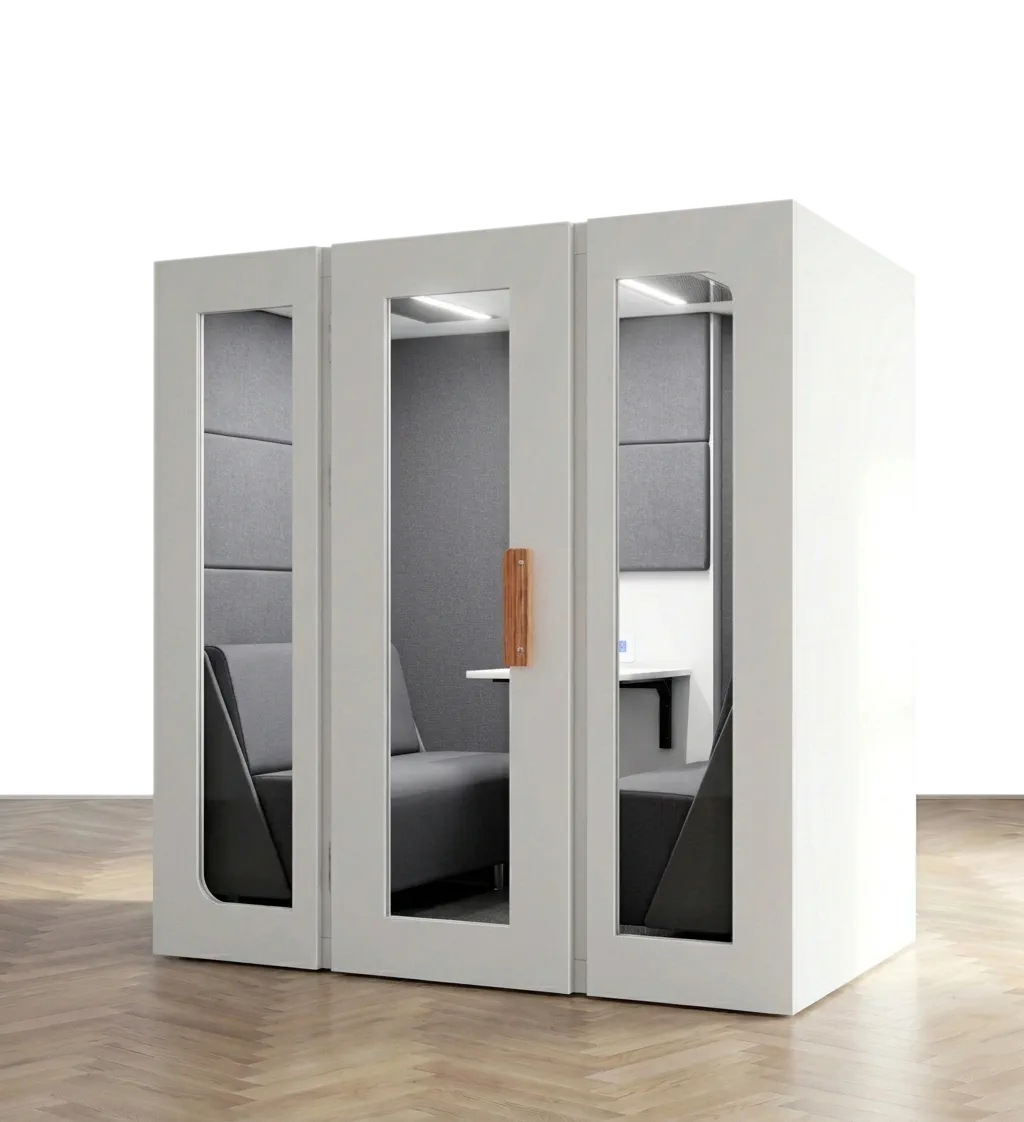
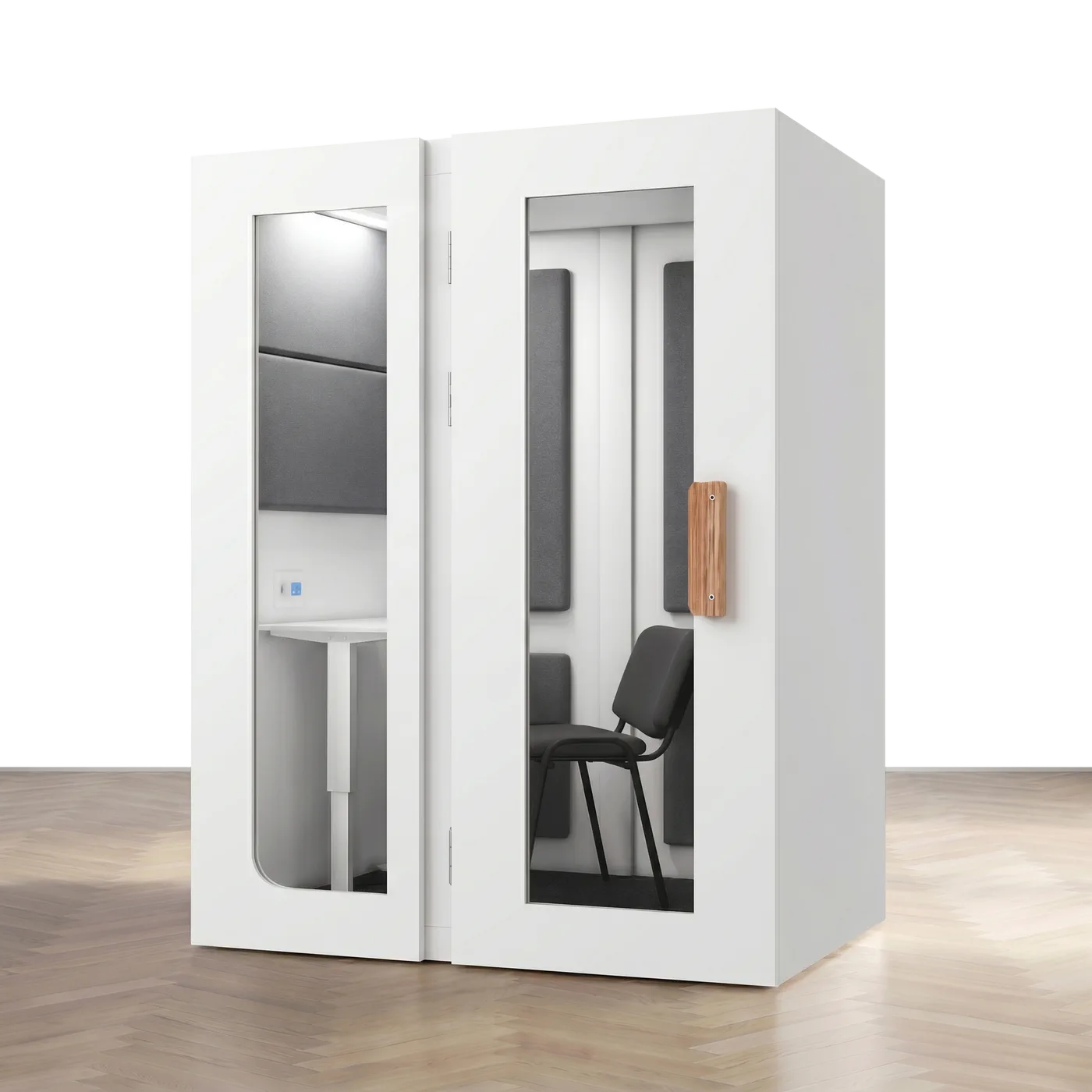
Acoustic booths address this at the level it needs addressing. They give employees somewhere genuinely isolated to work, which improves both output and day-to-day wellbeing, and they provide the privacy that confidential calls and strategic discussions require.
Why an office phone booth has become standard
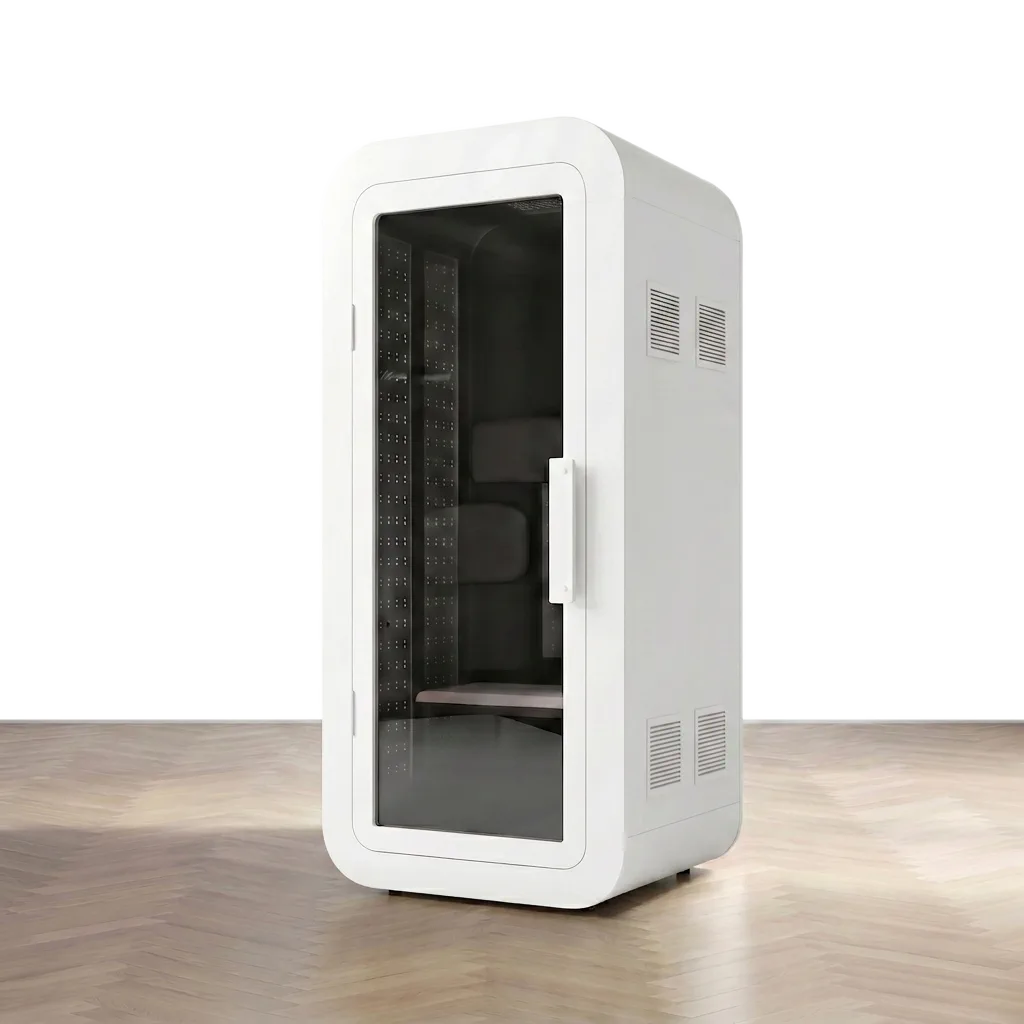
With hybrid work now the default, a large share of every day is spent on video calls. A booth for calls is no longer a nice extra — it is the difference between a call that sounds professional and one where the client hears your entire sales floor. It also protects everyone else: one person taking a call in an enclosed space is one fewer voice in the open plan.
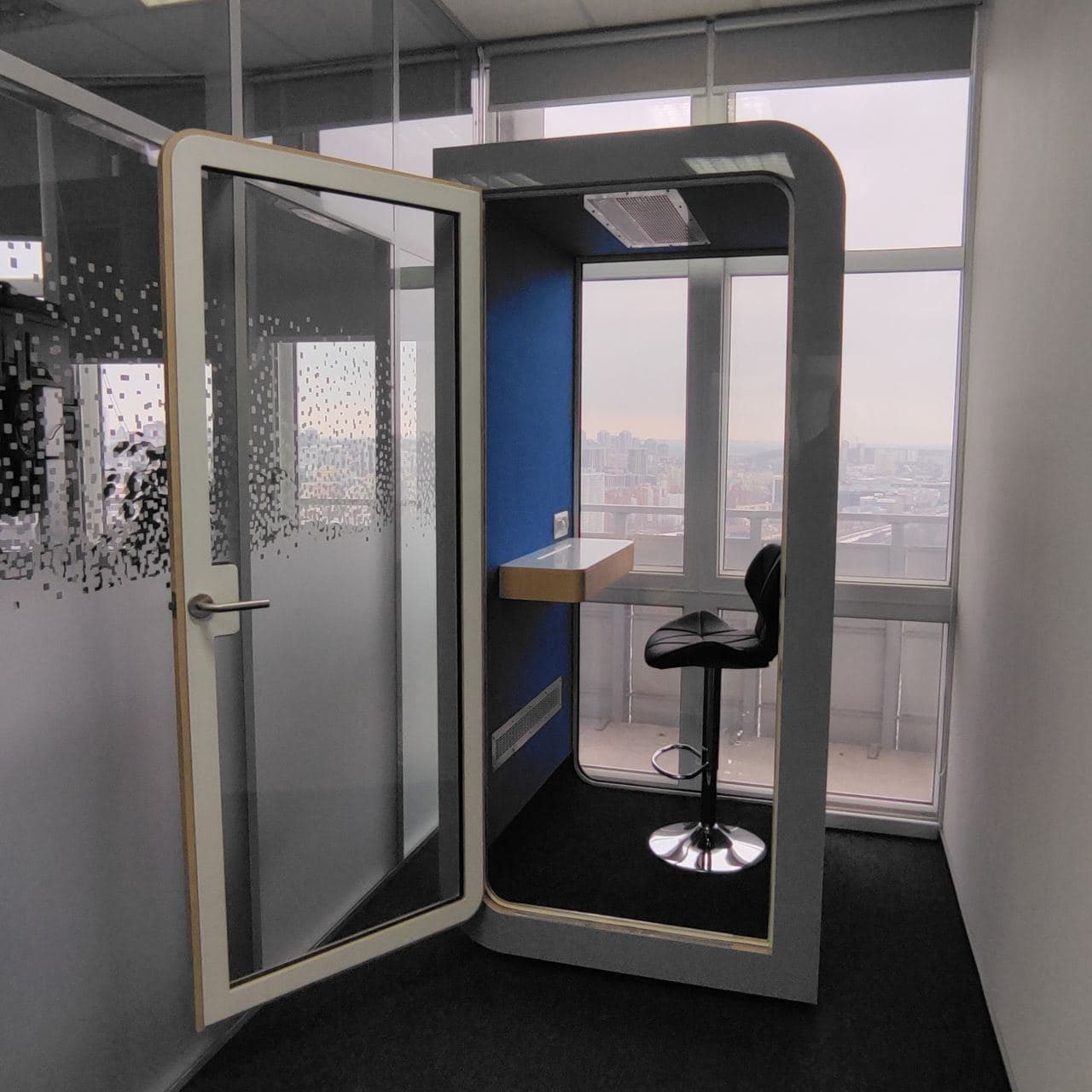
What booths give a business
- Better productivity: a quiet space makes complex, uninterrupted work possible and reduces mistakes
- Less stress: constant noise is exhausting, and a booth offers a place to step out of it
- Real confidentiality: sensitive calls, negotiations and interviews stay private
- More comfort: proper ventilation and lighting make an hour inside genuinely workable
How this affects recruitment
Candidates today are assessing more than the offer. They want to know whether the environment supports the work they are being hired to do — and whether the company has thought about it. An office with proper acoustic solutions communicates something specific: that the employer treats working conditions as a real consideration rather than an afterthought.
This weighs particularly heavily with younger professionals, who tend to expect flexibility and a workplace designed around how people actually work. It also improves retention: the reasons people quietly start looking elsewhere are often environmental rather than dramatic.
Booths as part of the office design, not an afterthought
Acoustic booths have moved from emergency purchase to considered element of office furniture. They pair naturally with acoustic panels, desk screens and soft treatments to form a coherent approach to sound across a floor — some surfaces absorbing reverberation, booths providing genuine isolation where it is needed.
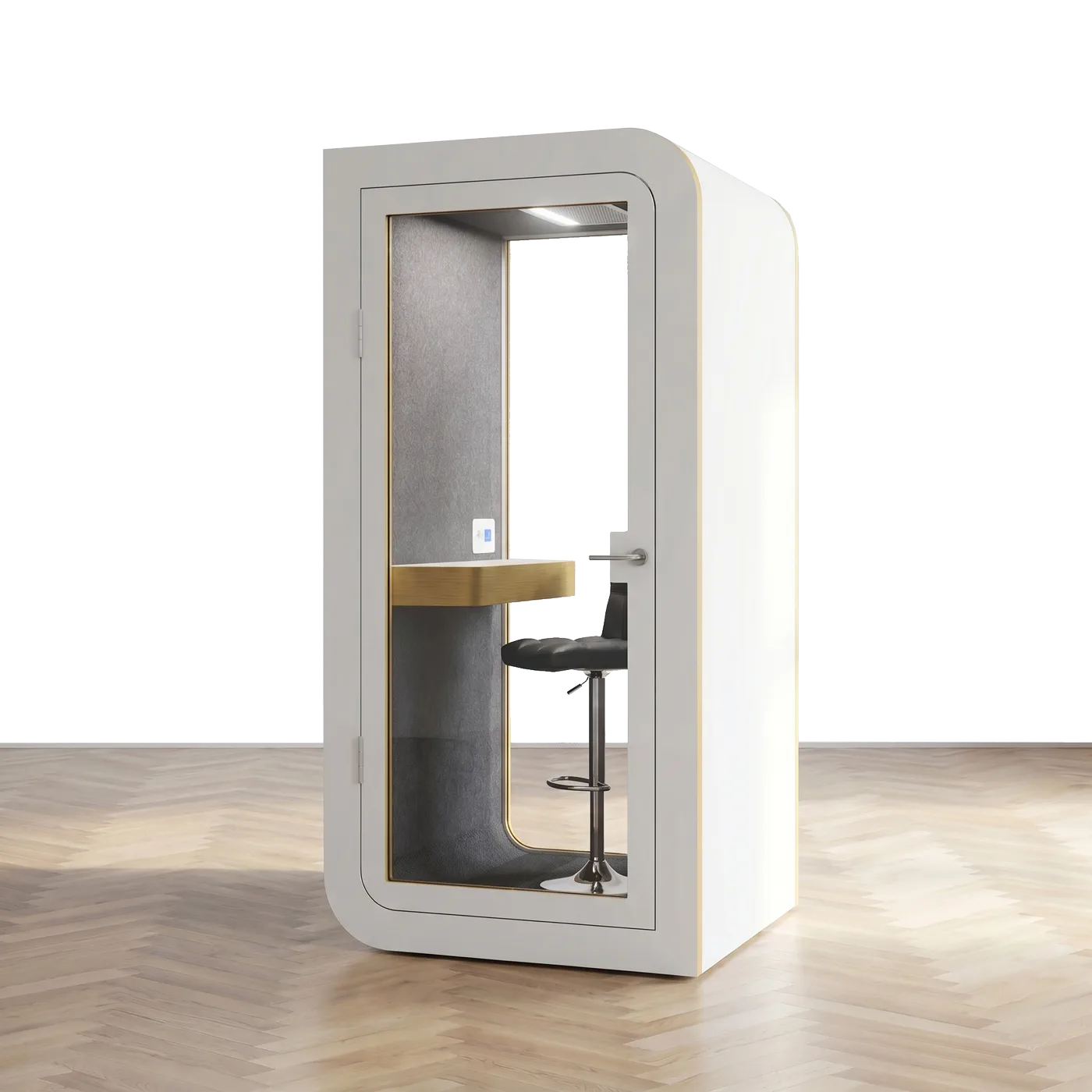
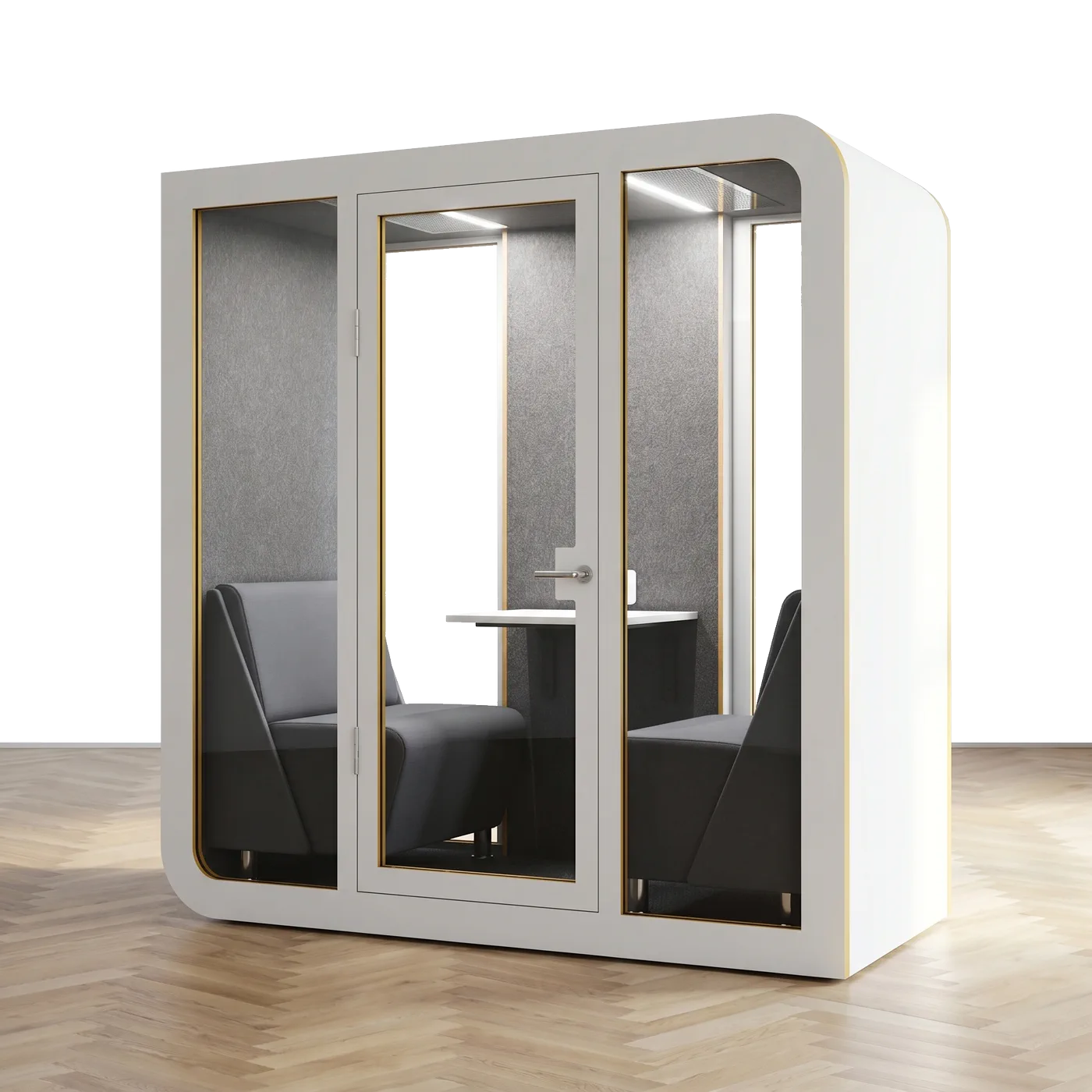
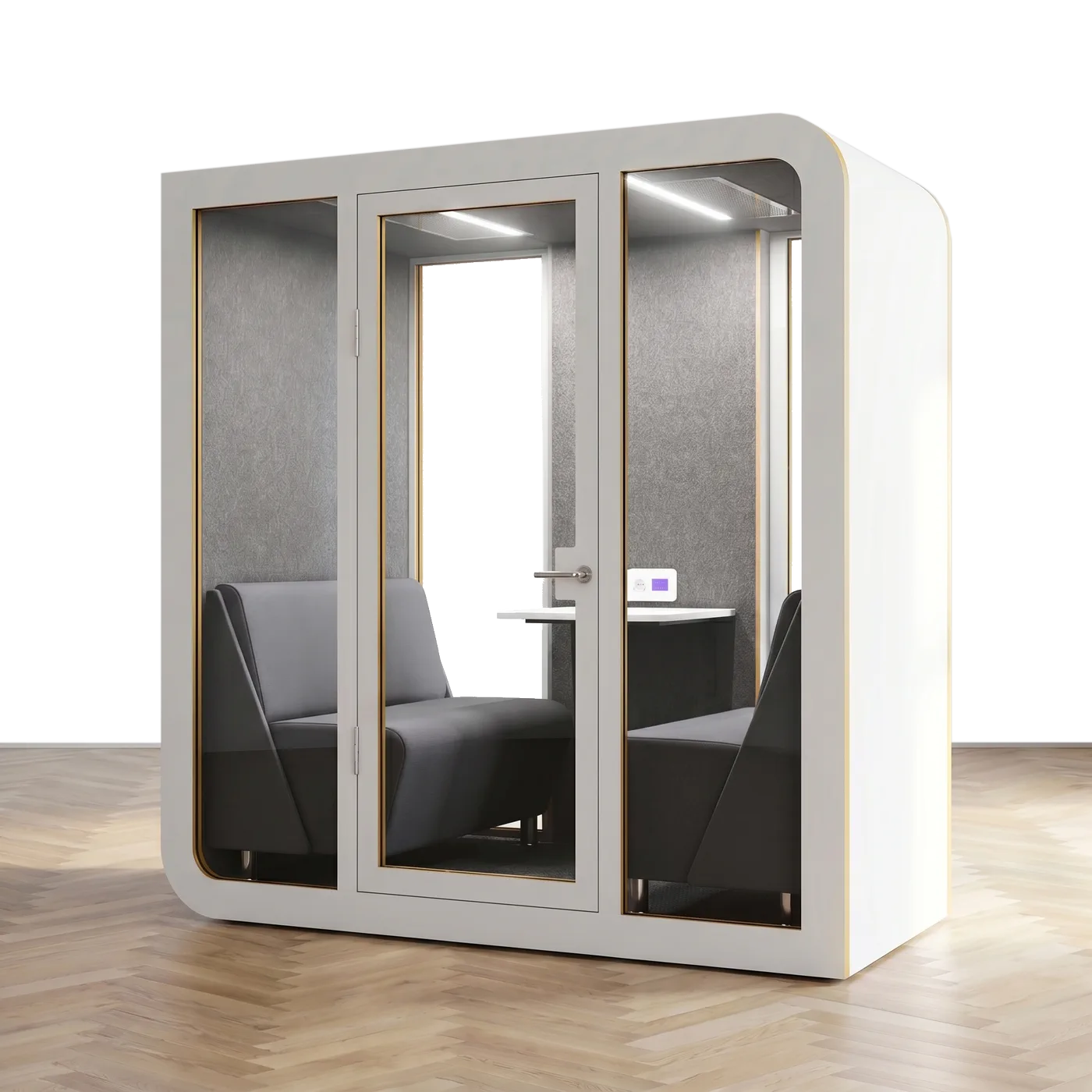
Handled well, a booth is also a visual asset. A row of Solos along a wall reads as intentional design; a Duet placed beside a meeting area anchors that zone. Investing in soundproof booths improves both how the office functions and how it presents.
In closing
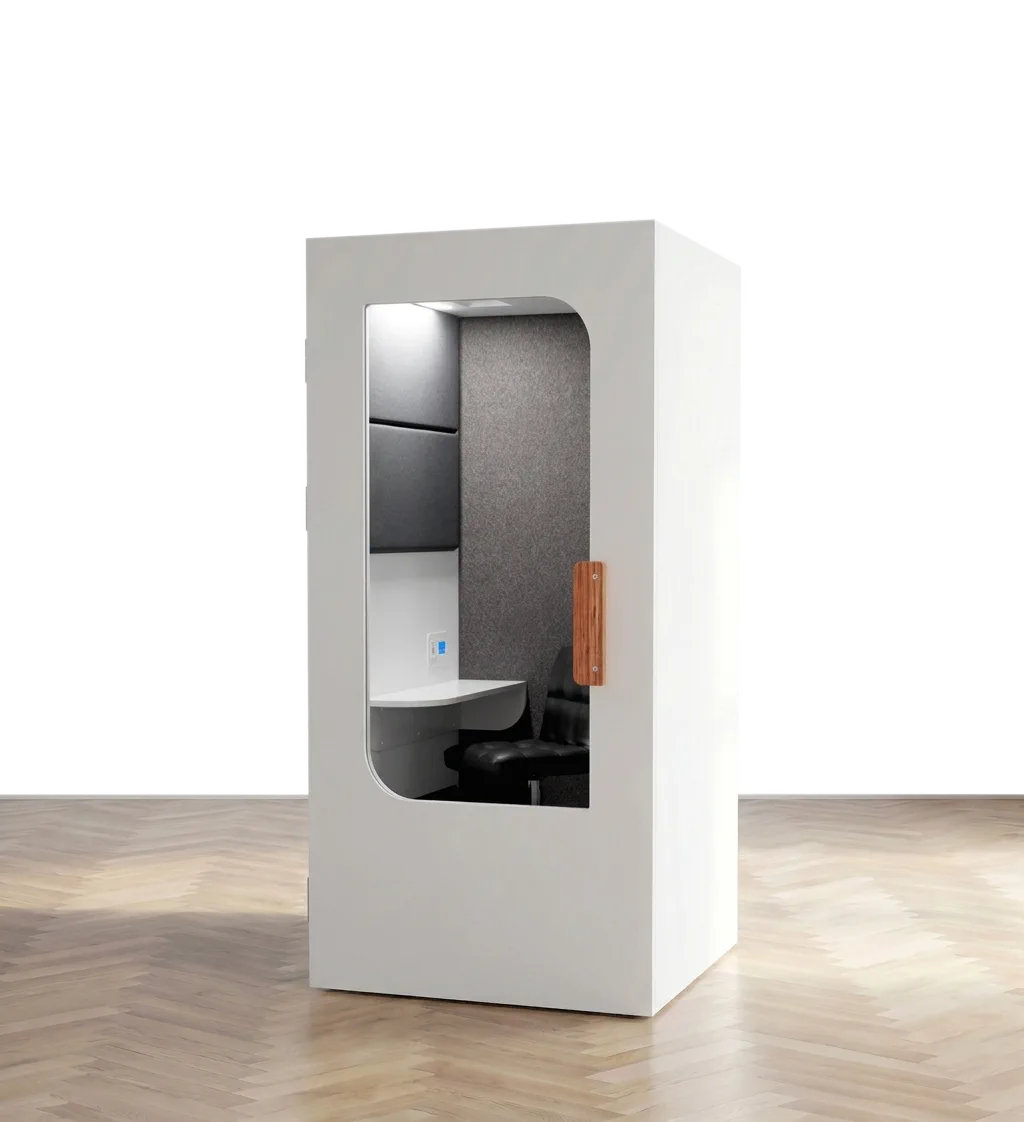
As competition for good people intensifies, a workplace that is pleasant to spend a day in stops being optional. Acoustic booths, phone booths and sound insulation are practical investments in a calm, functional, modern office — and they show employees that their conditions were thought about. The Silentbox range covers Solo, Duet, Quartet and WorkPod, with up to 35 dB of noise reduction in the Premium series; it is worth seeing which format fits your floor.