
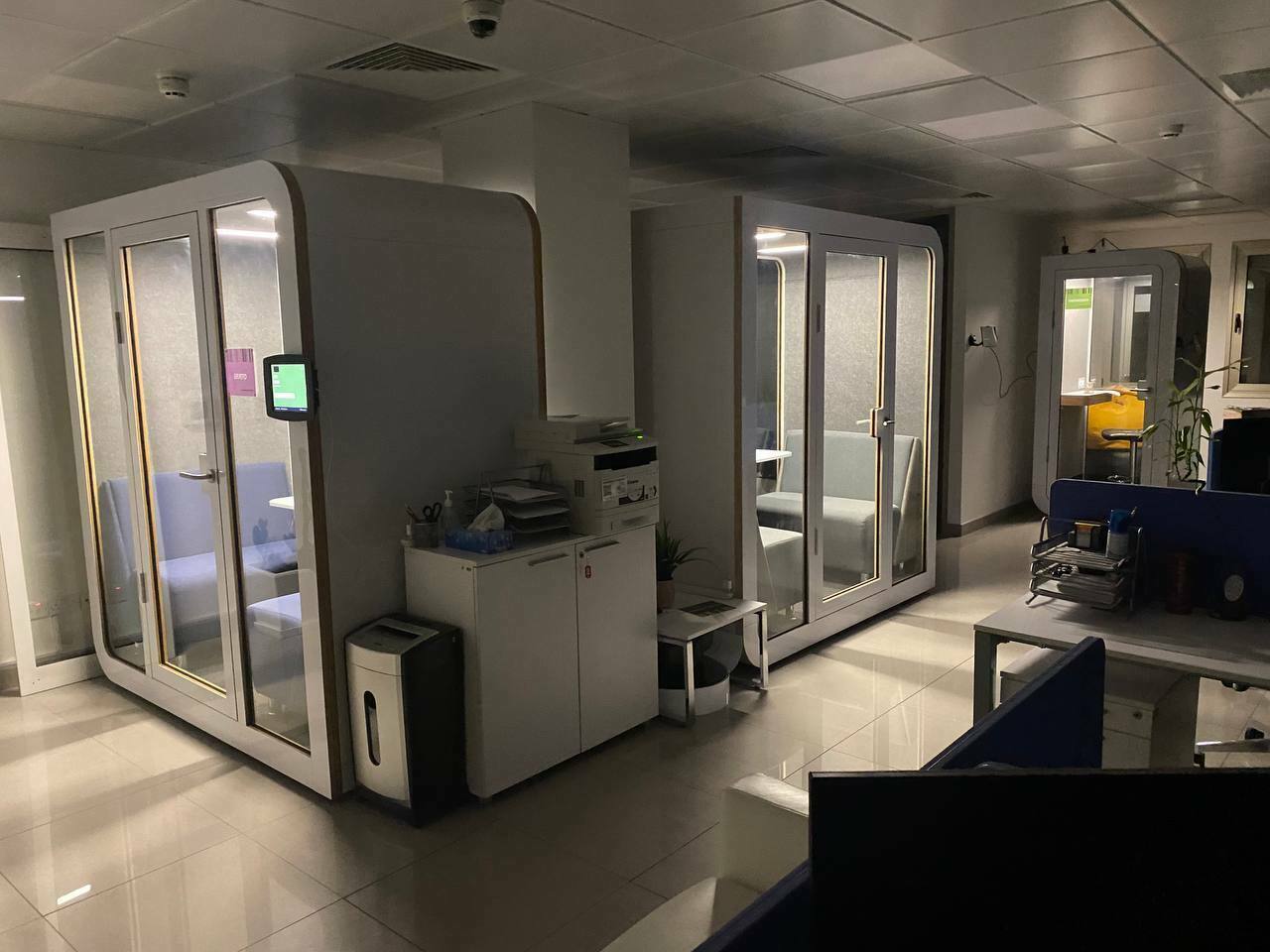
When output drops, the first instinct is usually to look at people: motivation, discipline, tooling. More often the cause sits in the room itself. Below are five conditions common to almost every open space, what each one costs, and how acoustic booths and phone booths remove them without reorganising the team.
1. Constant background noise
Conversations, ringing phones, the clatter of keyboards — individually harmless, collectively corrosive. Human speech is the hardest sound to ignore because the brain processes it whether or not we are listening.
- Concentration drops and stays down for minutes after each distraction
- Background stress builds through the day
- Errors slip through because attention was elsewhere
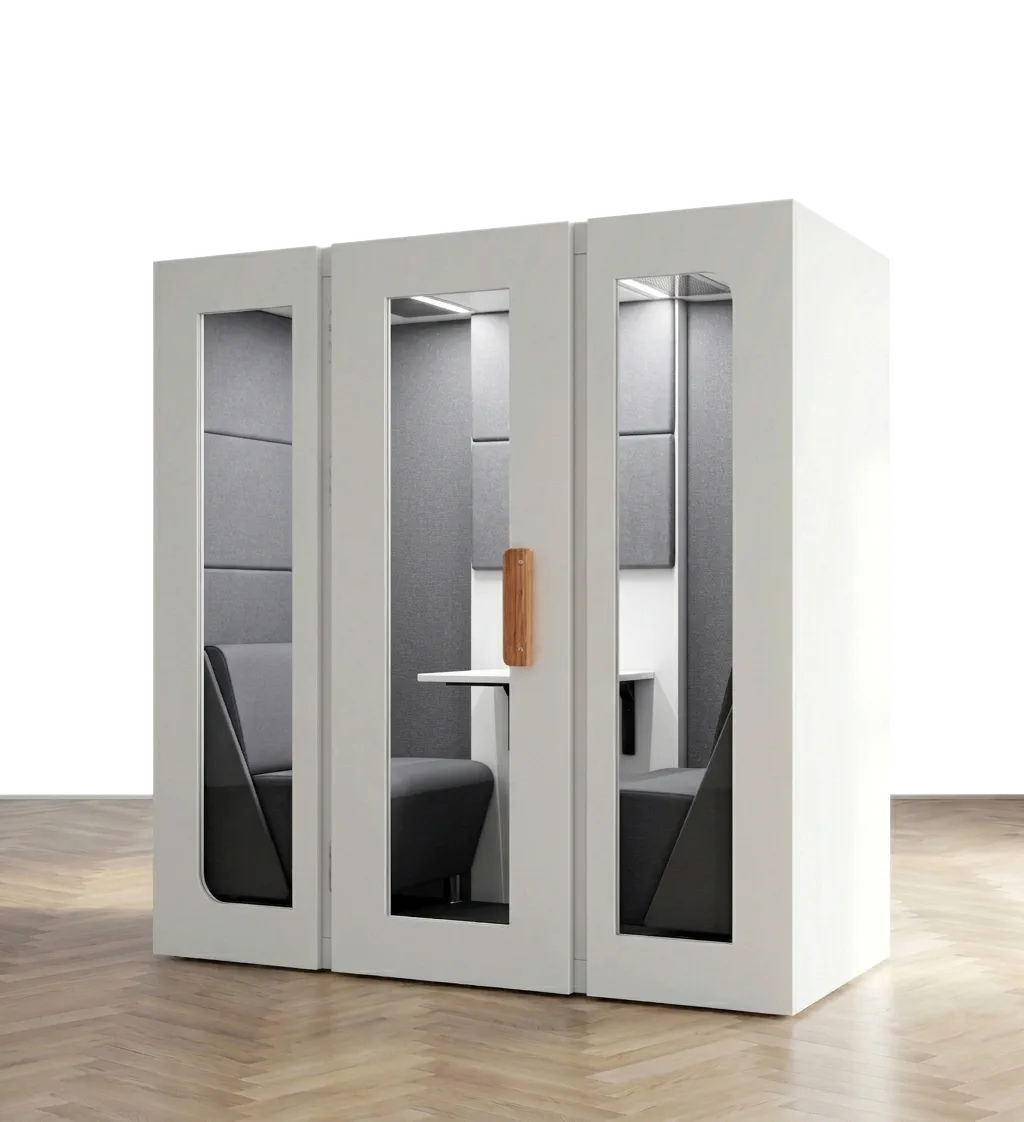
The fix is a place with an actual acoustic boundary. A soundproof booth gives an employee somewhere to work without the ambient hum — noise reduction of up to 35 dB in the Premium series turns a busy floor into a quiet room.
2. Nowhere private to take a call
Most offices have no proper space for a confidential conversation. People end up taking calls at their desk, in the corridor or in a stairwell, which affects both the call and everyone within earshot.
- Call quality suffers on both sides of the line
- Time and nerves go into hunting for a free corner
- Sensitive conversations happen in public
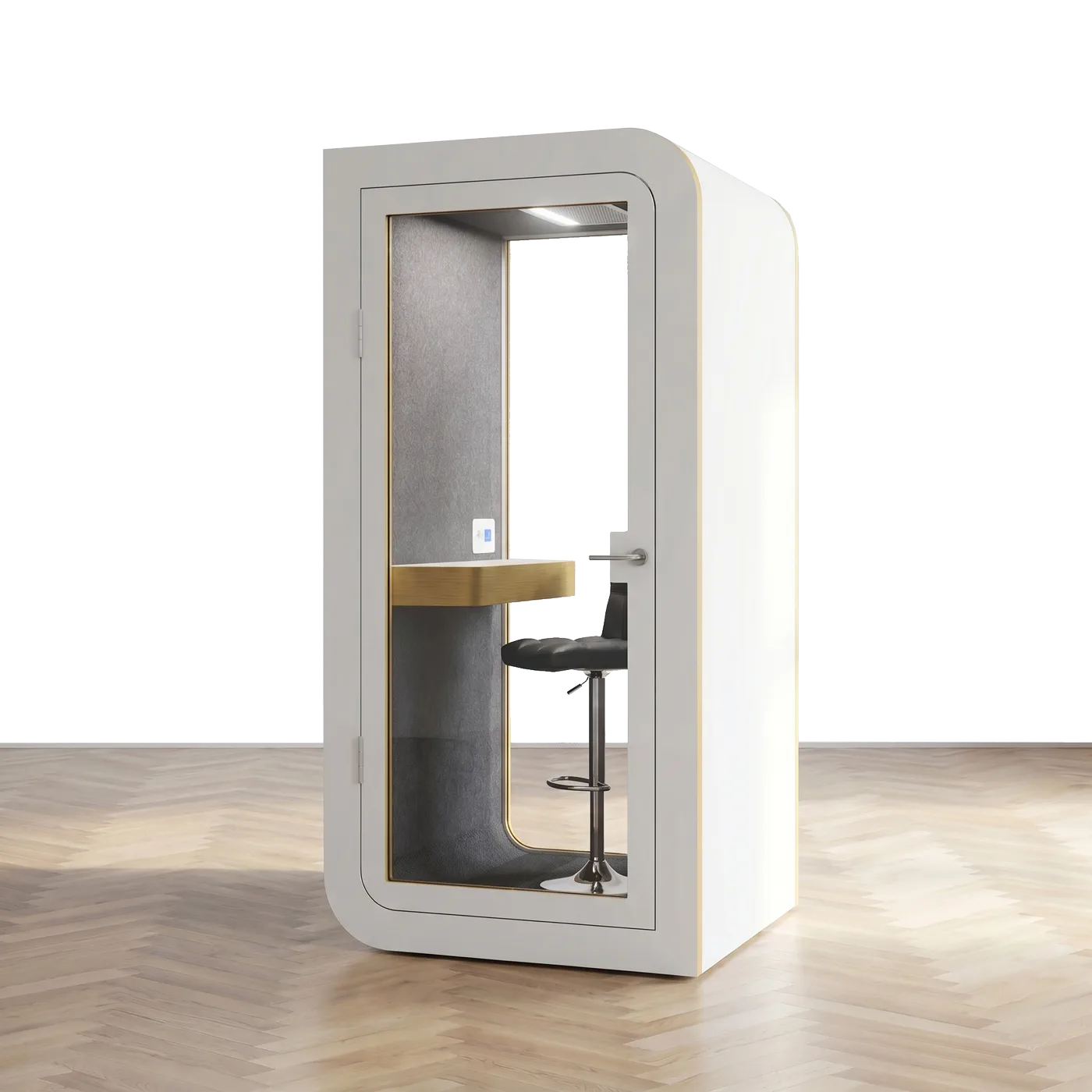
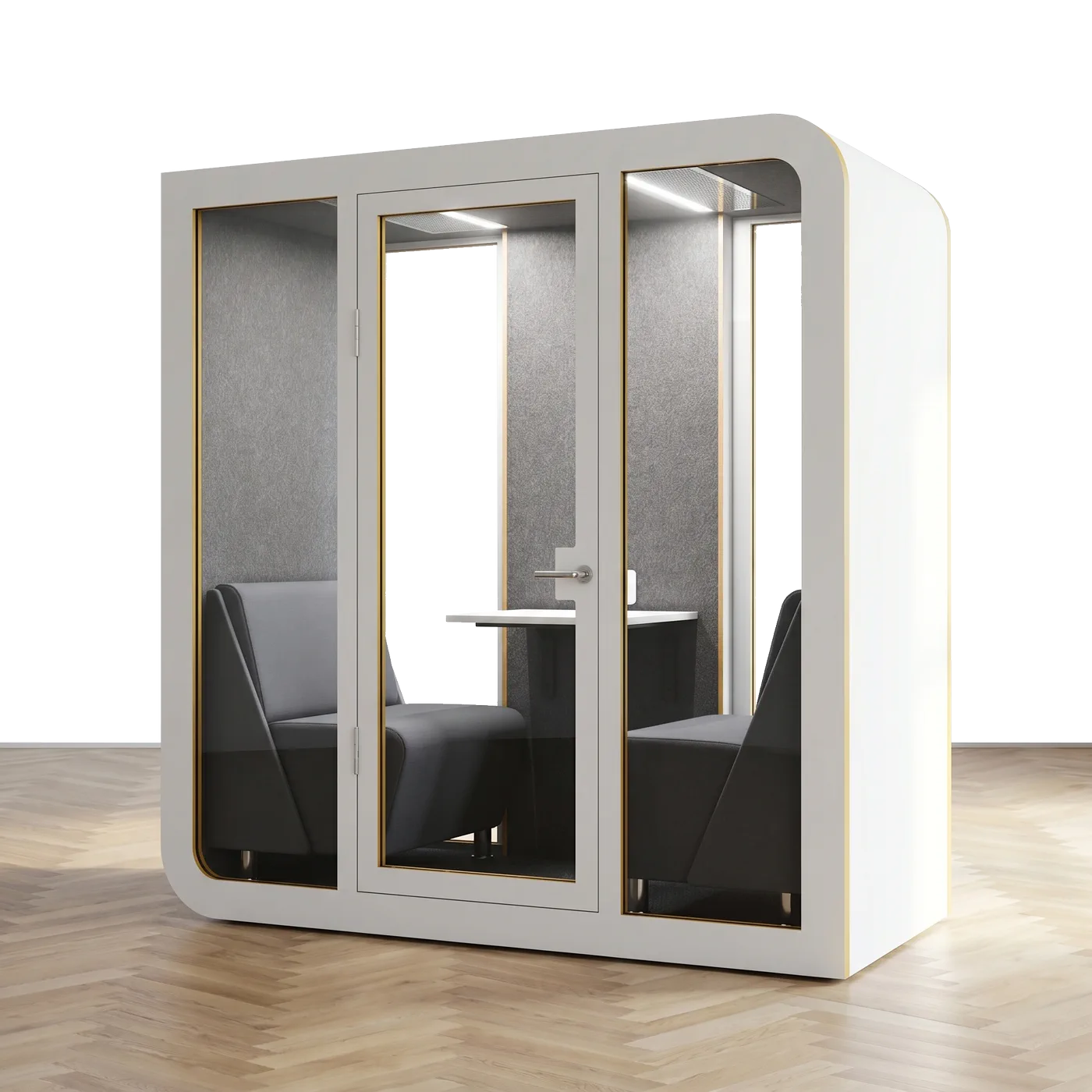
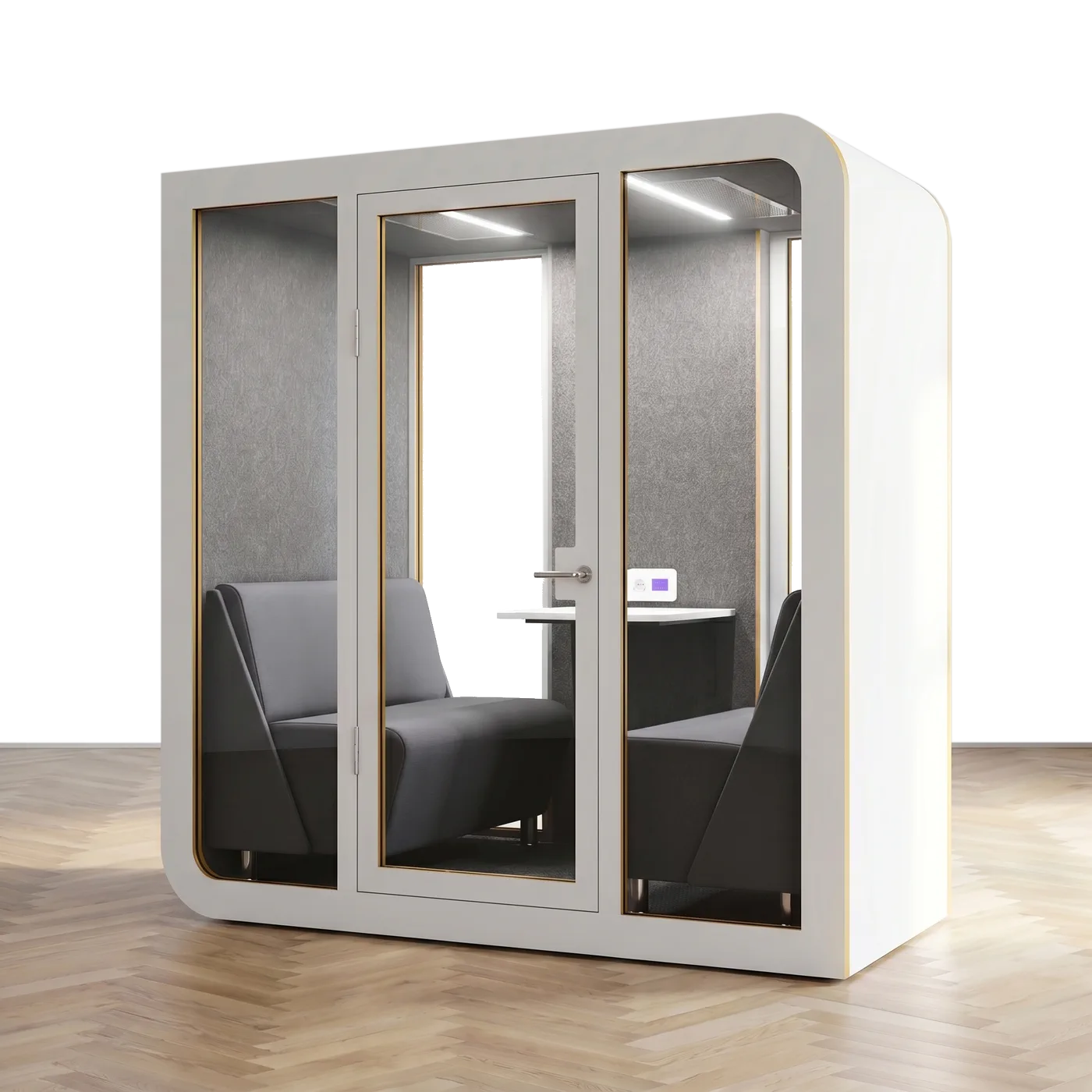
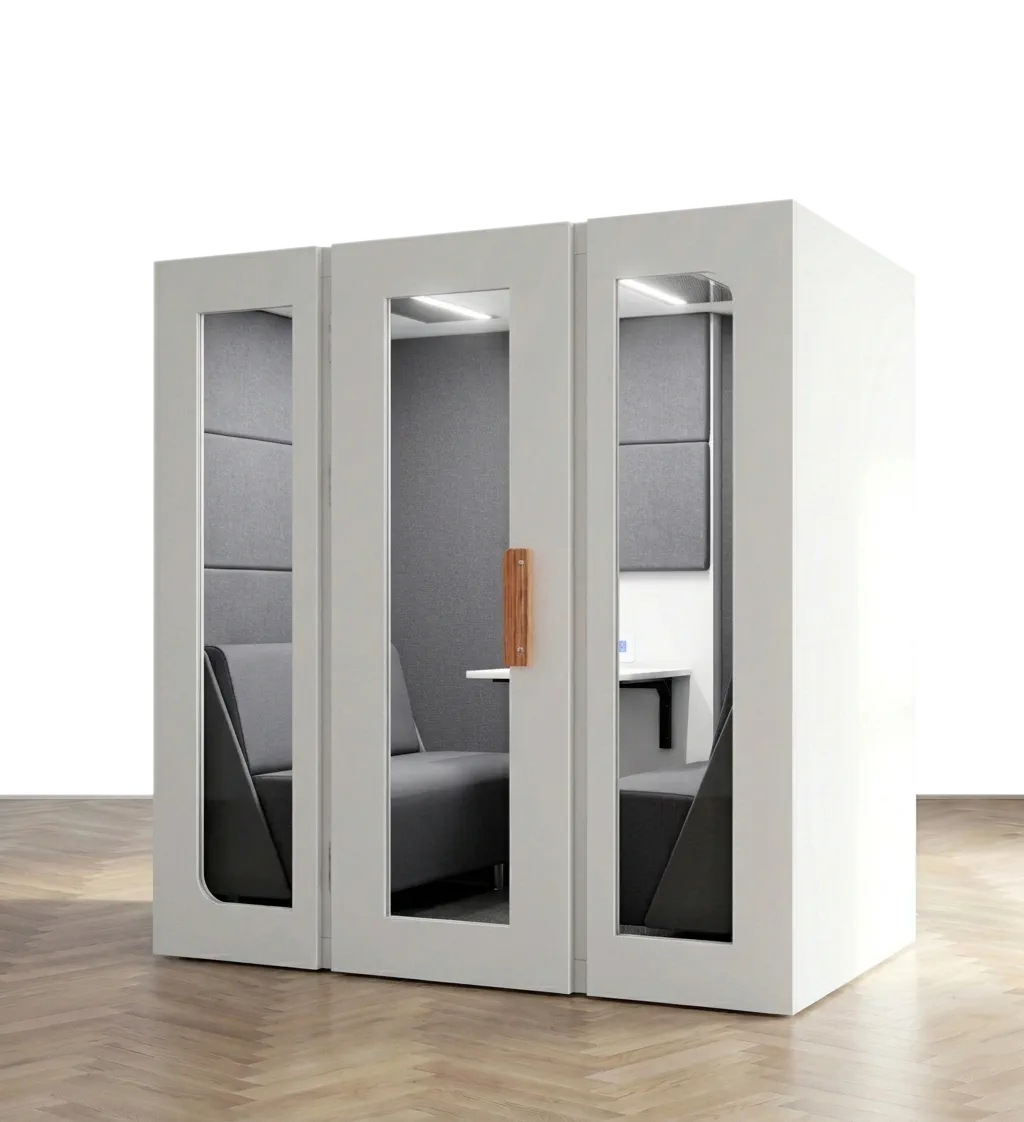
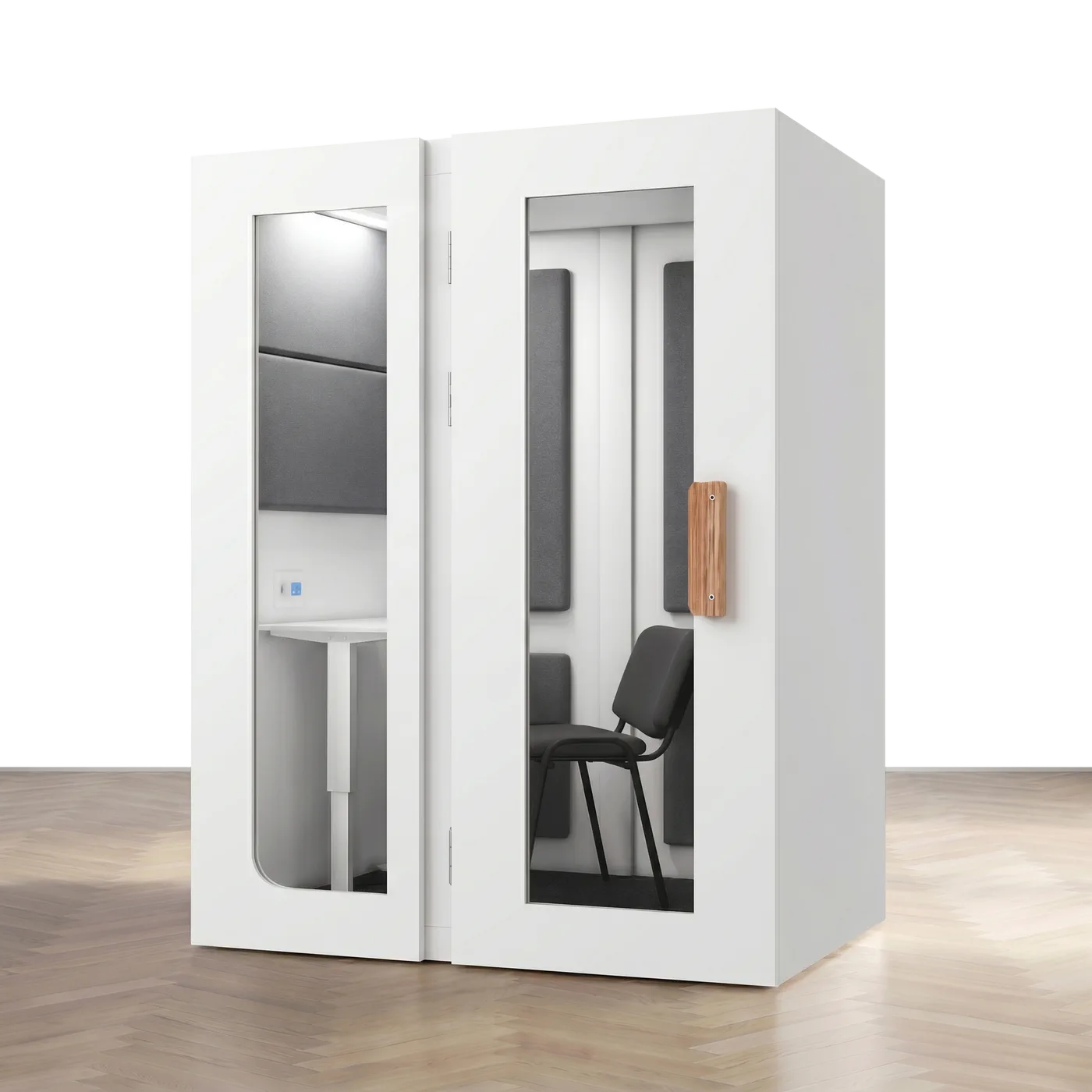
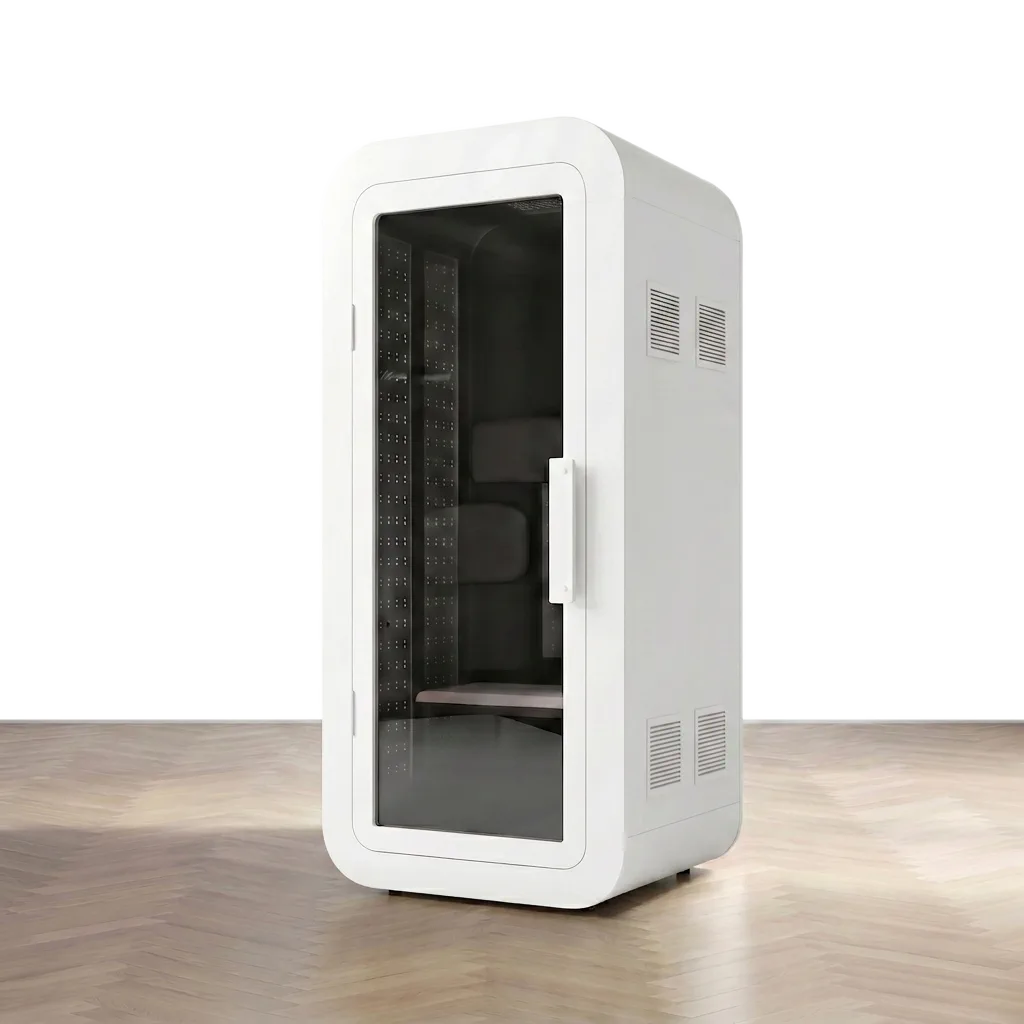
An office phone booth is built precisely for this: a Solo takes one person, a Duet two, and both are designed for calls and video meetings where privacy is not optional.
3. No boundary between tasks
Without a dedicated place for deep work, everything happens at the same desk in the same conditions. Switching from a shallow task to a demanding one becomes a matter of willpower rather than context, and multitasking fills the gap.
- Difficulty settling into anything that needs sustained thought
- Energy lost to switching between parallel tasks
- Procrastination on the work that matters most
A booth creates a physical signal: stepping inside means one task, no interruptions. That change of context does more for focus work than most productivity systems.
4. No quiet place to recover
The other side of the same problem is rest. If there is nowhere to step away from the noise, people carry the day's tension straight through to the evening.
- Mental fatigue accumulating across the week
- Falling motivation
- Lower overall satisfaction with the job
A booth used for ten quiet minutes between meetings is not a luxury — it is what lets the second half of the day resemble the first.
5. Interruptions no one can control
Colleagues dropping by, impromptu huddles, questions that could have been a message. In an open space there is no polite way to be unavailable, so nobody ever is.
- Time spent repeatedly picking up a dropped thread
- Stress from never being able to close the door
- Projects that move slower than the effort put into them
An occupied booth is an unambiguous signal that works without any policy behind it. Nobody knocks, and the person inside gets an uninterrupted hour.
In closing
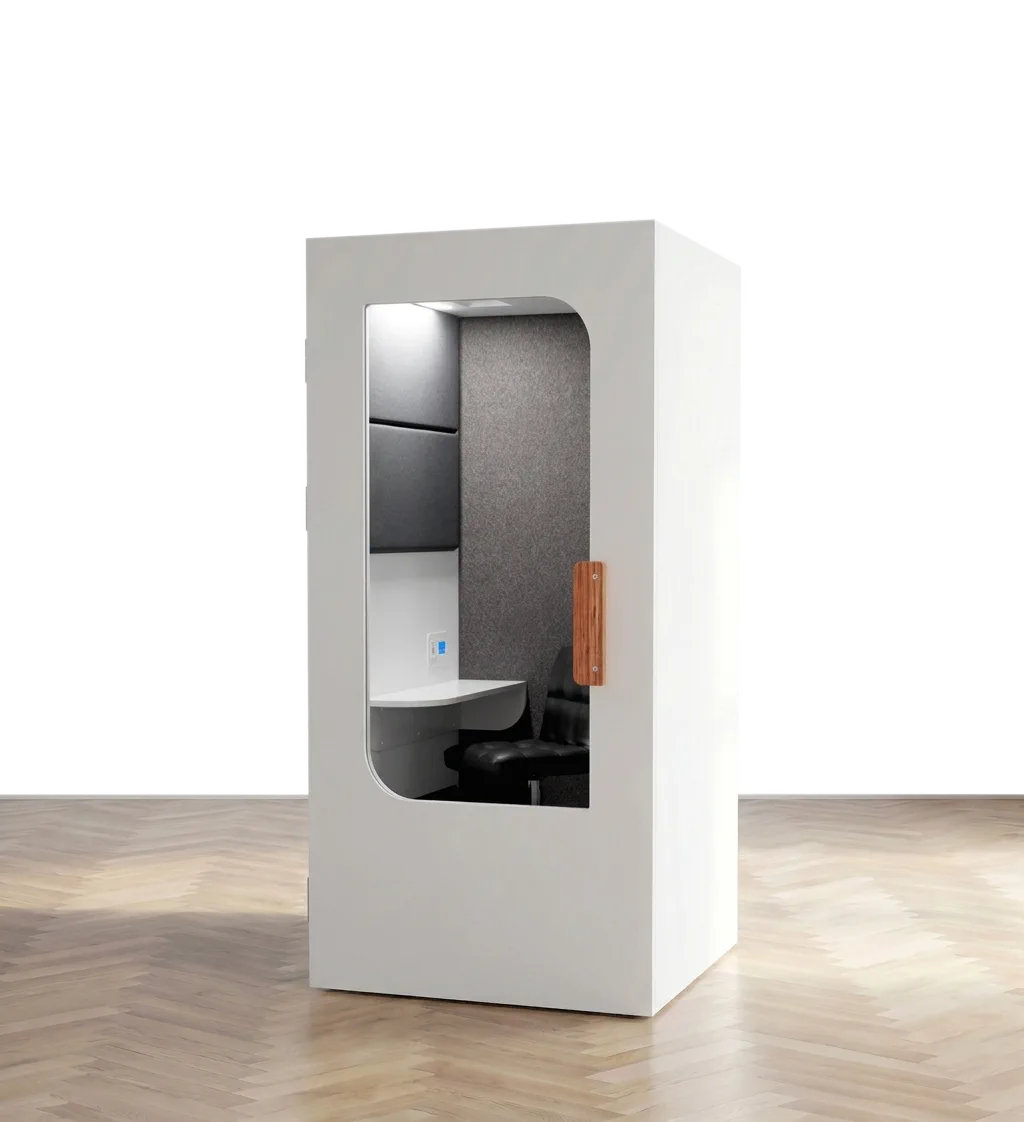
Noise, lack of privacy and constant interruptions account for more lost output than any motivation gap. Acoustic booths address all three at once, and they do it in an afternoon: assembly takes a few hours, with no renovation and no disruption to the working day. If you are weighing up how to make your open space work properly, it is worth looking at the Silentbox range — Solo, Duet, Quartet and WorkPod cover most office scenarios.