
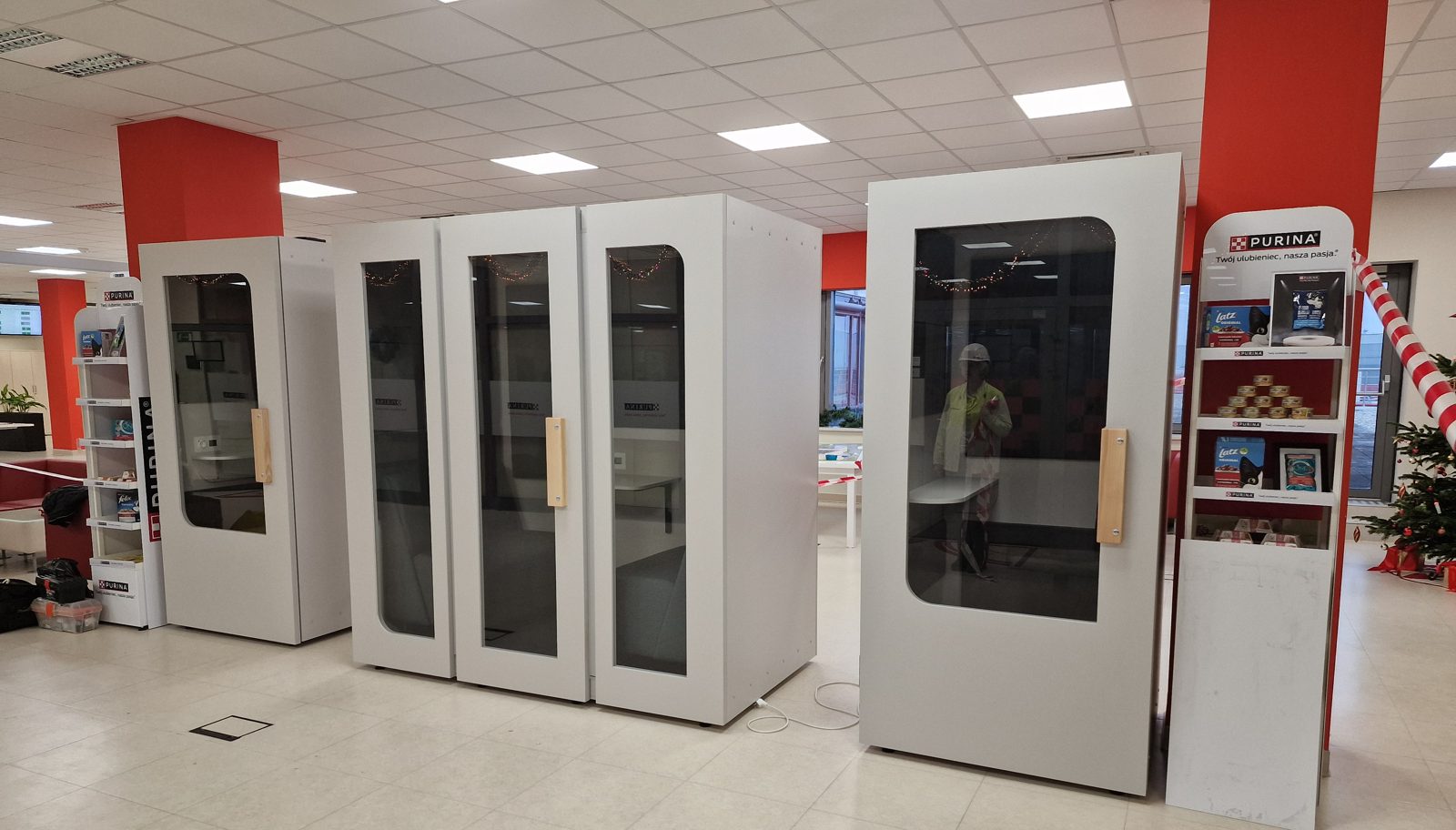
A calm working environment is not a perk — it is the condition under which focus work, sensitive conversations and decent client calls are possible at all. The good news is that quiet zones can be introduced into an office that is already running, without closing it down or committing to a renovation. Here is a plan in eight steps, in the order they actually need to happen.
1. Work out where the noise actually is
Before buying anything, find out what the team experiences. Perceptions differ sharply between someone sitting beside the sales desk and someone in a far corner, and the loudest spot is not always the one people complain about.
- Survey the team: which areas are hardest to work in, and at what times of day
- Identify which tasks suffer most — calls, meetings, or solo focus work
- Note where people currently escape to: corridors, stairwells, the kitchen
2. Decide what kinds of quiet space you need
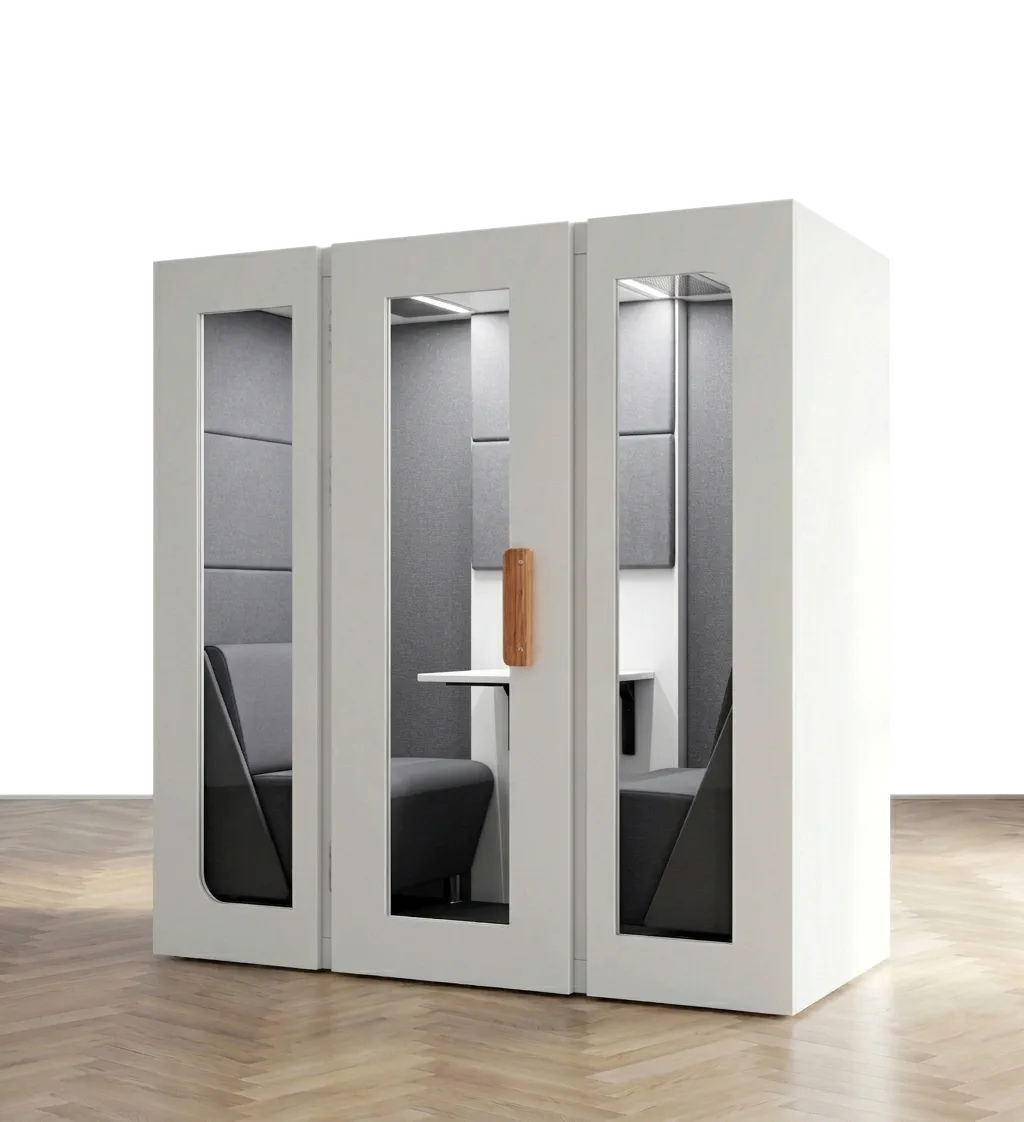
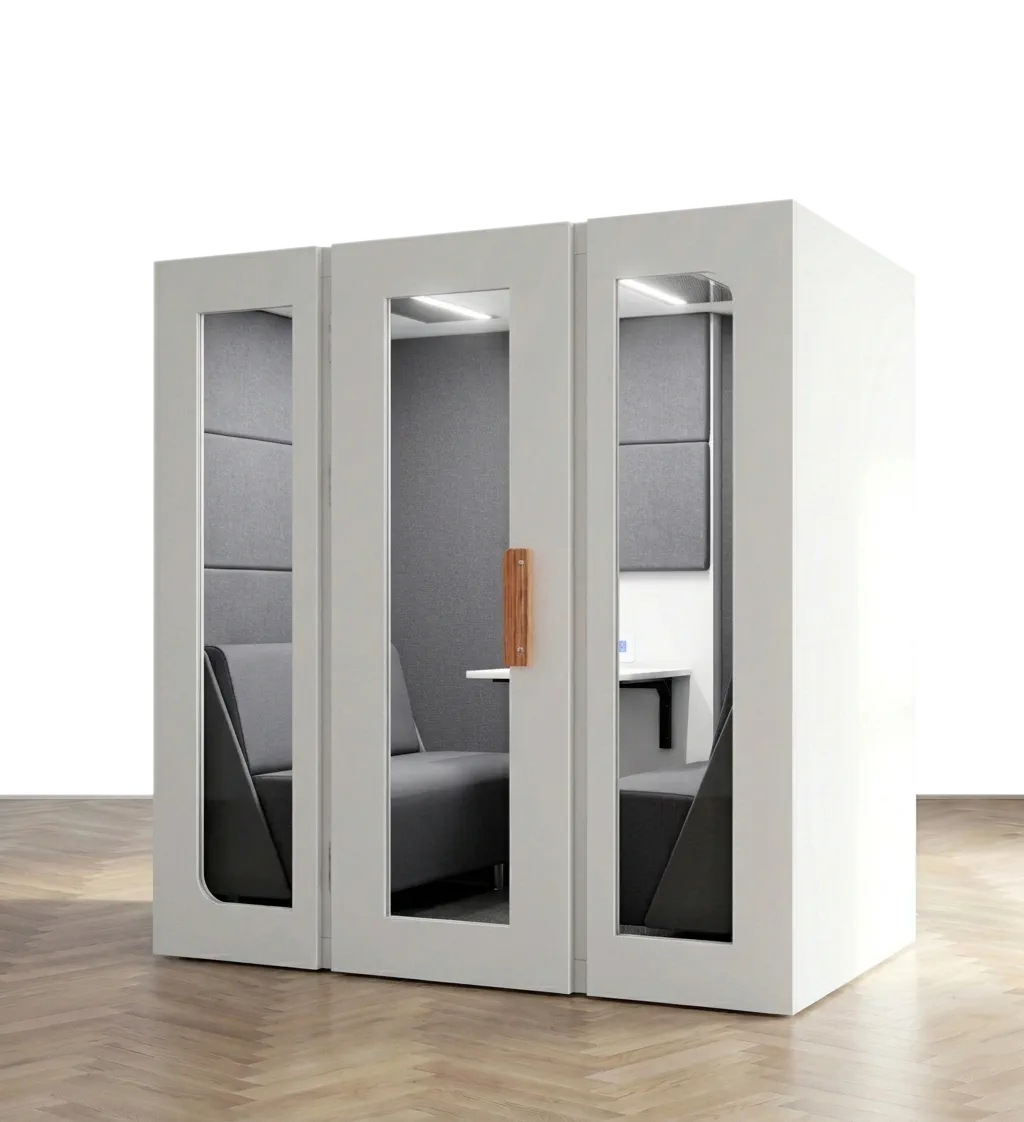
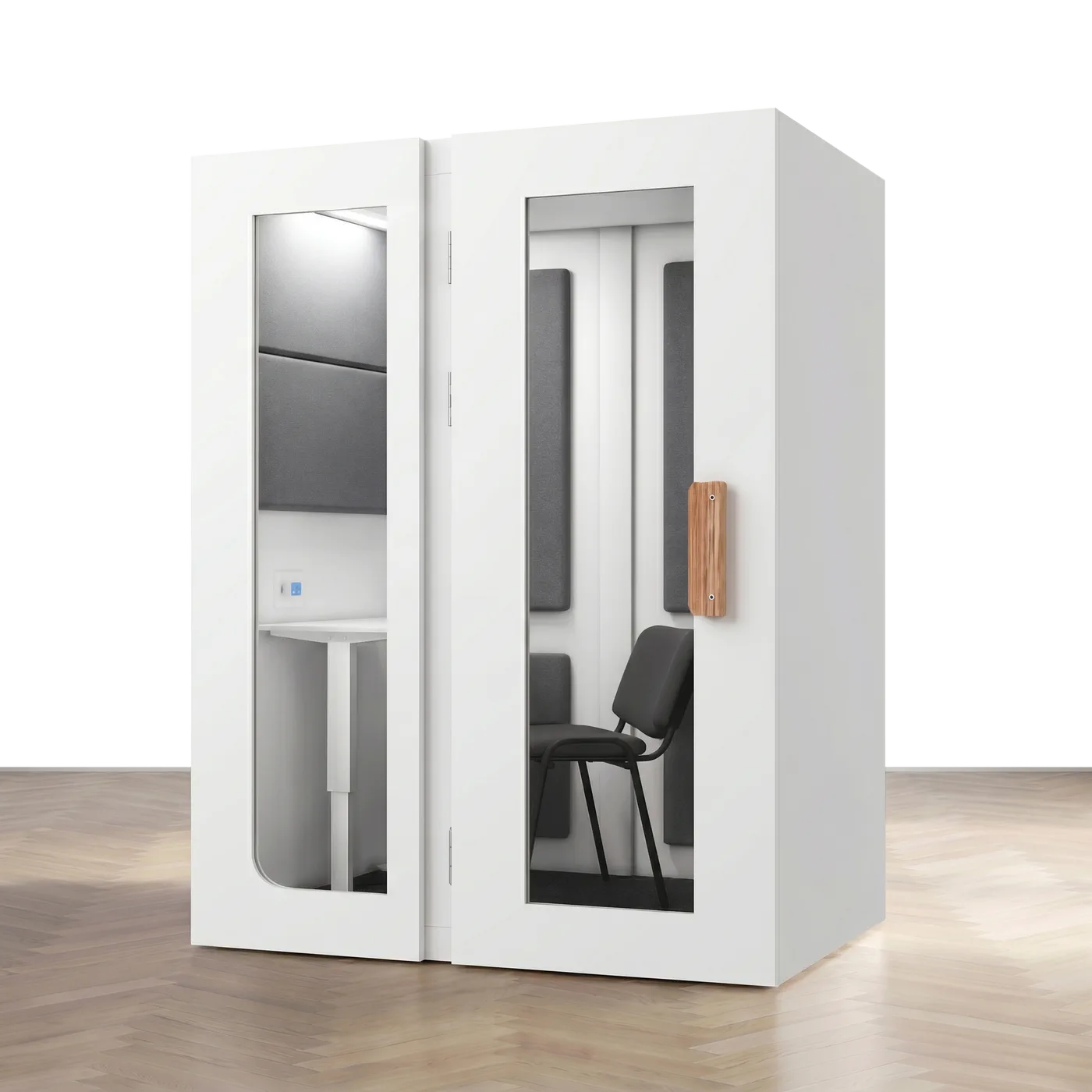
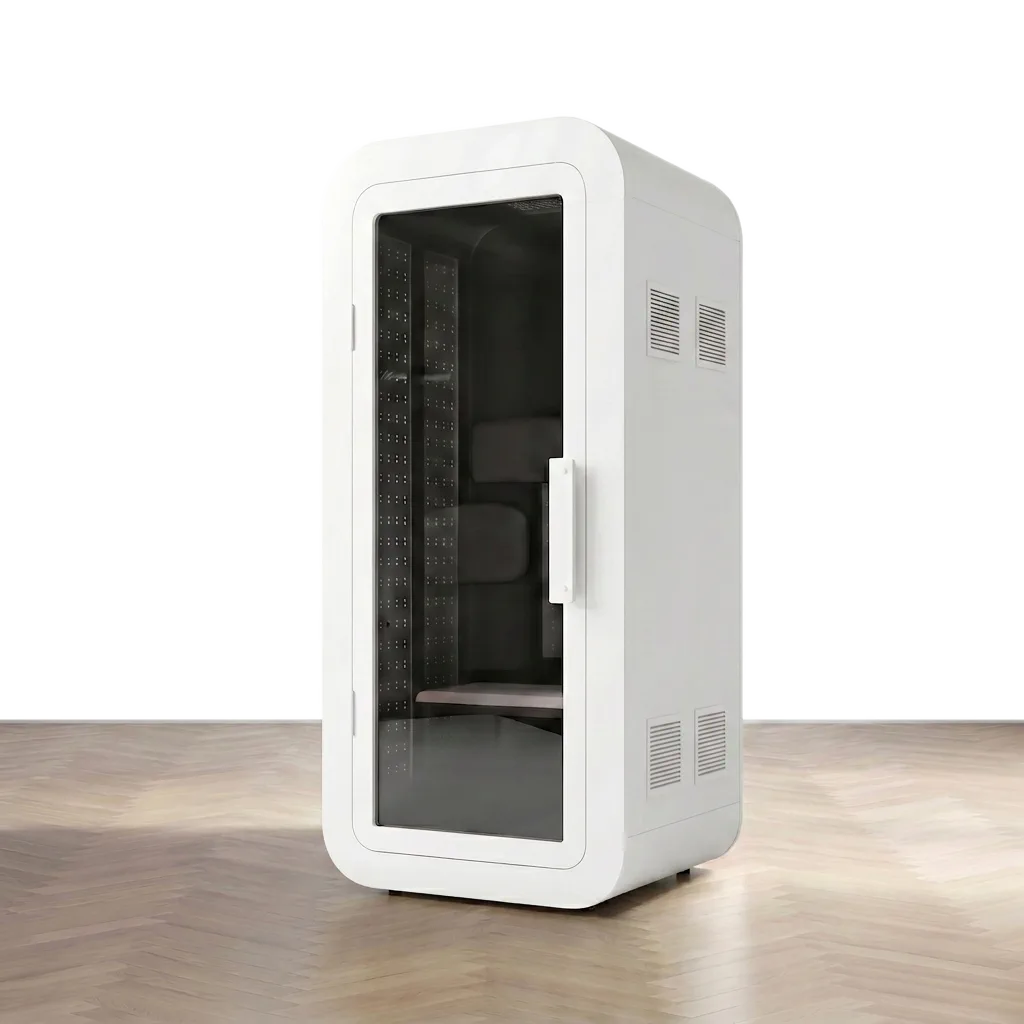
Quiet zones are not one thing. A booth for calls, a pod for small meetings and a low-stimulation area for breaks solve different problems, and getting the mix wrong is the most common mistake at this stage.
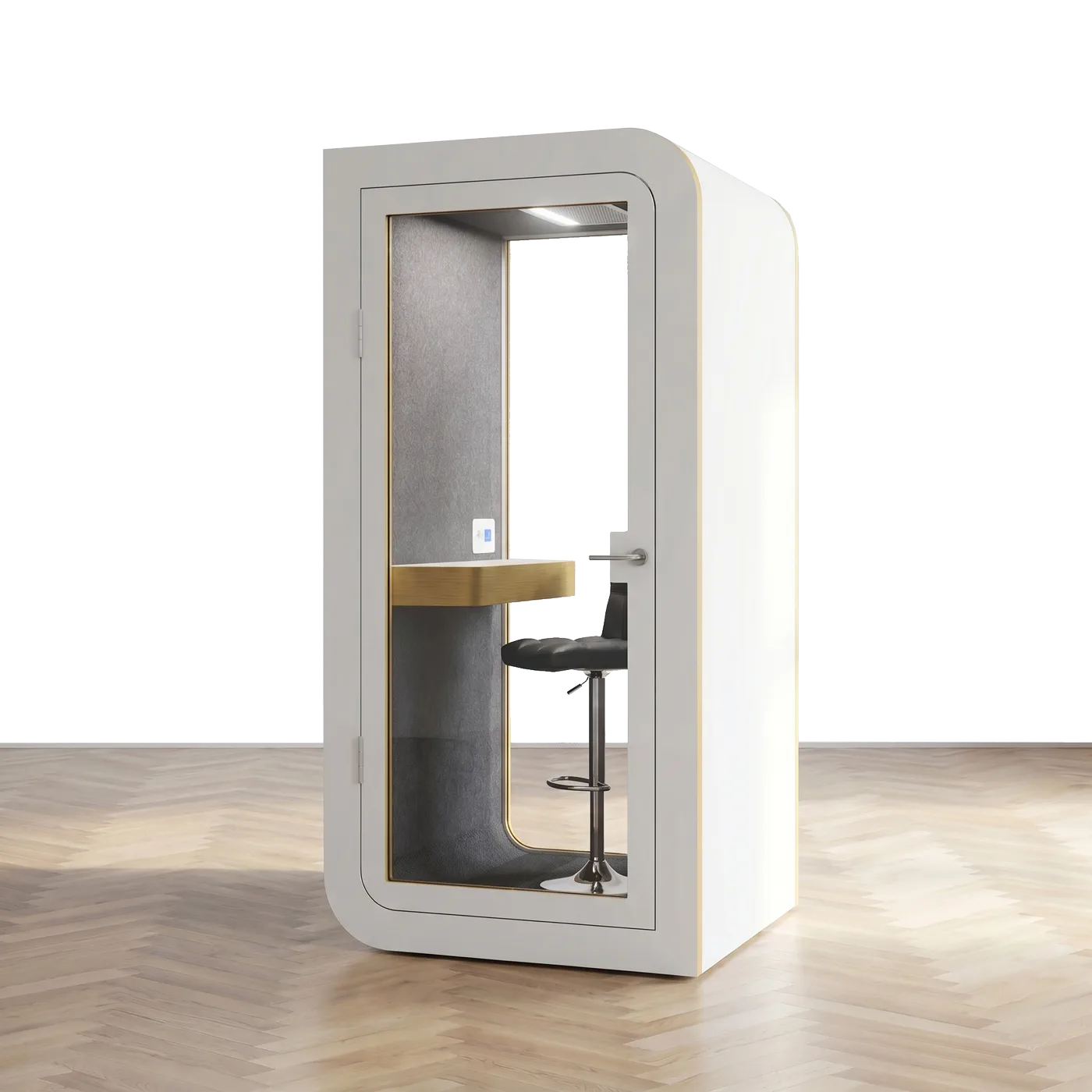
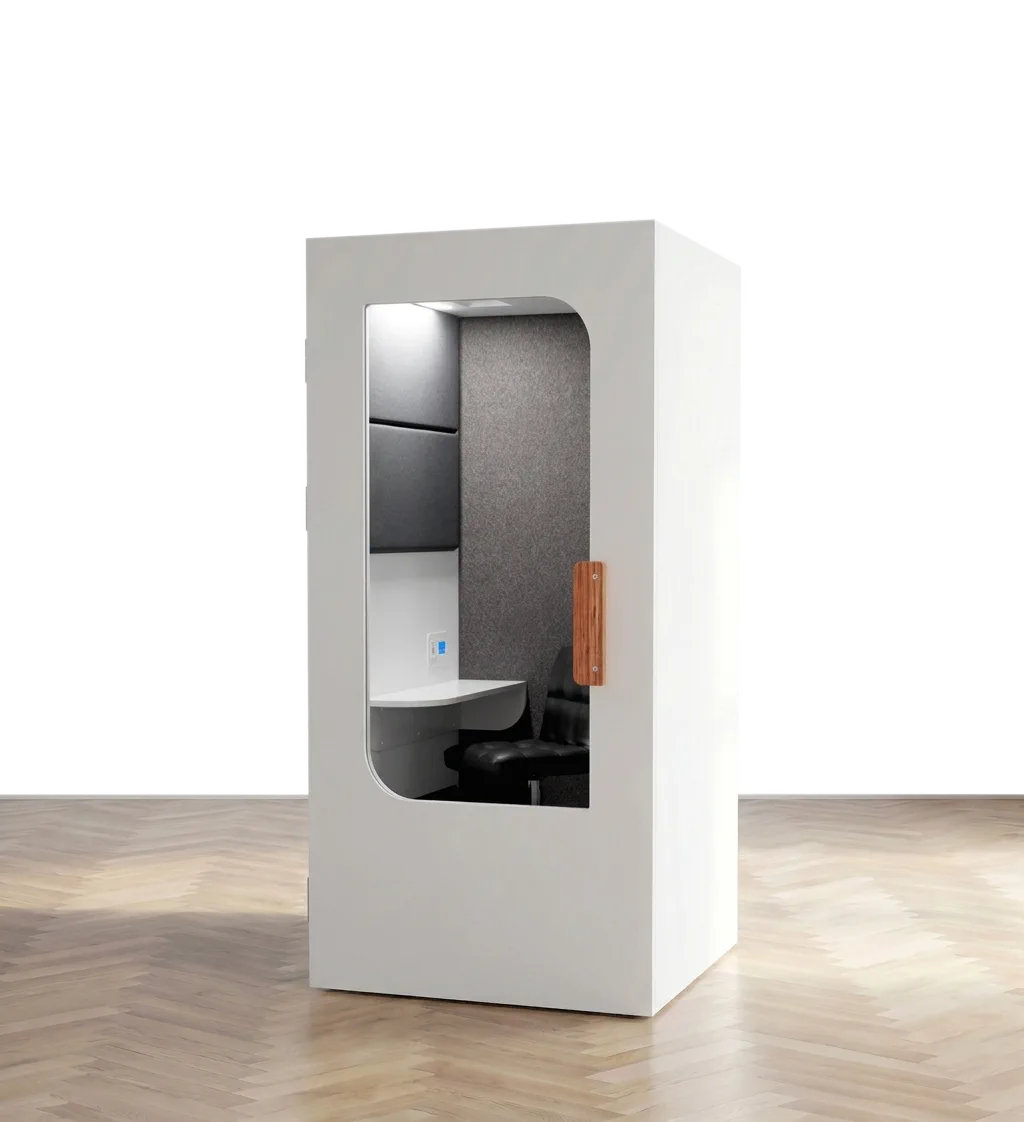
- Solo — one person, calls and concentrated work
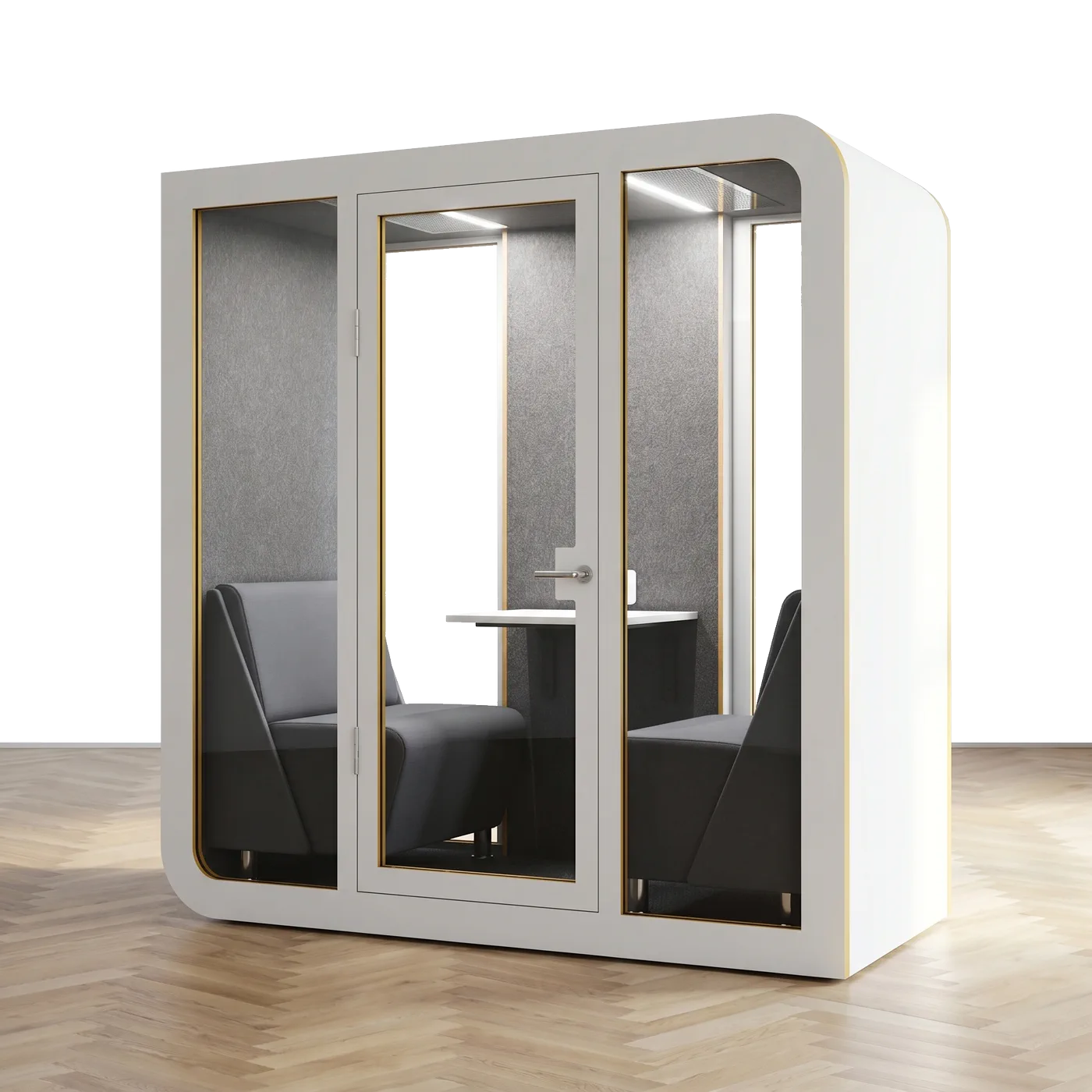
- Duet — two people, interviews and one-to-ones
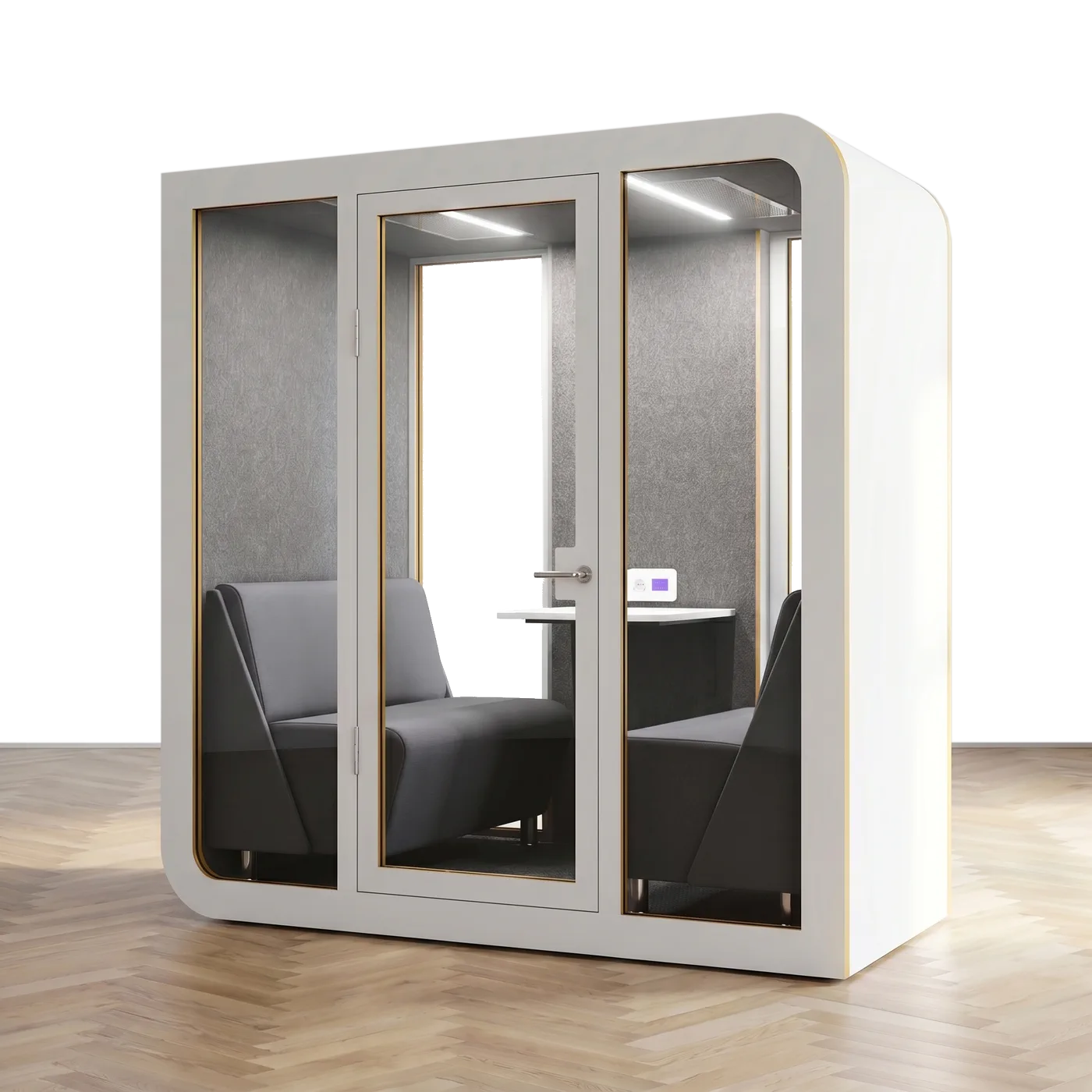
- Quartet — small meetings and team sessions
- An informal quiet corner with comfortable seating for breaks
3. Map the zones onto the existing floor plan
In an open space, quiet has to be positioned deliberately. Screens, modular panels and considered furniture placement mark out calmer areas at no structural cost; the noisiest activity, meanwhile, should be given somewhere enclosed to go so it stops radiating across the floor.
4. Place the booths where the noise is loudest
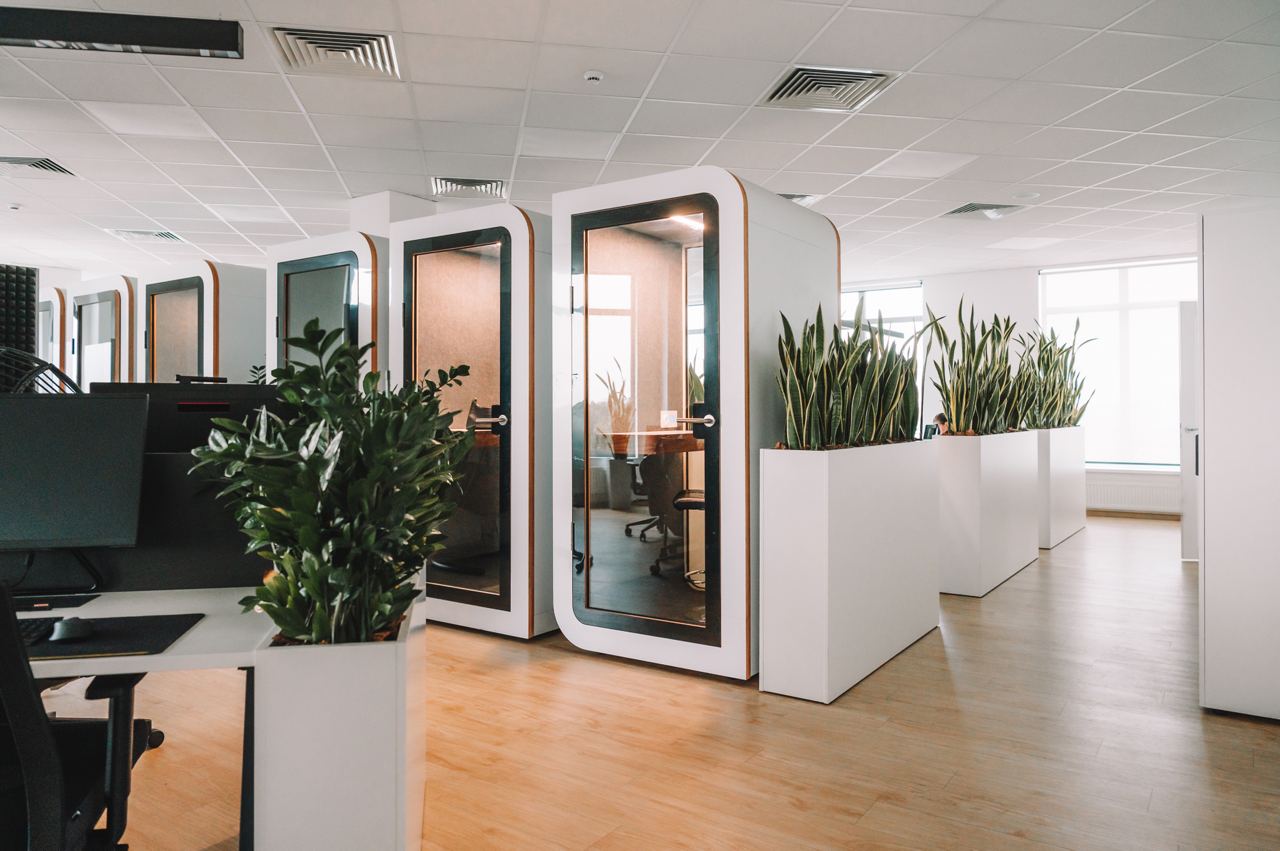
The instinct is to tuck a booth into a quiet corner, which defeats the point. Booths belong near the busiest zones — beside the sales team, near the entrance, close to the kitchen route — because that is where the calls being taken in the open are coming from. A Solo needs about a square metre, assembles in 2–3 hours, and requires nothing more than a level floor and a socket.
5. Do not forget air and light
An enclosed space stops being useful the moment it becomes stuffy. Any booth intended for meetings longer than a few minutes needs proper ventilation and comfortable lighting — in the Silentbox range both are fitted as standard rather than sold as options. For open quiet zones, soft lighting and access to daylight do the same job.
6. Add somewhere to actually recover
Quiet zones for work need a counterpart for rest, positioned away from the busiest areas. Comfortable seating, plants and warm lighting are enough; the important part is that stepping away from the desk does not mean stepping into more noise.
7. Explain how the zones are meant to work
New spaces need a shared understanding or they drift into misuse — the booth becomes a storage cupboard, the quiet corner becomes a second meeting room. A short briefing and a few simple rules are usually all it takes.
- An occupied booth is not to be interrupted, for any reason
- Booths are for calls and focus work, not long-term desk occupation
- Book the Quartet for meetings; leave the Solos free for spontaneous calls
8. Review and adjust
After a month, ask the team what is working. Usage patterns almost always differ from the plan: one booth turns out to be permanently occupied while another sits idle in the wrong place. Because booths are movable rather than built in, correcting this costs an afternoon rather than a budget cycle.
In closing
Quiet zones improve concentration, wellbeing and the general atmosphere of a workplace, and none of it requires shutting the office down. Work through the steps in order, start with the loudest area, and adjust once you see real usage. The Silentbox range covers the full spread of formats — Solo, Duet, Quartet and WorkPod — with up to 35 dB of noise reduction in the Premium series, production in 3–6 weeks and then delivery across the EU in 10–25 days via the logistics hub in Wrocław.