
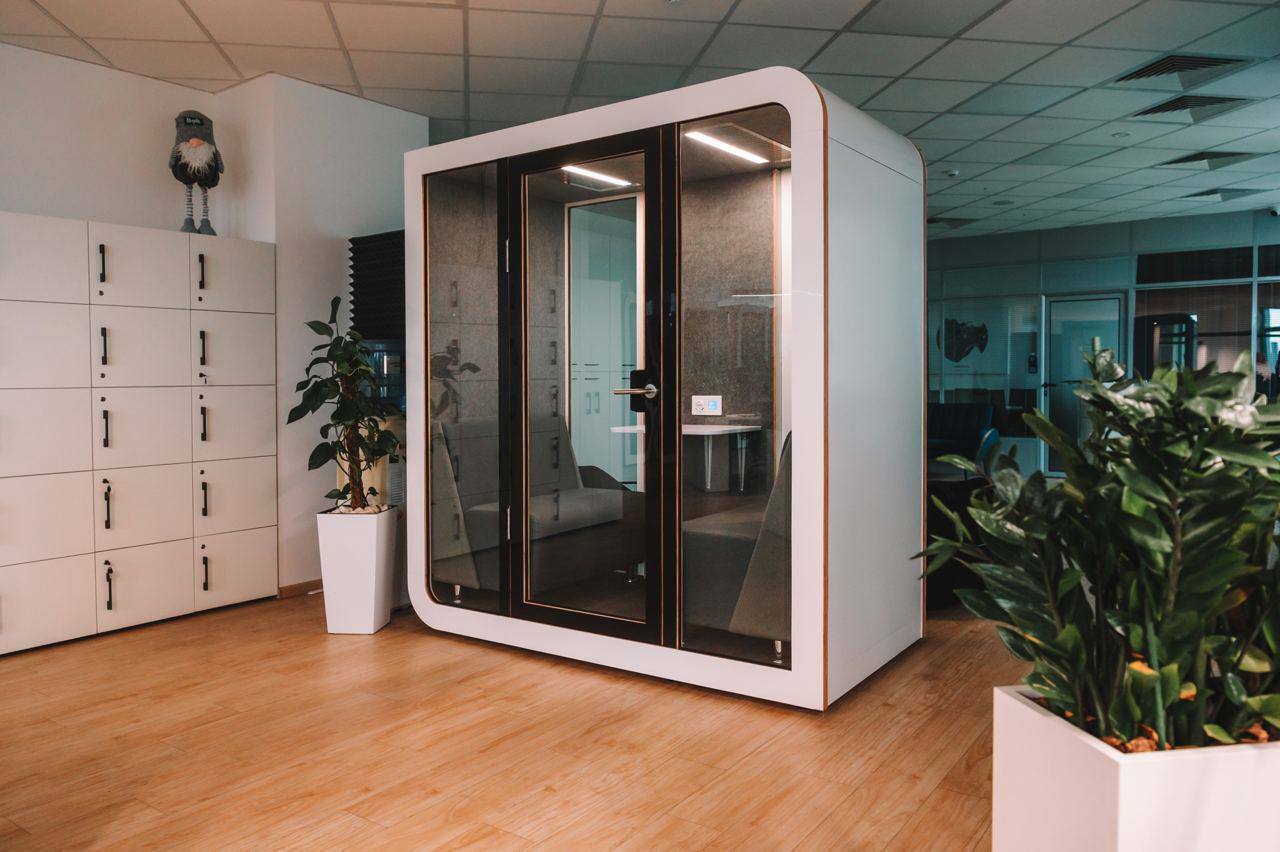
The need for privacy in a modern office is no longer a niche request — it comes up in every team that takes calls, interviews candidates or handles anything confidential. The obstacle is usually the assumption that privacy means partitions, permits and a contractor on site for a fortnight. It does not. Here are five ways to create private areas quickly, with the honest trade-offs of each.
1. Movable acoustic booths
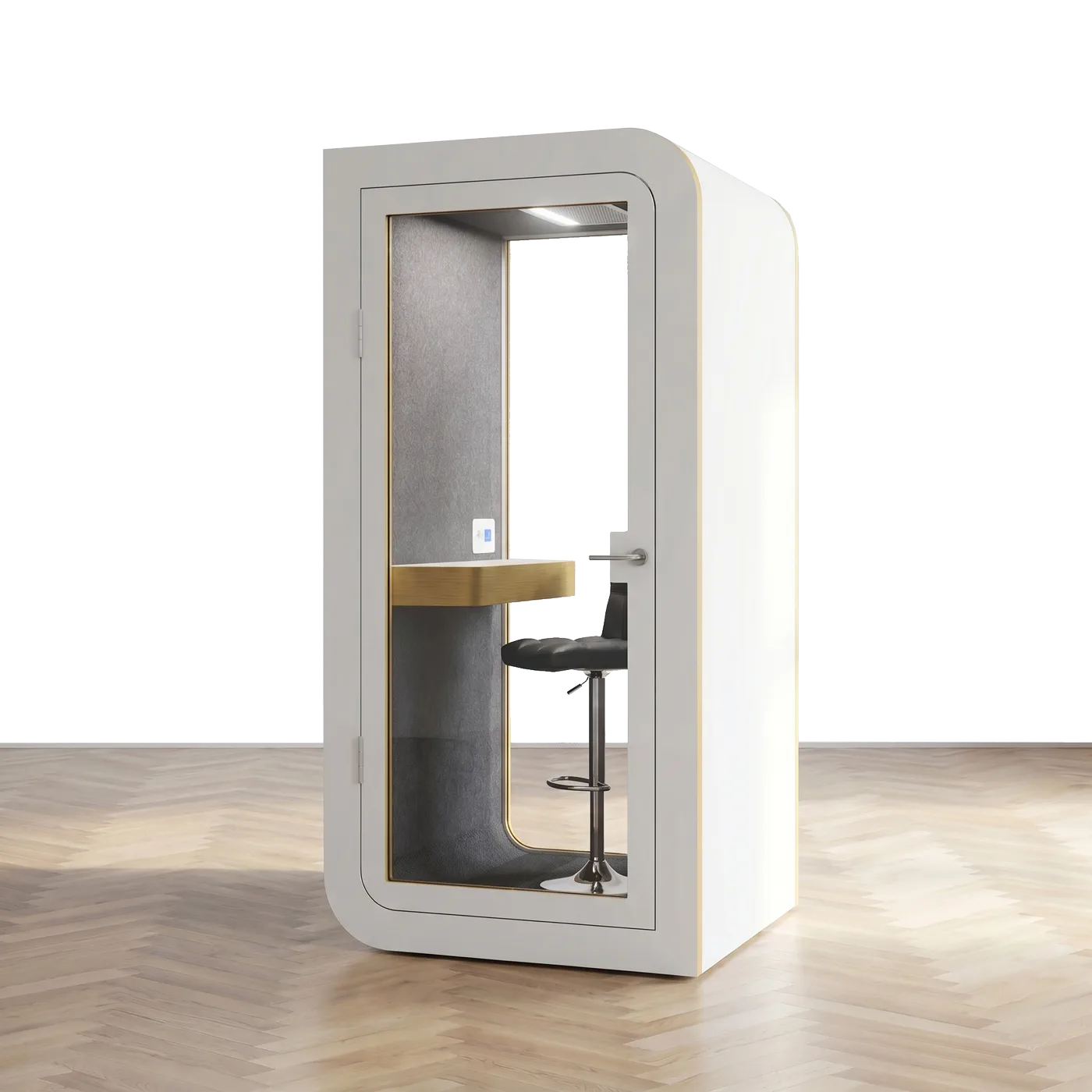
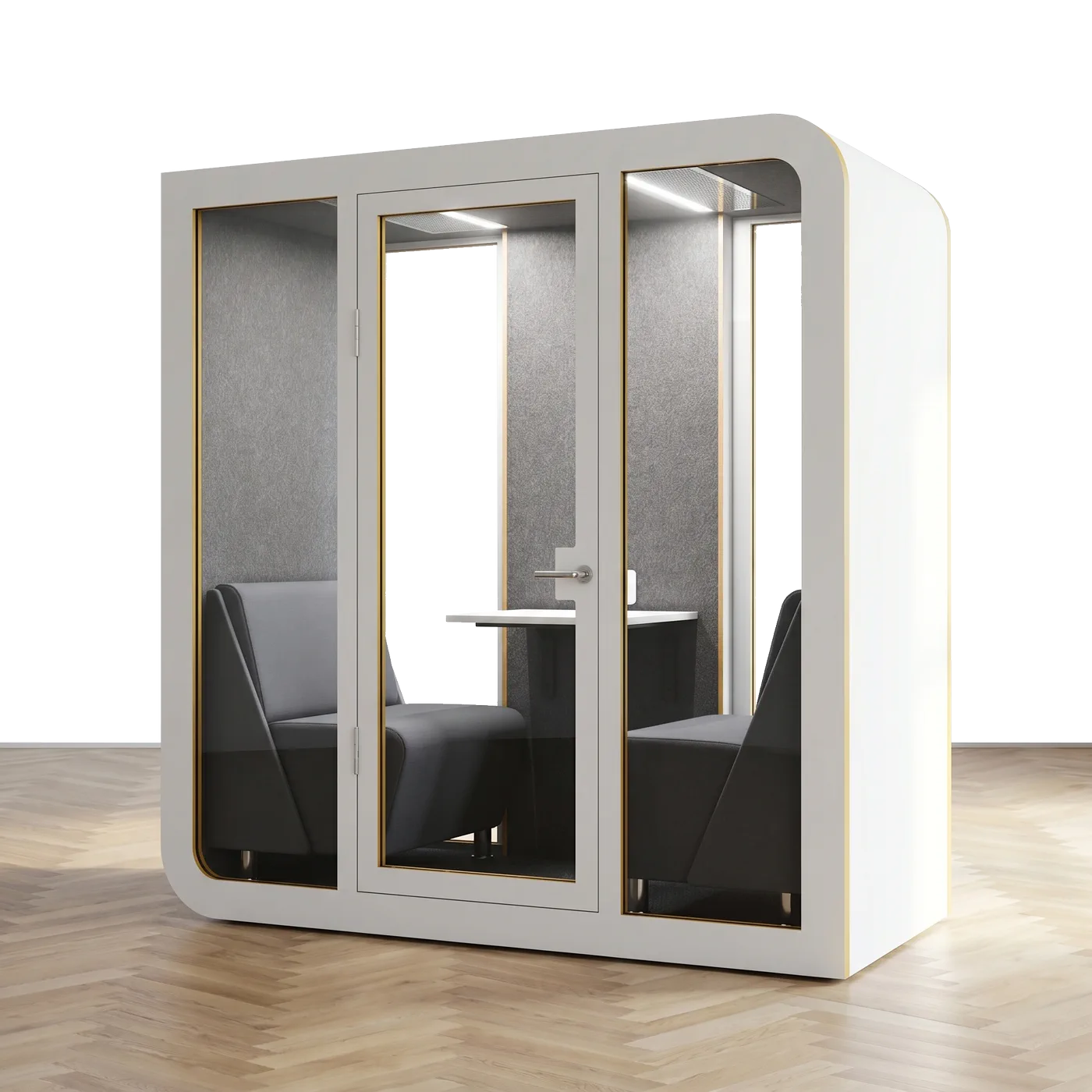
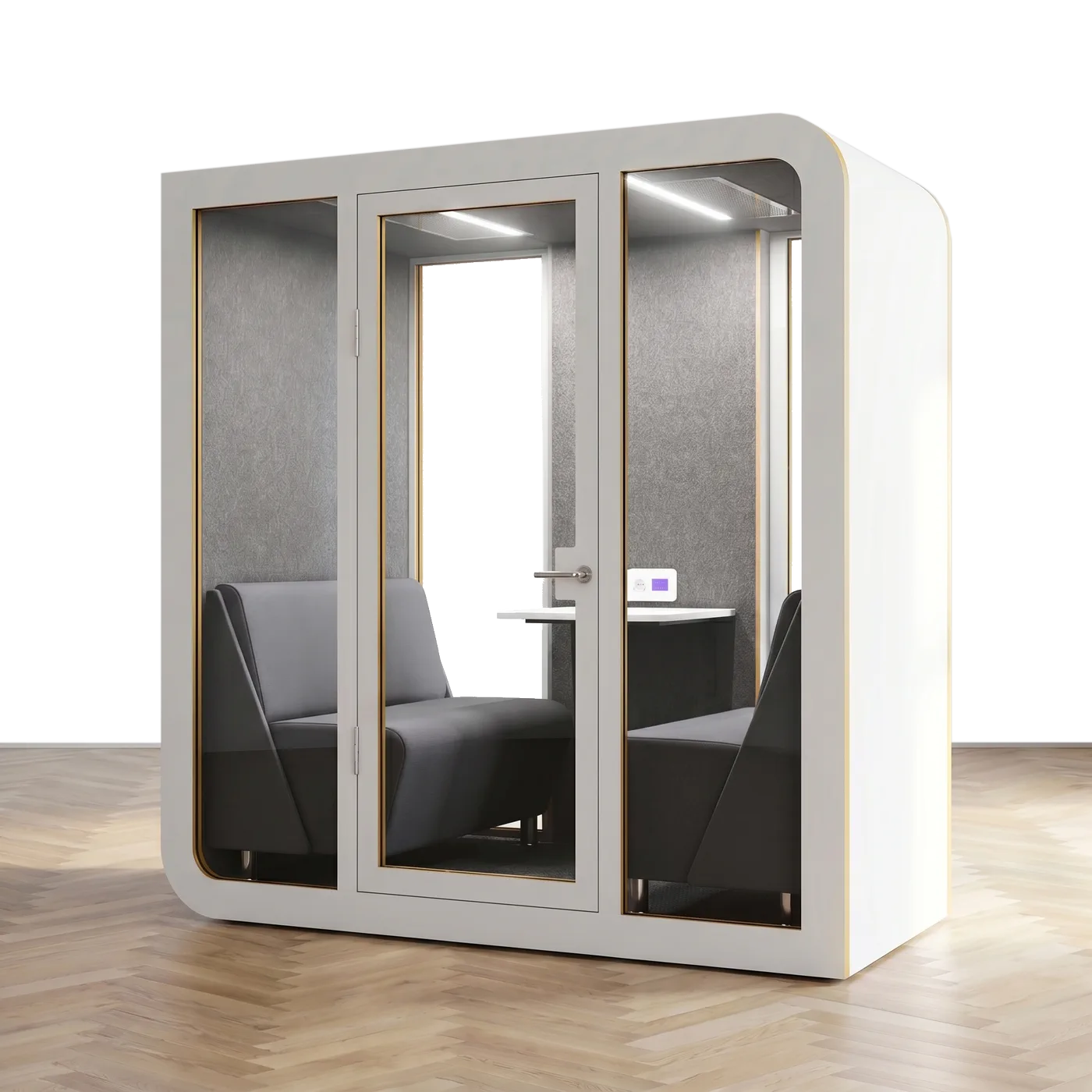
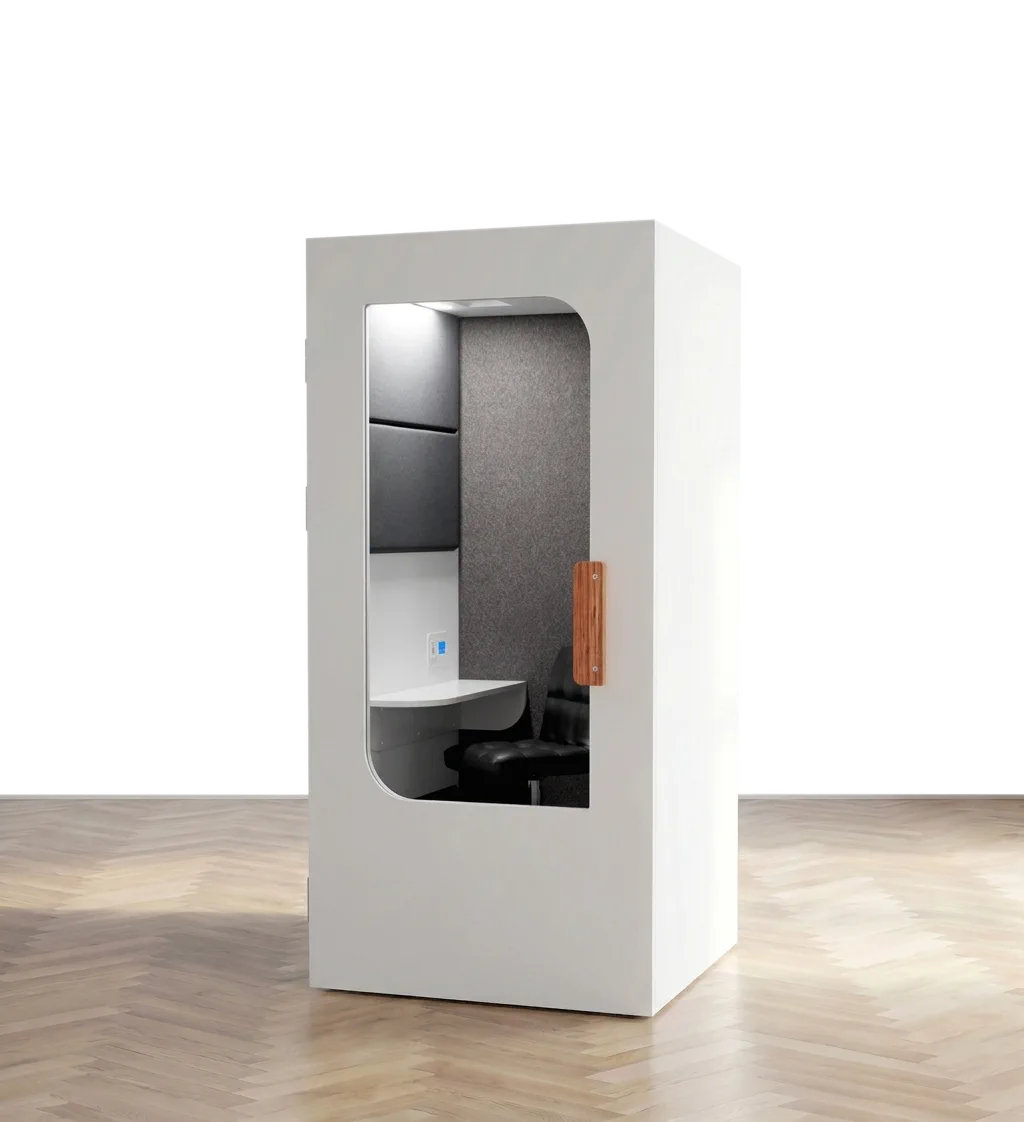
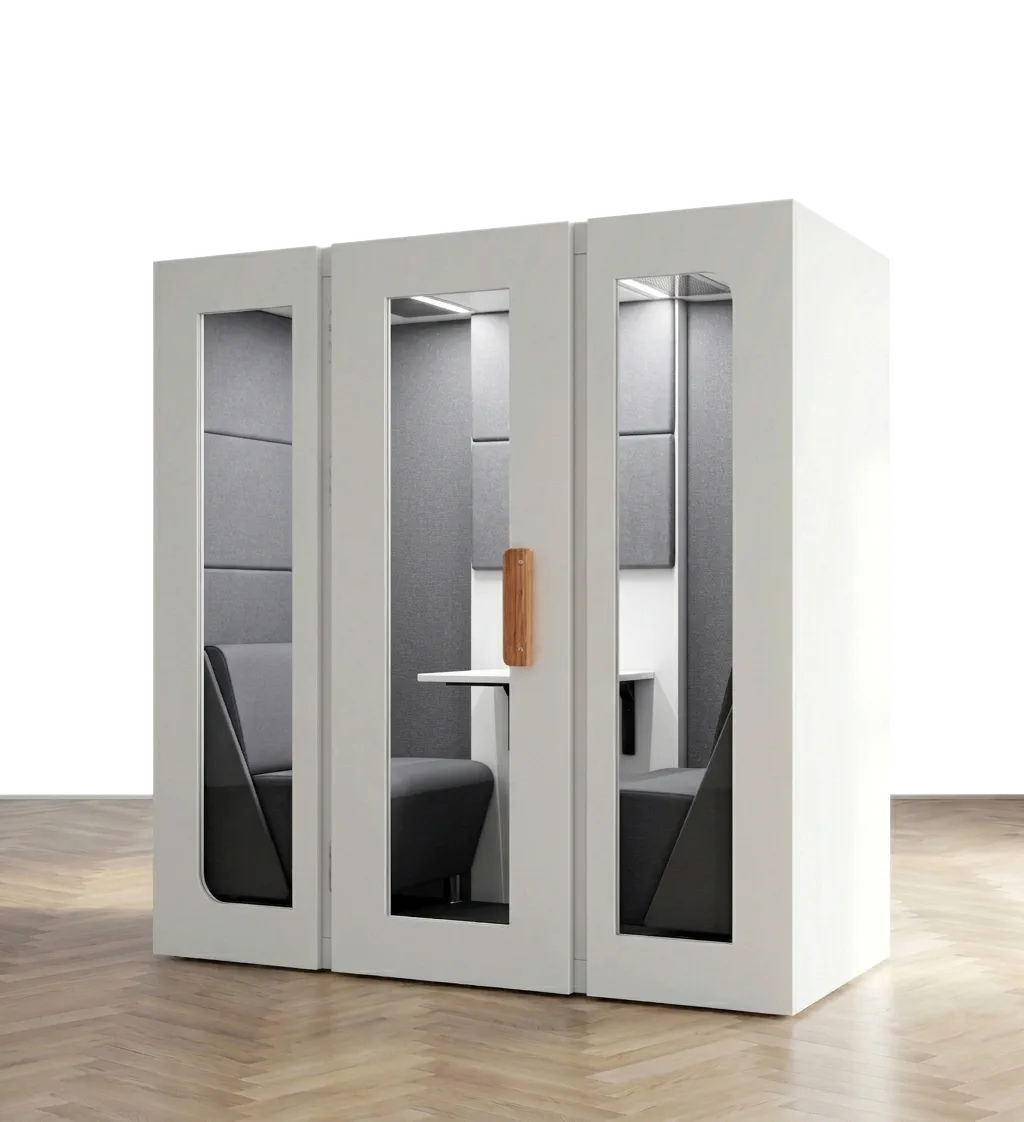
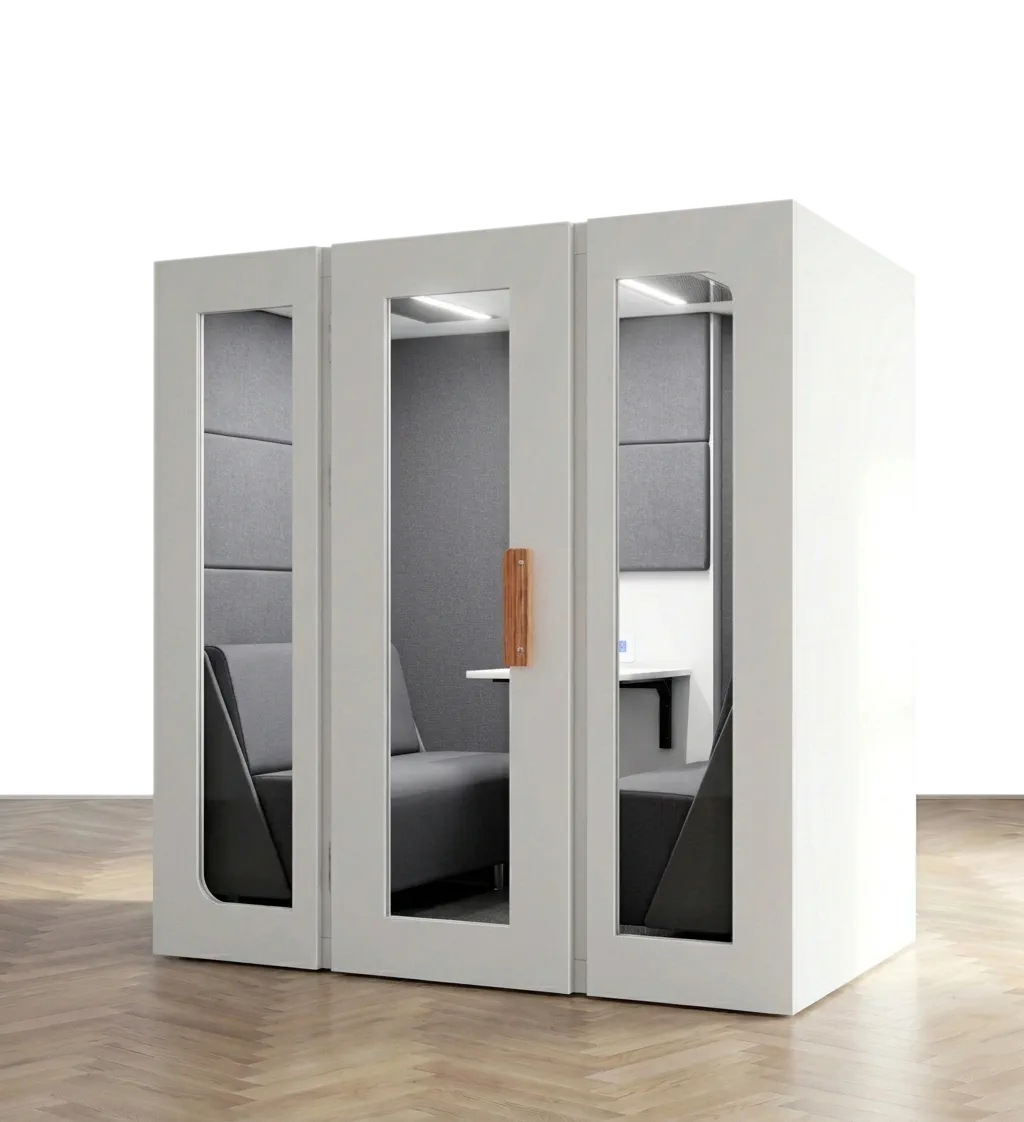
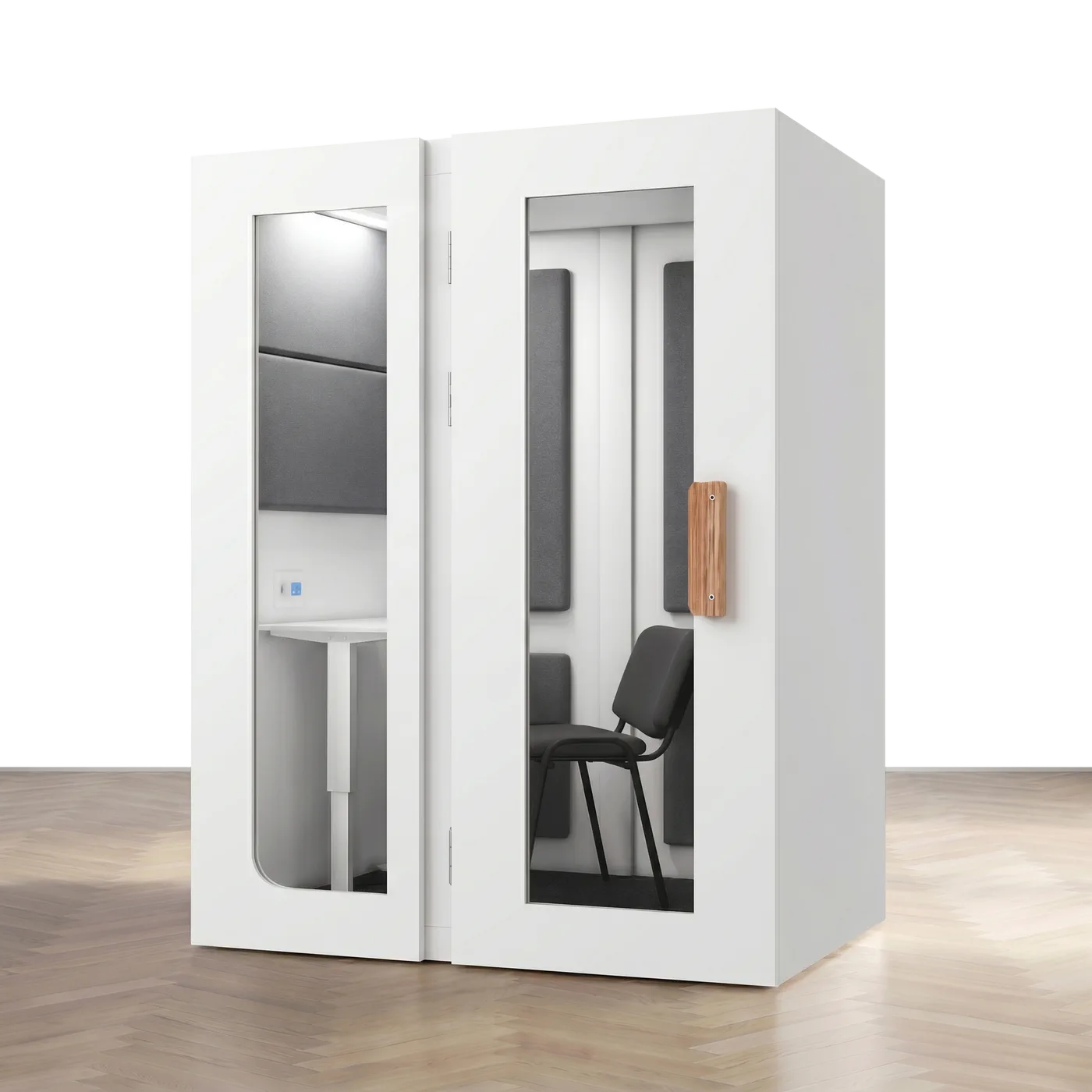
The most direct solution. An acoustic booth is a self-contained room that arrives ready to use: it needs a level floor and a socket, nothing else. Assembly takes a few hours, and because the booth is not a structural element it can be relocated later if the layout changes. Ventilation and lighting come as standard, so it is genuinely usable for an hour-long call rather than a two-minute one.
This is also the only option on this list that delivers measurable noise reduction — up to 35 dB in the Premium series, tested to ISO 23351-1 and ISO 11957.
2. Screens and modular panels
Freestanding screens are cheap, flexible and take minutes to reposition. They create visual separation and a sense of a defined zone, which is often enough for focus work at a desk. What they do not do is block sound — a conversation behind a screen is still perfectly audible, so treat them as a layout tool rather than an acoustic one.
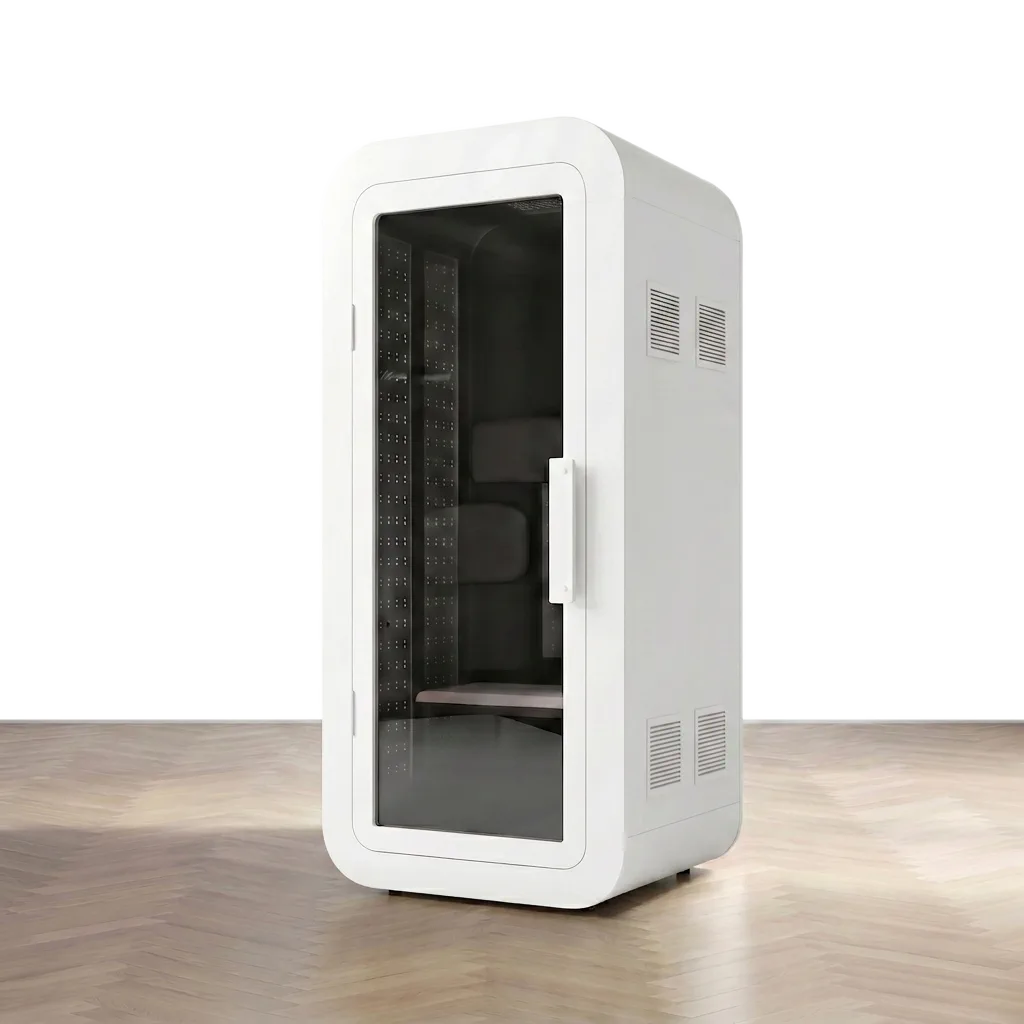
3. A phone booth for calls
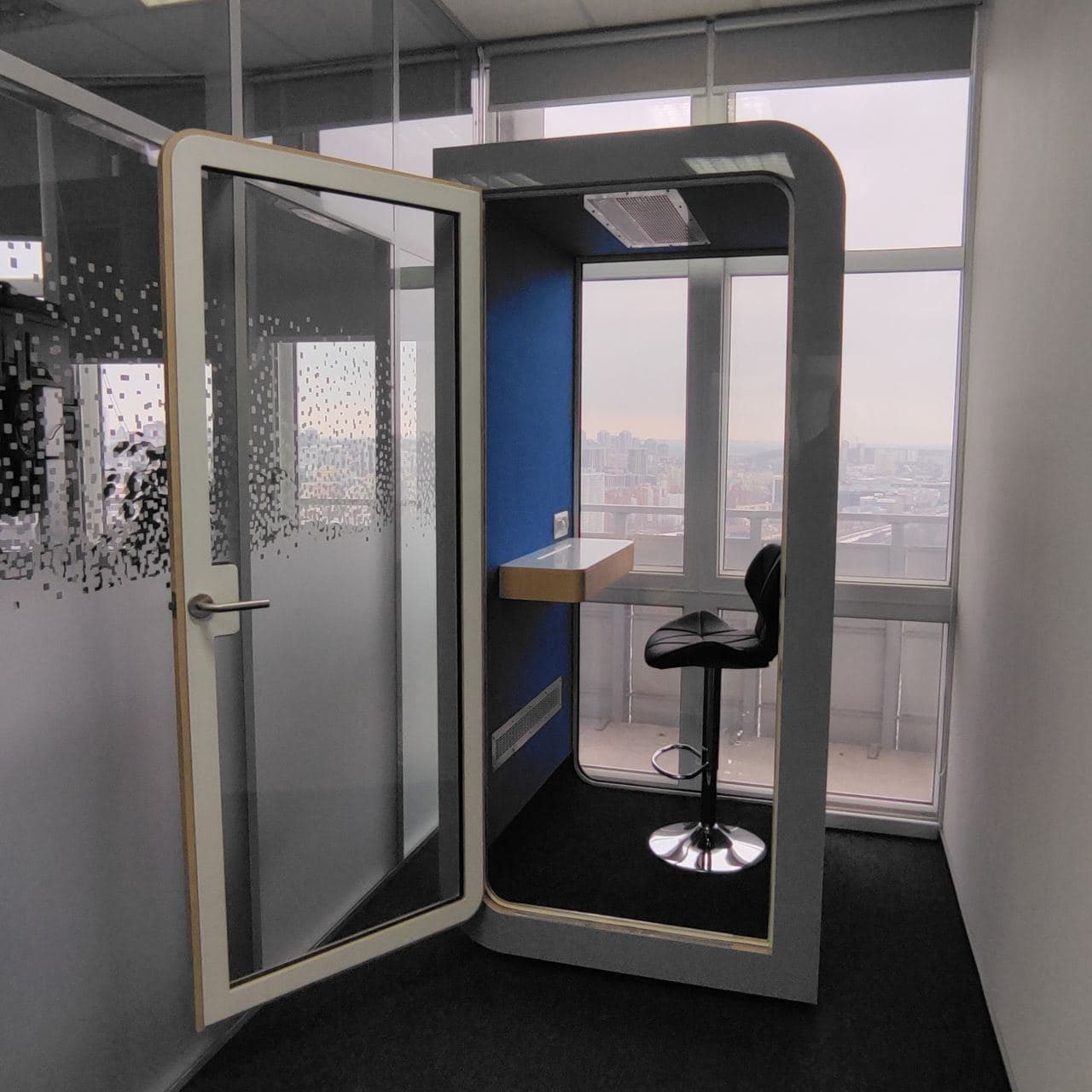
If the pressure point is calls specifically, a single-person office phone booth solves it at the lowest cost per problem removed. It takes up roughly a square metre, sits near the busiest part of the floor, and takes the loudest activity in the office out of the shared soundscape. In most open spaces one Solo per ten to fifteen people is a sensible starting ratio.
4. Modular furniture as a boundary
Tall shelving, storage units and planted dividers can mark out a semi-private area without a single tool. The effect is psychological rather than acoustic, but it works: people behave more quietly in a space that reads as separate, and the room keeps its open feel. This is the cheapest way to signal zoning across a large floor.
5. Soft acoustic treatments
Heavy curtains, felt panels, carpet and ceiling baffles absorb reflections and take the edge off the general hum. They reduce reverberation rather than transmission — the room sounds calmer, but speech still carries. Best used as a complement to booths, not a substitute for them.
Choosing between them
- Confidential calls and video meetings — an acoustic or phone booth, nothing else is adequate
- Deep focus work for one person — a Solo booth, or a screened desk if the floor is quiet
- Small meetings of two to four — a Duet or Quartet meeting pod
- General reverberation across the floor — acoustic panels, carpet, soft furnishings
- Flexible zoning on a tight budget — screens and modular furniture
In closing
Creating private areas without renovation is entirely feasible — the question is only which layer of the problem you are solving. Screens and soft treatments improve comfort; booths deliver actual privacy. Silentbox booths are made in Ukraine in three to six weeks and then delivered across the EU in 10–25 days via the logistics hub in Wrocław, and come with a warranty of up to 10 years on the Premium structure and 3 years on Lite and WorkPod. If your office needs quiet without a building site, that is where to start looking.