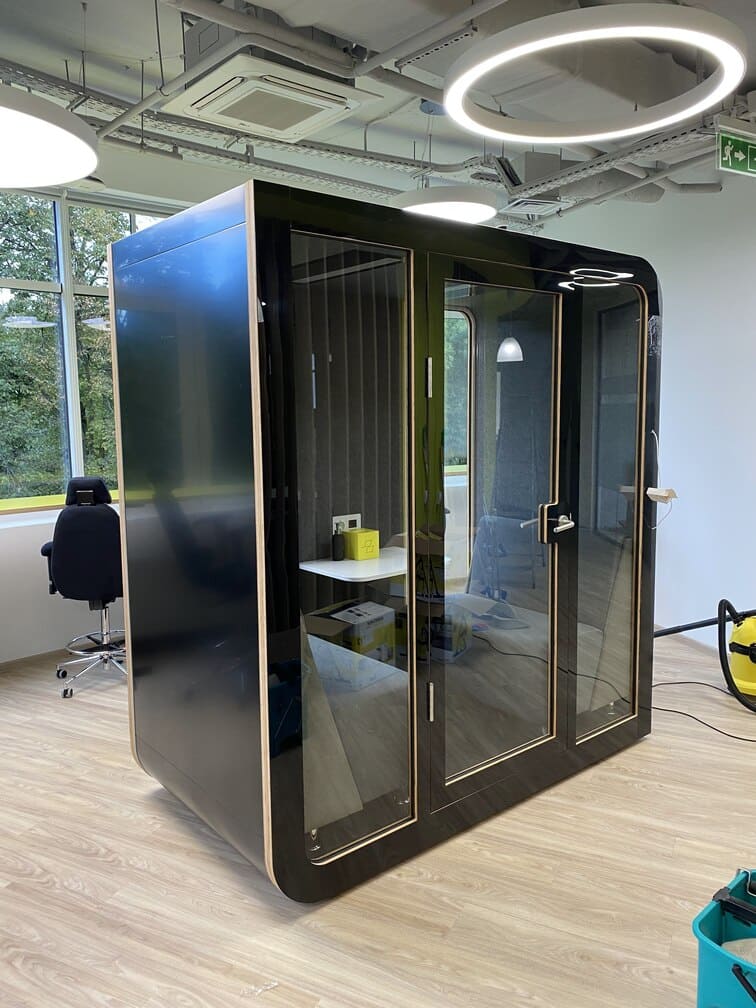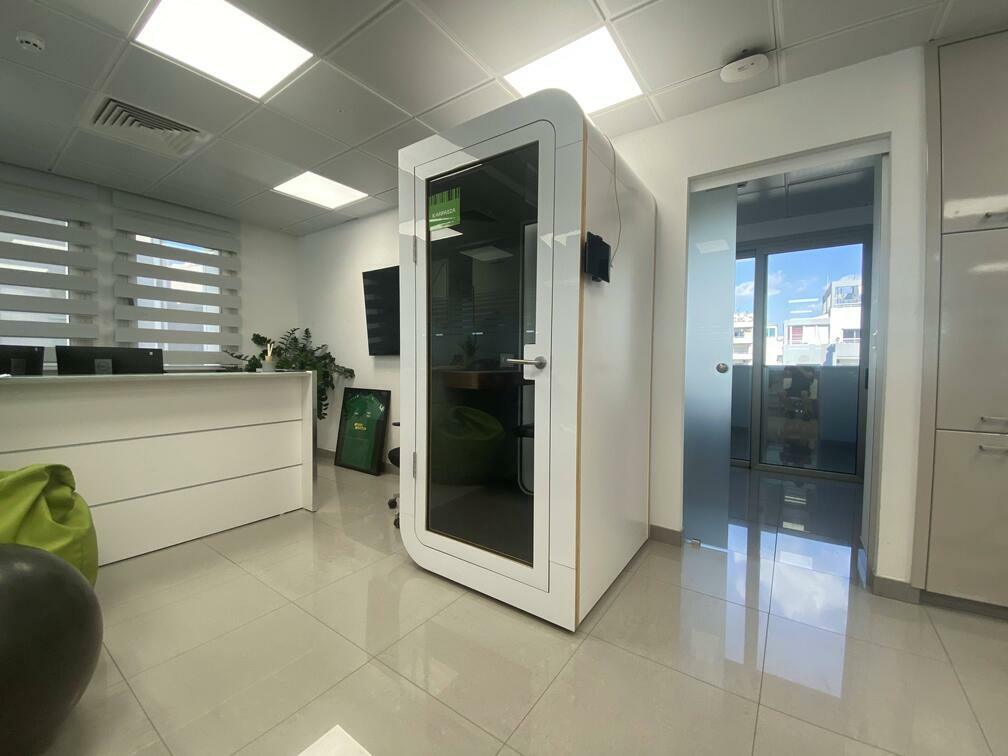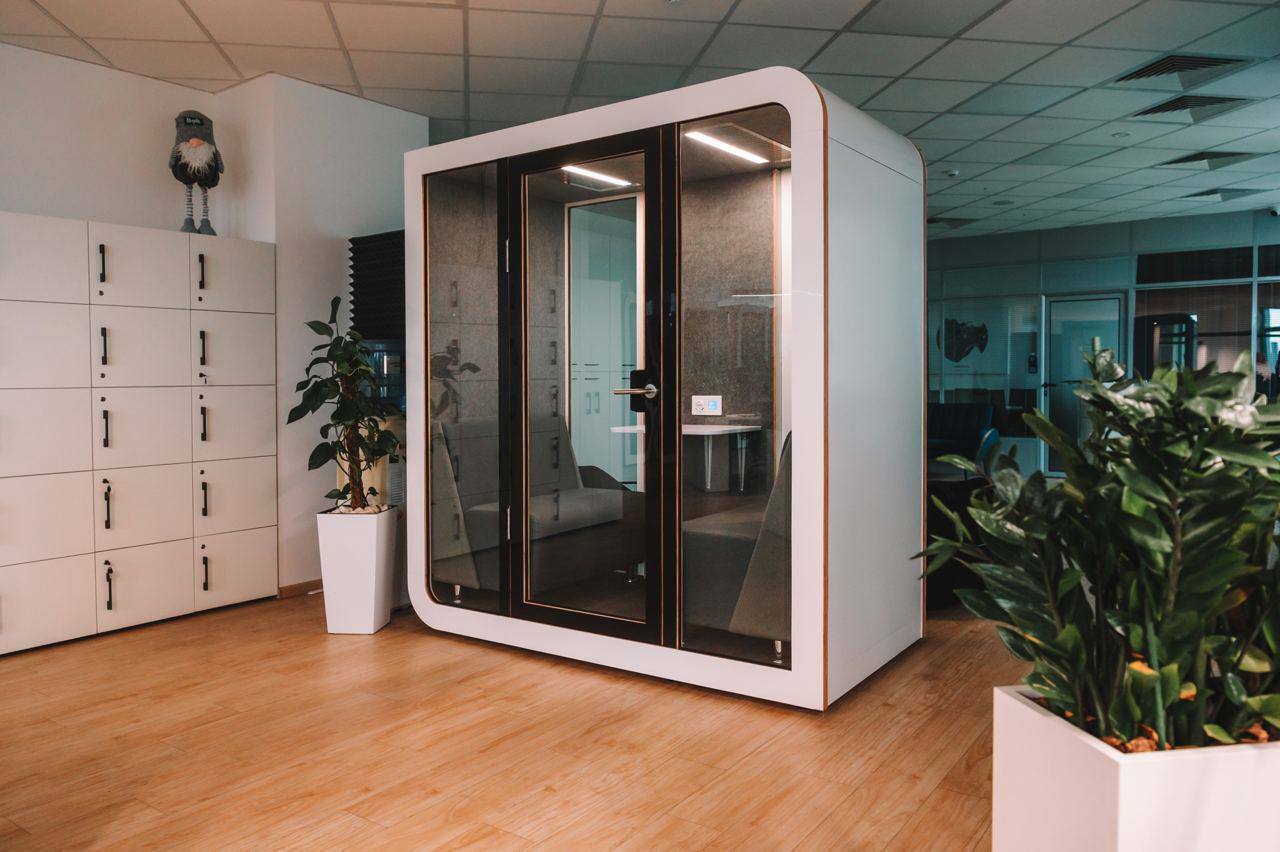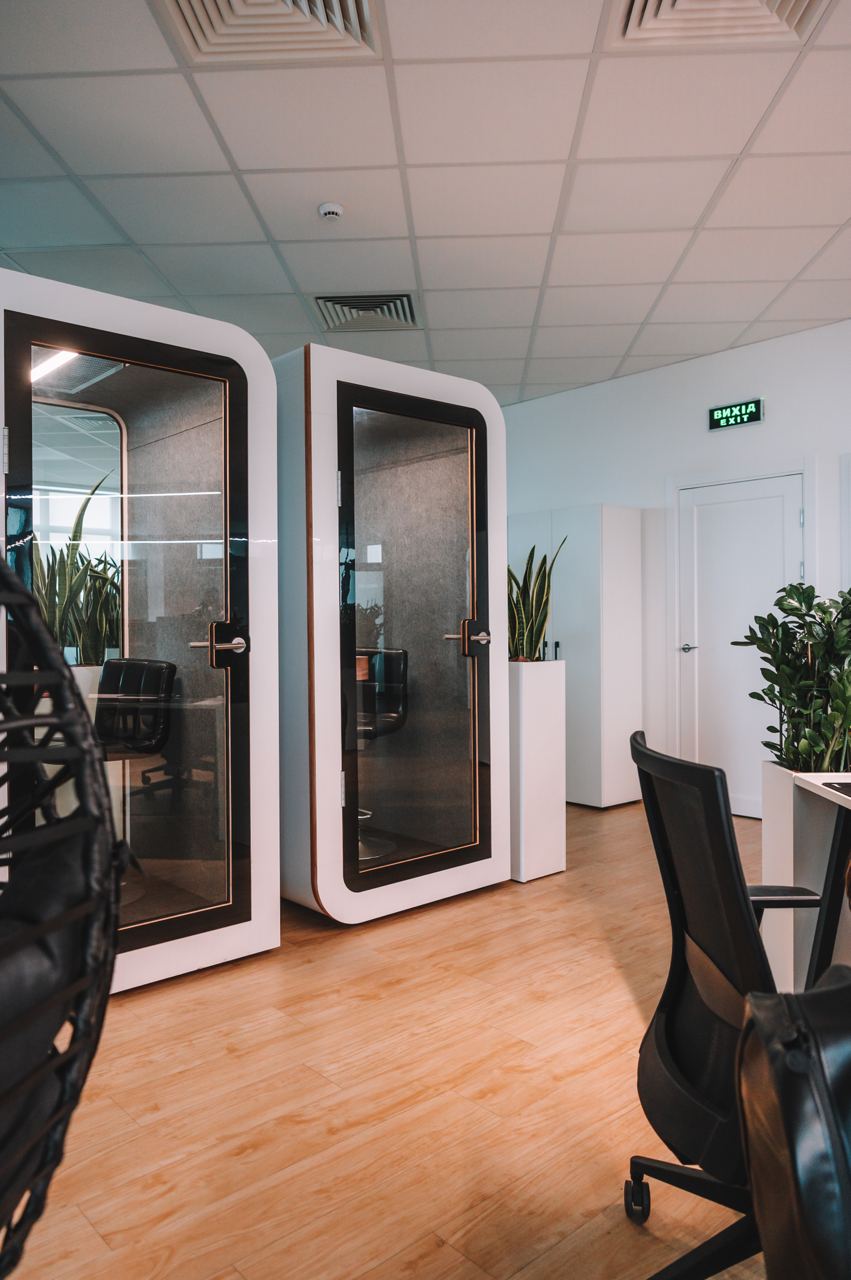
Panels absorb, a booth contains
Acoustic panels cut reverberation and make a room more comfortable, but the conversation at the next desk is still audible. A booth closes the space on every side and keeps the voice inside.
Panels absorb reverberation; a booth keeps the conversation inside. We pick the solution that fits your space: insulation 25–45 dB, assembled in a few hours with no building work.
Trusted by companies in 28 countries











Acoustic panels for the office work inside the room: they absorb reflections, bring reverberation down and make the space less tiring to sit in. That's the right first move when an office echoes. What they can't do is hide a conversation — the voice still travels across the open floor and reaches the desks nearby. That takes a boundary closed on every side, which means a booth with measured insulation. In practice the two don't compete: Silentbox booths use Class A absorbers inside and add up to 35 dB of insulation from the outside. So acoustic wall panels for offices and booths belong to the same plan, not to opposite camps.
The same booths in every office don't solve the problem. These are the four criteria a solution for one specific space is built on.
Acoustic panels cut reverberation and make a room more comfortable, but the conversation at the next desk is still audible. A booth closes the space on every side and keeps the voice inside.
Office noise never has one single cause: there's nowhere to take a private call, no free room for twenty minutes, no quiet for focused work. Each scenario calls for a different format.
Every booth goes up in a few hours — no drilling, no dust, no permits. The acoustics of the floor change in a day, not over months of refurbishment.
Start with the first booth where noise hurts most and add formats as the team grows. When the layout changes, the booths move with it.
The level of insulation is chosen by the job, not by the logic of «more is better». Daily calls and focused work need 25 dB; confidential negotiations move up to 35 dB to ISO 11957; and 45 dB is reached on Custom projects with specialist requirements.
The baseline level of acoustic comfort: absorbs speech noise and open-plan chatter for everyday work and short calls.
Insulation certified to ISO 11957: the right level for confidential negotiations, HR conversations and daily video meetings.
The maximum level for specialist briefs: recording studios, music rooms and spaces with stricter quiet requirements.
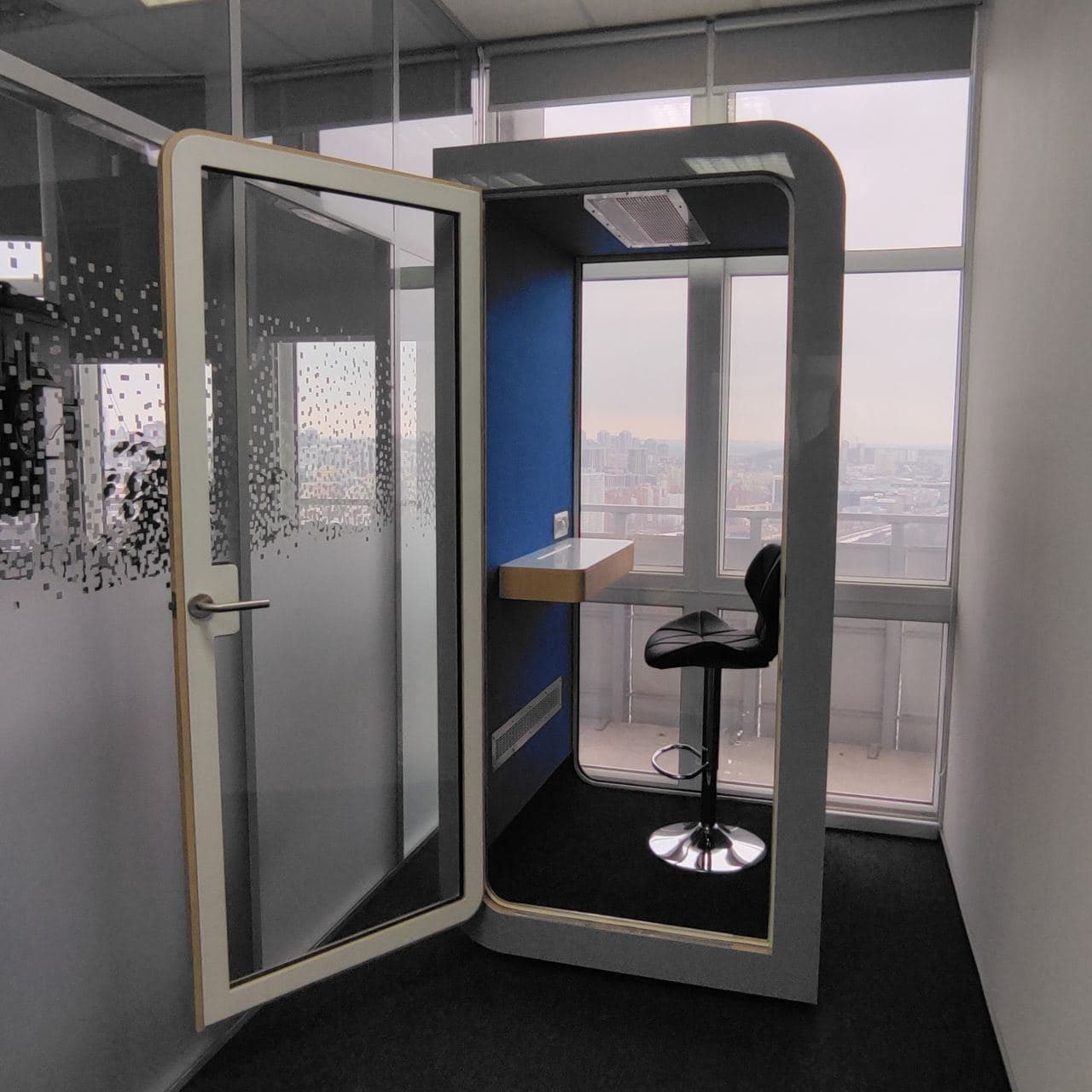
The quiet point for calls on an open-plan floor
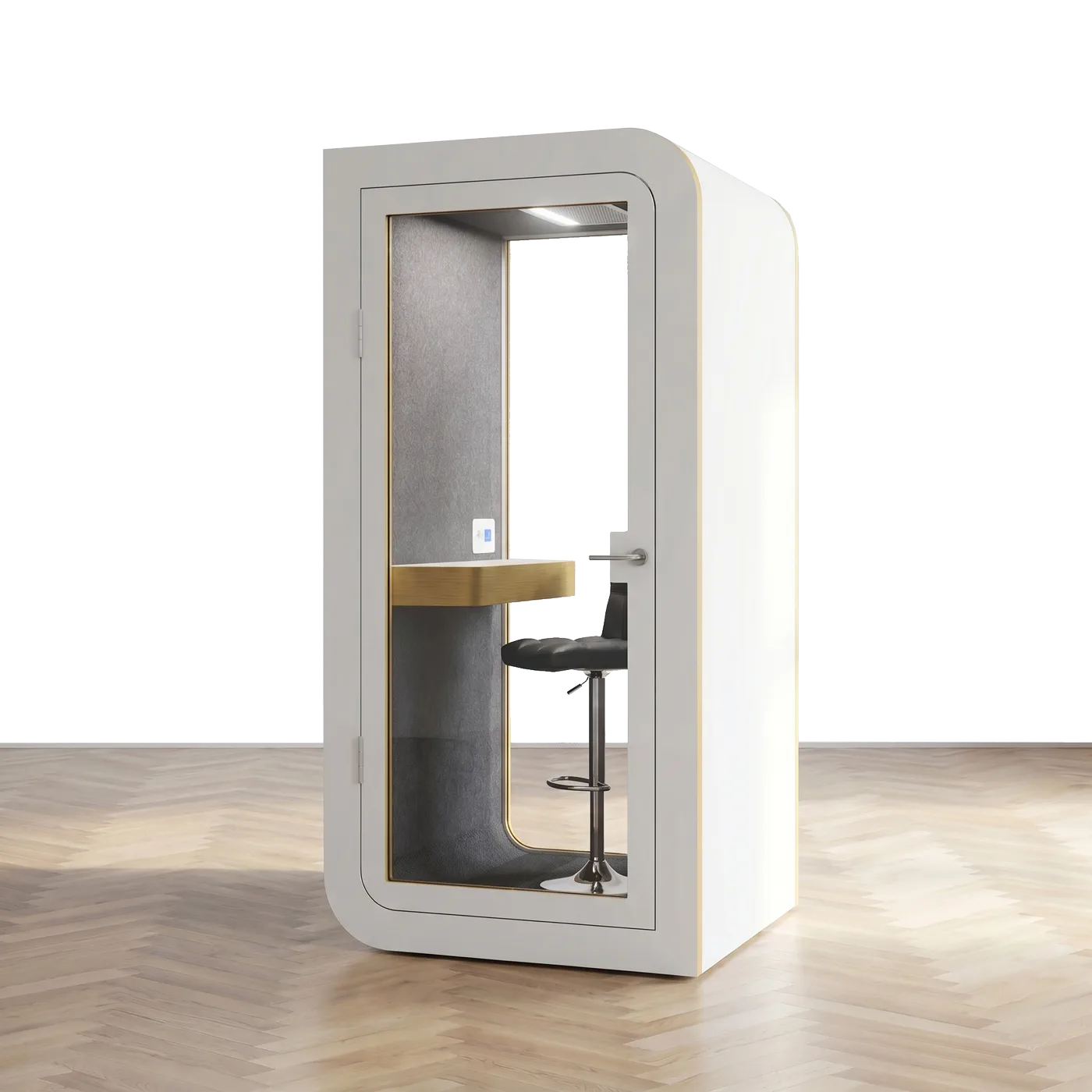
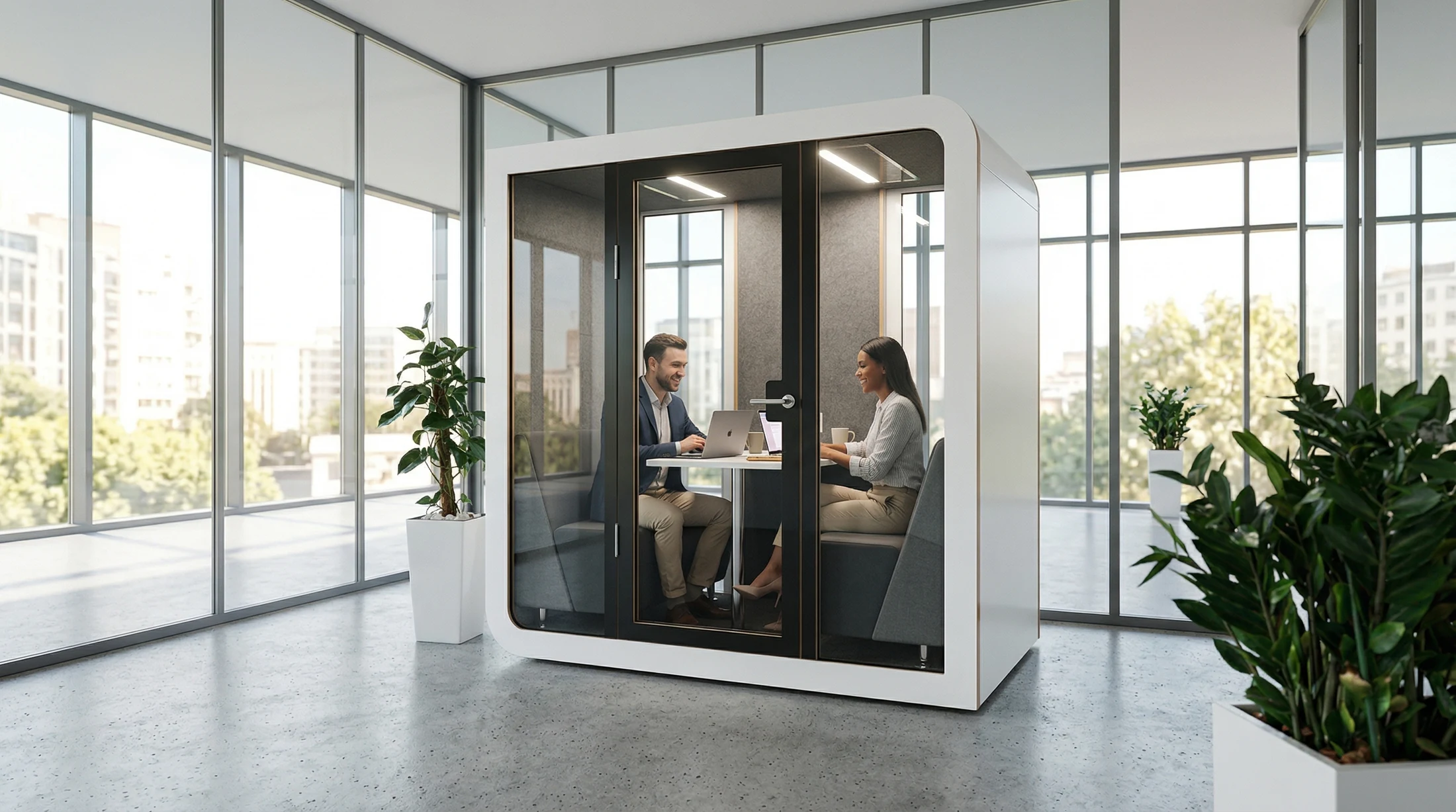
A meeting space for two, without building a room
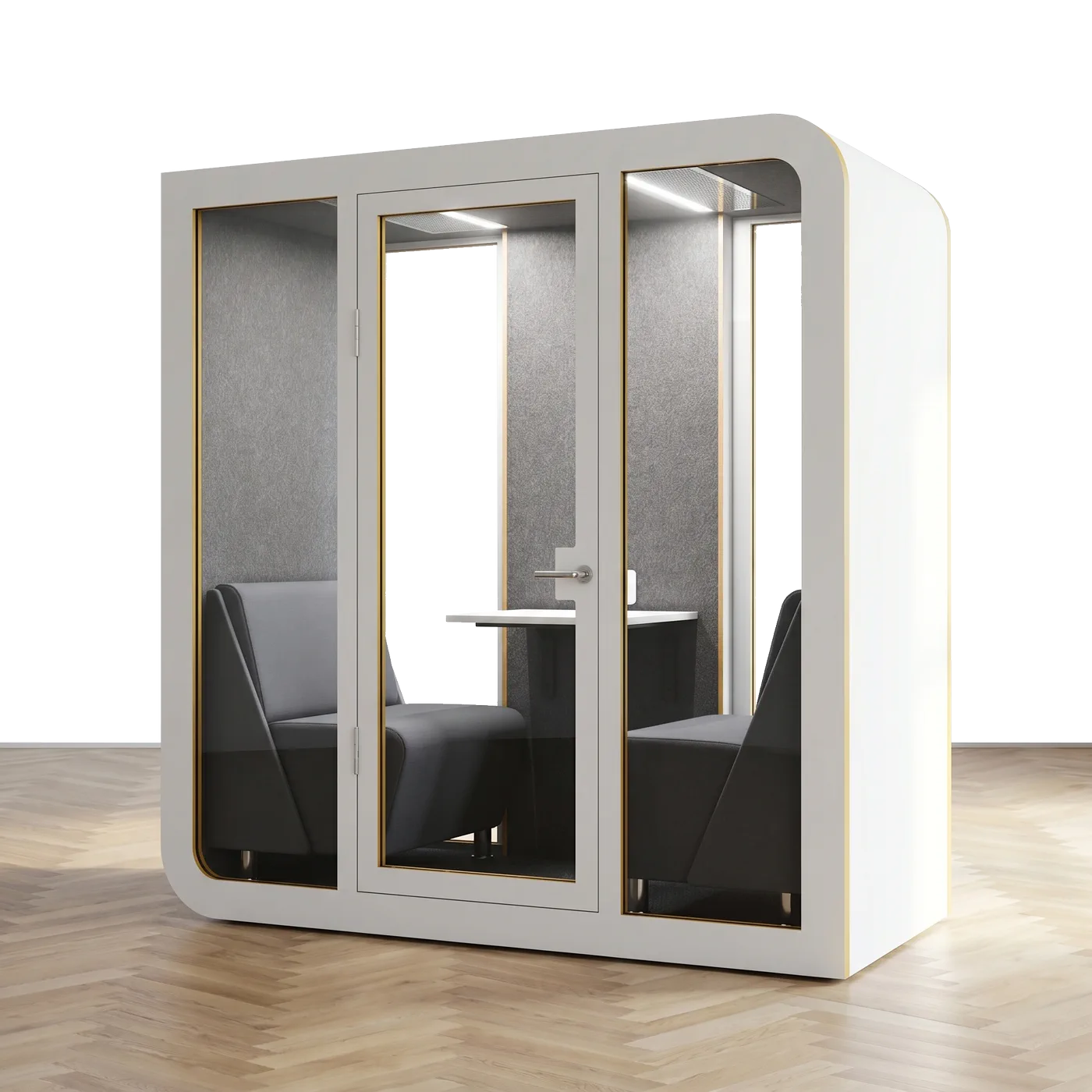
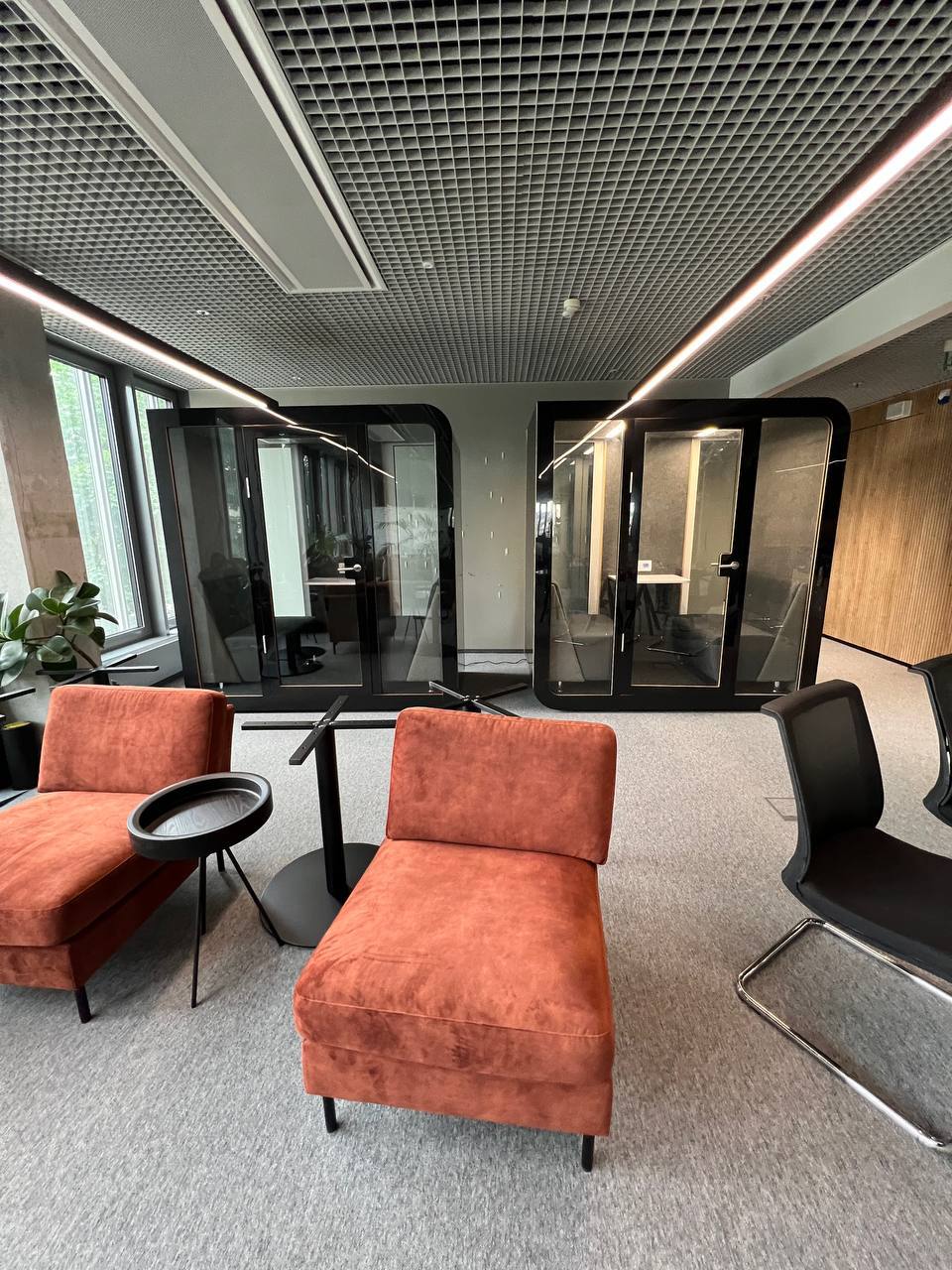
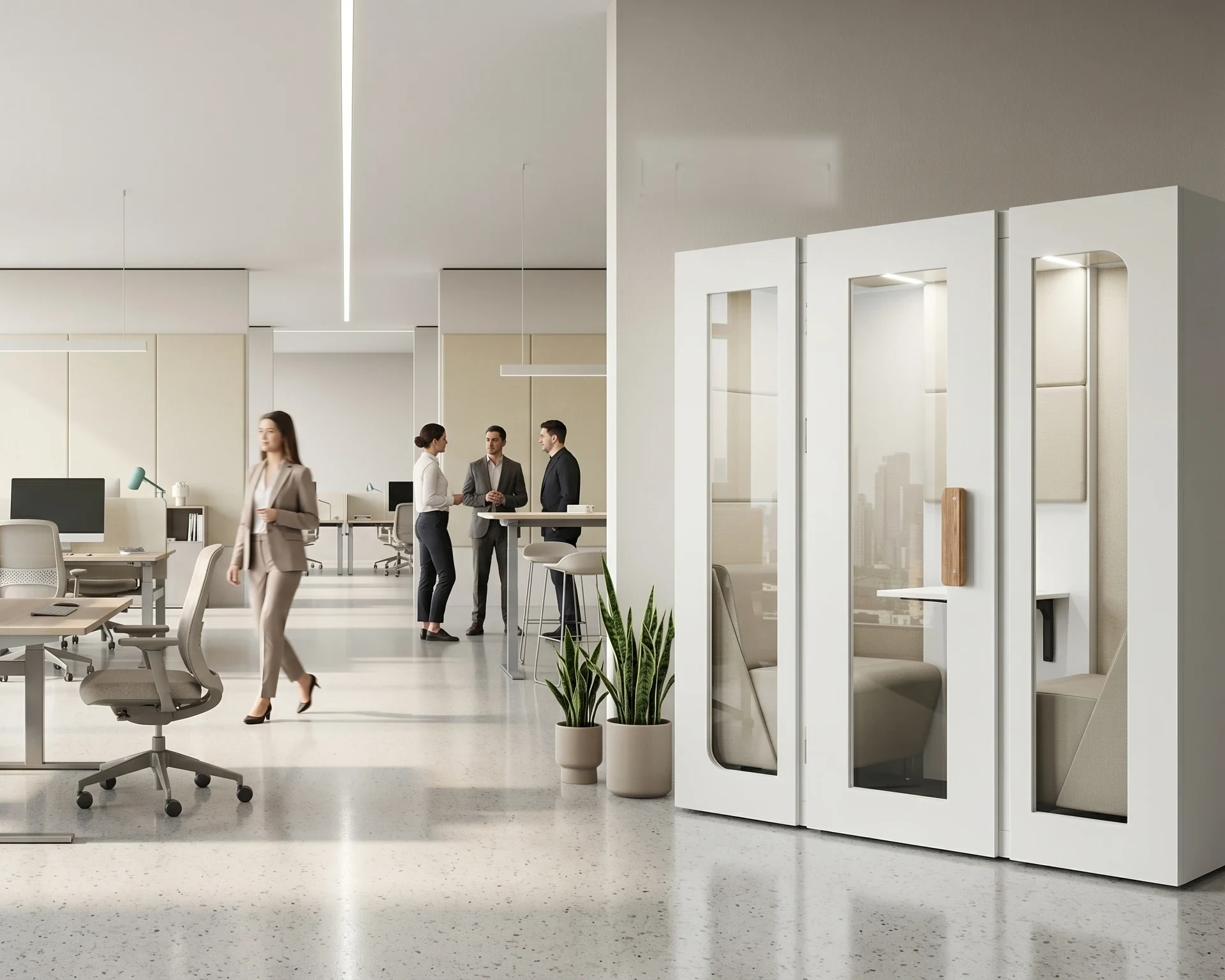
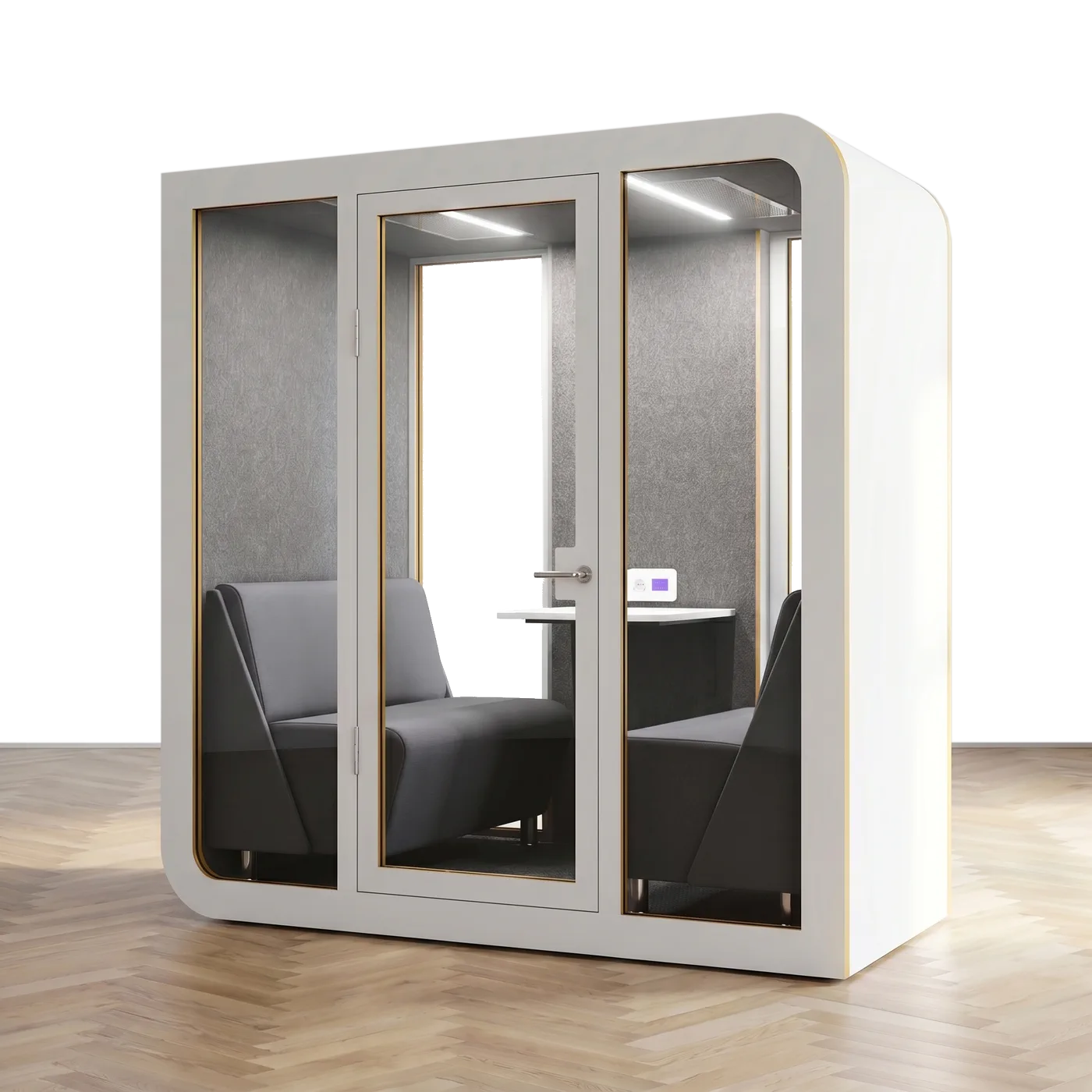
A team space for four, right in the open plan
The accessible way to add one quiet spot
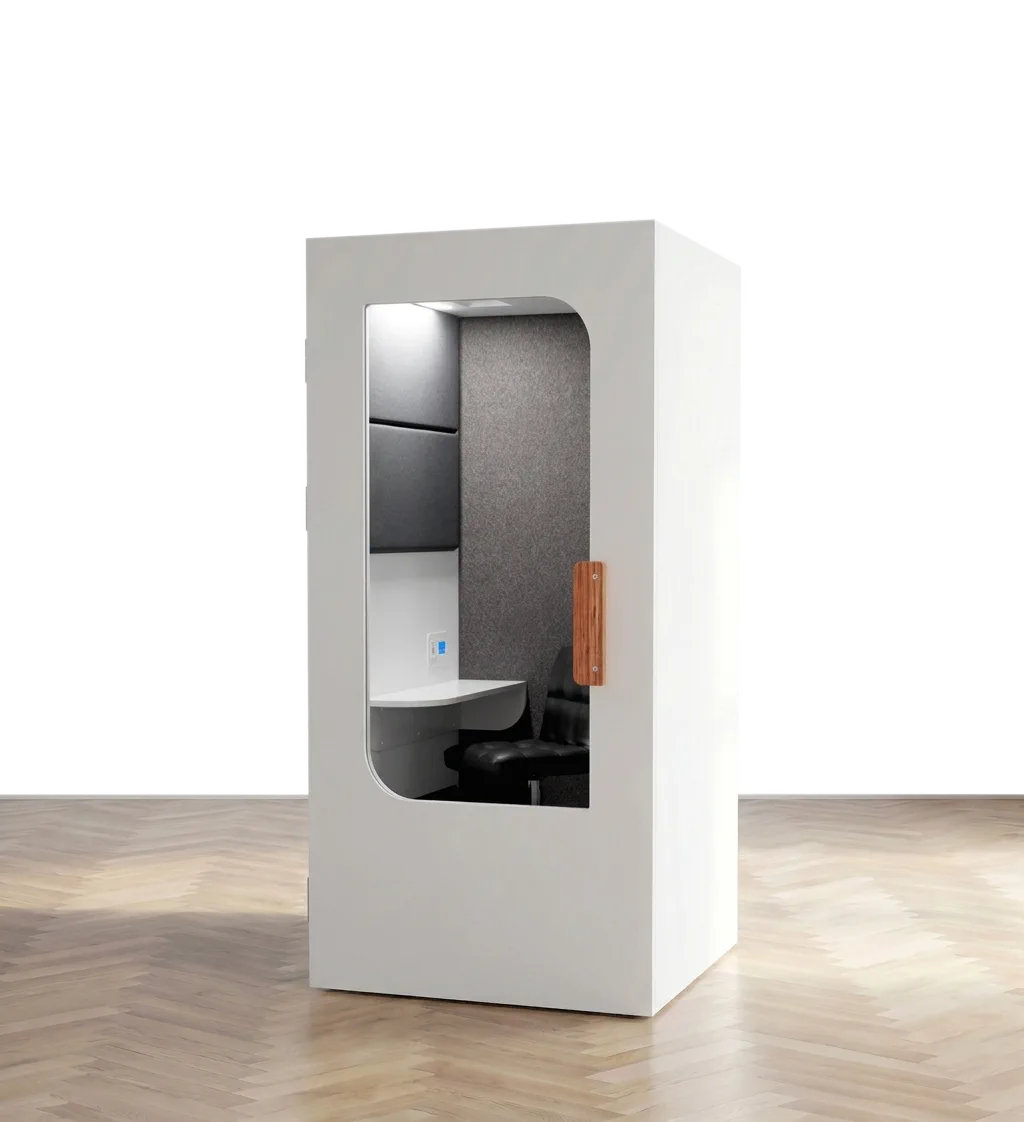
A retreat space for quick catch-ups
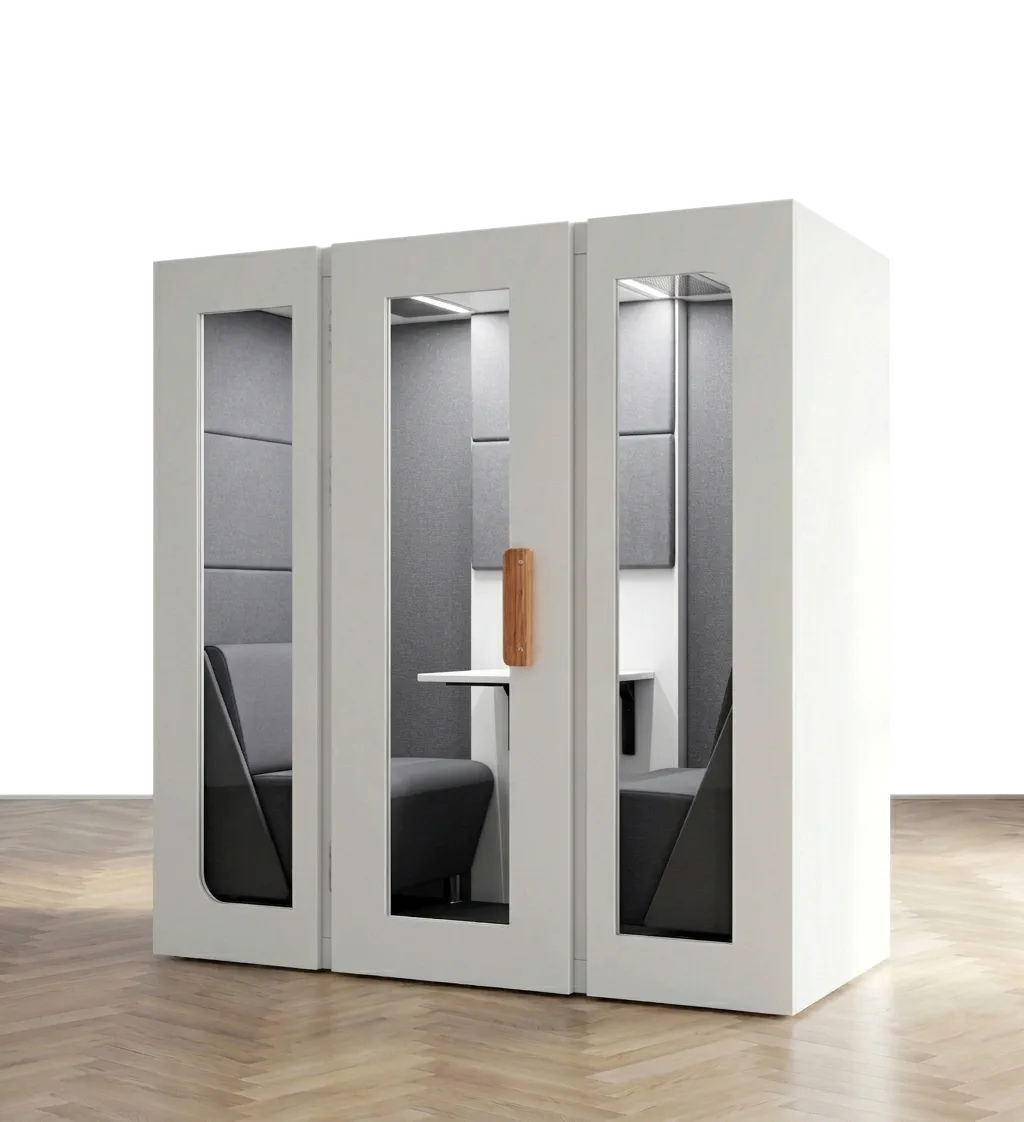
A team space for the everyday stand-up
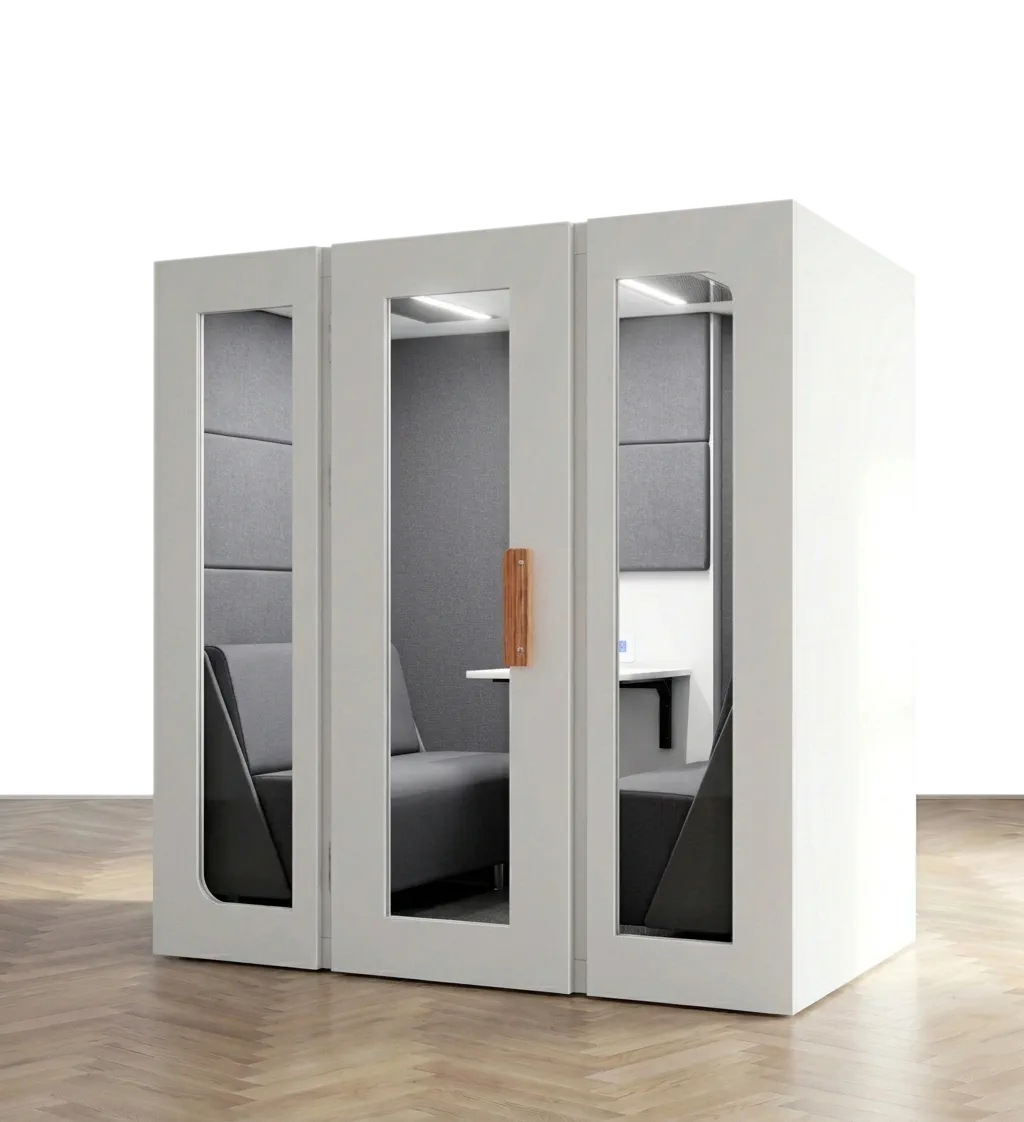
A desk workstation for the whole day
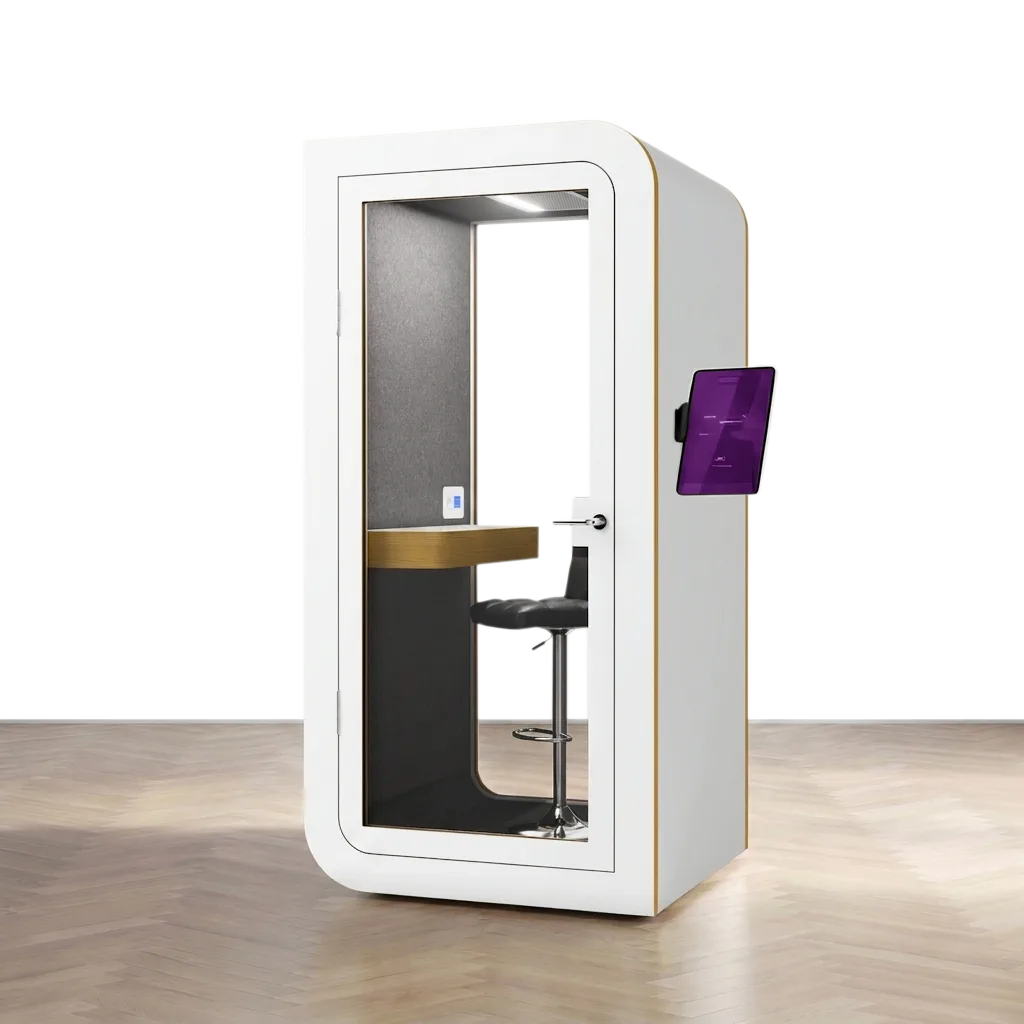
Unlocked from an app. For business centres, airports and coworking.
An acoustic solution built to your dimensions
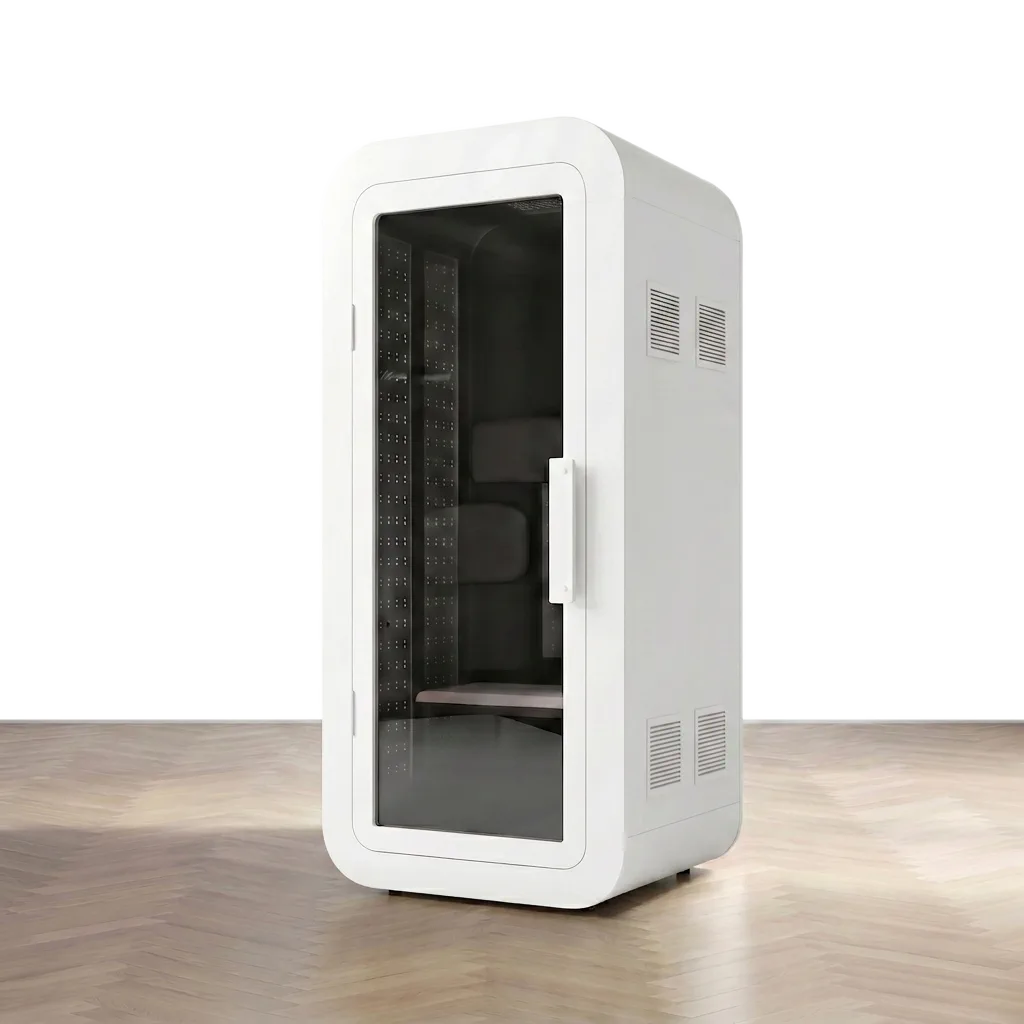
What an acoustic solution actually designed for an open plan changes.
A clear route from assessing the space to a working acoustic solution — in four steps.
We look at the floor plan and the way the team works: how many people, how many calls and meetings, and where the quiet is genuinely missing.
We propose the mix of formats and the number of booths that fit your brief, with a quote and delivery to your city.
We build the booths in our own factory with quality control at every stage. Standard production time is 3–6 weeks.
We deliver the booths and brief your team on assembling them without any building work; the Silentbox crew can install them for you instead. The solution is ready to use straight away.
Our own factory, warranty and service: behind every acoustic solution there's the team that builds it.
On Premium booths, cover runs by component — 10 years for the structure and frame, 5 for electronics and lighting, 3 for moving parts and ventilation; Lite and WorkPod carry 3 years.
We design and manufacture our booths ourselves — which means quality control and real flexibility in choosing the solution.
Certified materials, with integrated ventilation, LED lighting and a 220 V socket with USB and Type-C inside.
Silentbox acoustic solutions are already at work in the offices of Parimatch, El Corte Inglés, Ciklum and hundreds of other companies across Europe.
Acoustic panels absorb sound reflections inside a room: they cut reverberation and echo, so voices sound clearer and the space feels less tiring. What they are not is a barrier — they don't stop a conversation being overheard from the next desk.
It depends on the problem. If the office echoes and voices pile on top of each other, Class A panels improve comfort immediately. If what you need is somewhere to speak without being heard, that takes the insulation of a booth: up to 35 dB, certified to ISO 11957.
It's a mix of formats chosen for one specific space: single-person booths for calls, booths for 2–4 people for meetings, and desk workstations for focused work. The number and the formats are calculated from your floor plan and how the team actually works, not from a standard template.
Our starting point is one call booth per 10–15 employees, plus meeting formats depending on how many recurring meetings you run. The exact configuration comes from your floor plan and the team's real scenarios.
For short daily calls and focused work, 25 dB is enough (Lite and WorkPod). For confidential negotiations, HR conversations and recurring video meetings, the choice is 35 dB (Premium, ISO 11957). Up to 45 dB comes from Custom projects with specialist requirements.
Yes. The interior lining uses Class A absorbers, so a booth does both jobs at once: it absorbs reverberation inside and blocks sound from the outside. That's why your voice sounds clean on video calls, with no echo.
No. Every booth goes up in a few hours — no drilling, no dust, no construction permits. All it needs is a level floor and a 220 V socket nearby: ventilation and lighting are already built in.
Yes. Every Silentbox booth has quiet SMART ventilation built in, with an active supply of fresh air (250–600 m³/h, with acoustic silencers), along with LED lighting and a 220 V socket with USB and Type-C.
The cost depends on the number and format of the booths. Current prices for every model are in the catalogue above, and the full quote for your floor plan, delivery included, is ready within one working day.
Yes. Booths can be dismantled, transported and reassembled elsewhere: unlike built rooms they don't stay with the landlord, they relocate with the team.
Yes. We deliver to more than 30 countries: the booths arrive in your city and each one takes a few hours to install with no building work. A quote including delivery costs is ready within one working day.
No. Panels absorb reflections and remove echo, but they don't block speech travelling directly through a room. For a conversation to genuinely stay private you need an isolated capsule: a Silentbox Premium booth delivers 35 dB to ISO 11957 — inaudible just one metre away.
It's the highest sound absorption class under ISO 23351-1: the material soaks up the maximum share of sound energy instead of reflecting it. These exact panels line the inside of every Silentbox booth — they dampen reverberation and keep your voice clean on video calls.
They often pair well: panels lower the general hum of the open area, while booths give people places where a conversation is fully contained. The core difference between acoustic panels and a booth is that panels dampen ambient noise in the room, while a booth fully isolates the conversation. If you have a limited budget, start with booths — they solve the sharpest problem (calls and confidential talks) and already include panels inside.
Three layers of defence: Class A absorption panels on the interior surfaces, triple-layer laminated glazing, and acoustic ventilation silencers. Together they deliver 25 dB in the Lite series, 35 dB in Premium, and 35–45 dB in Custom.
Practical answers from the Silentbox blog