
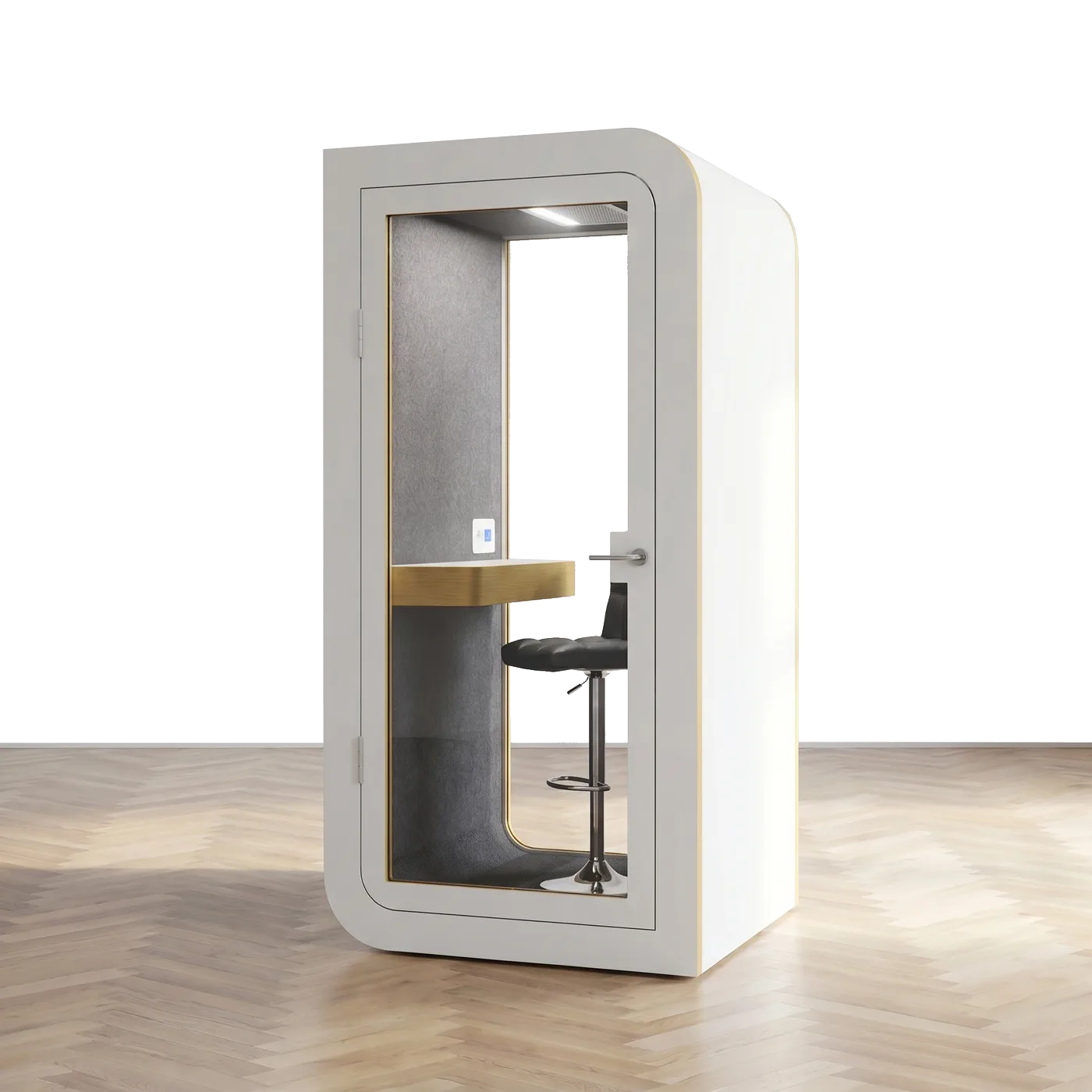
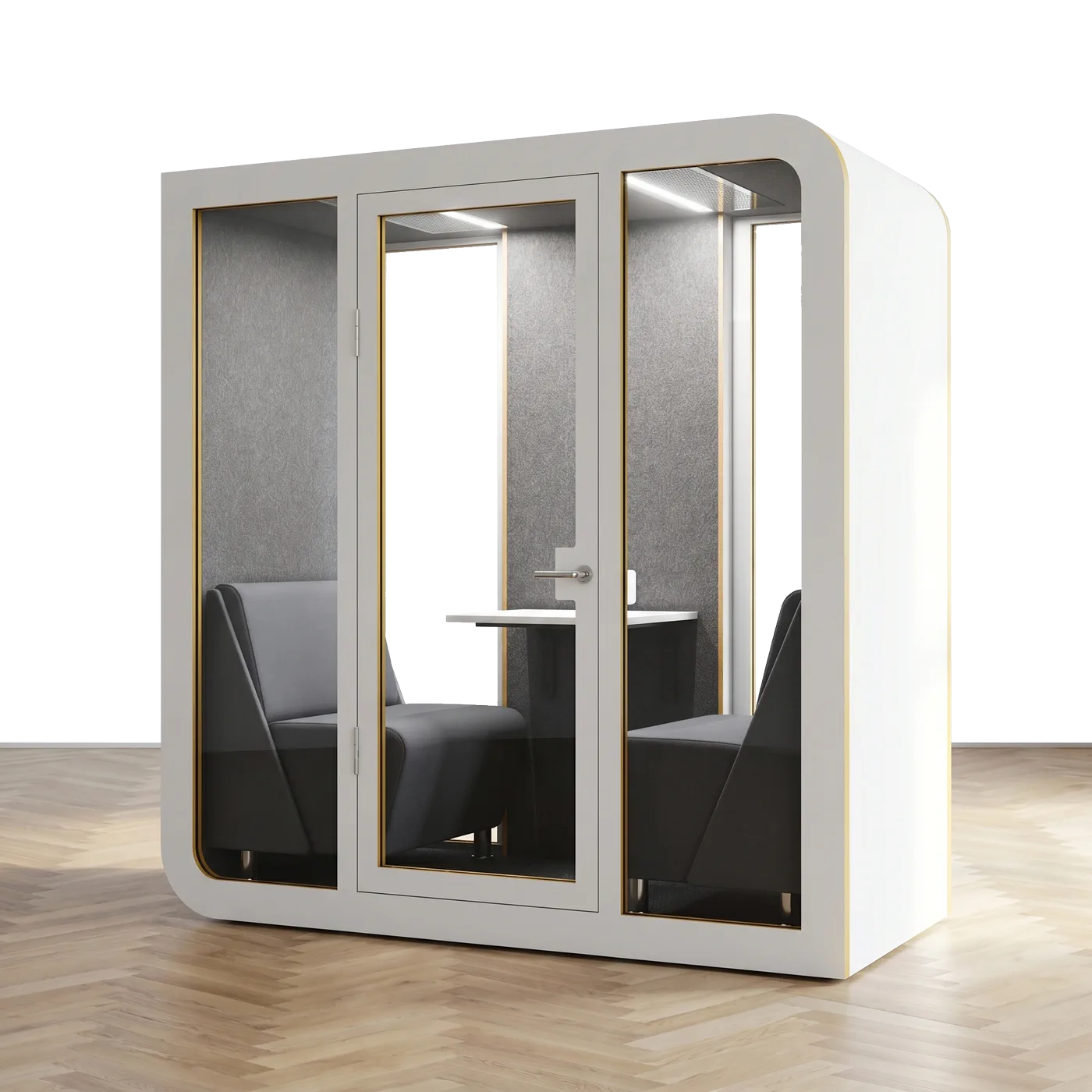
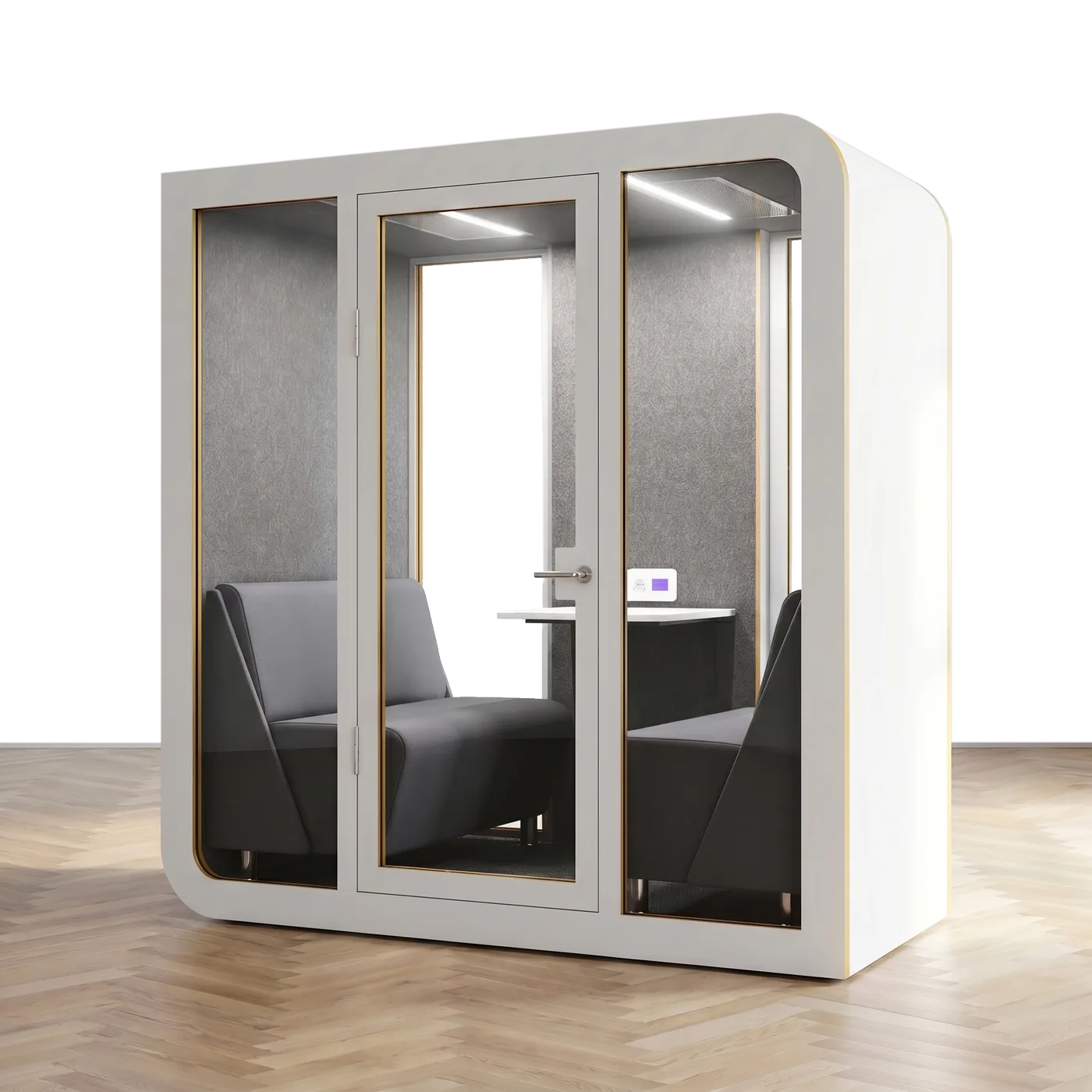
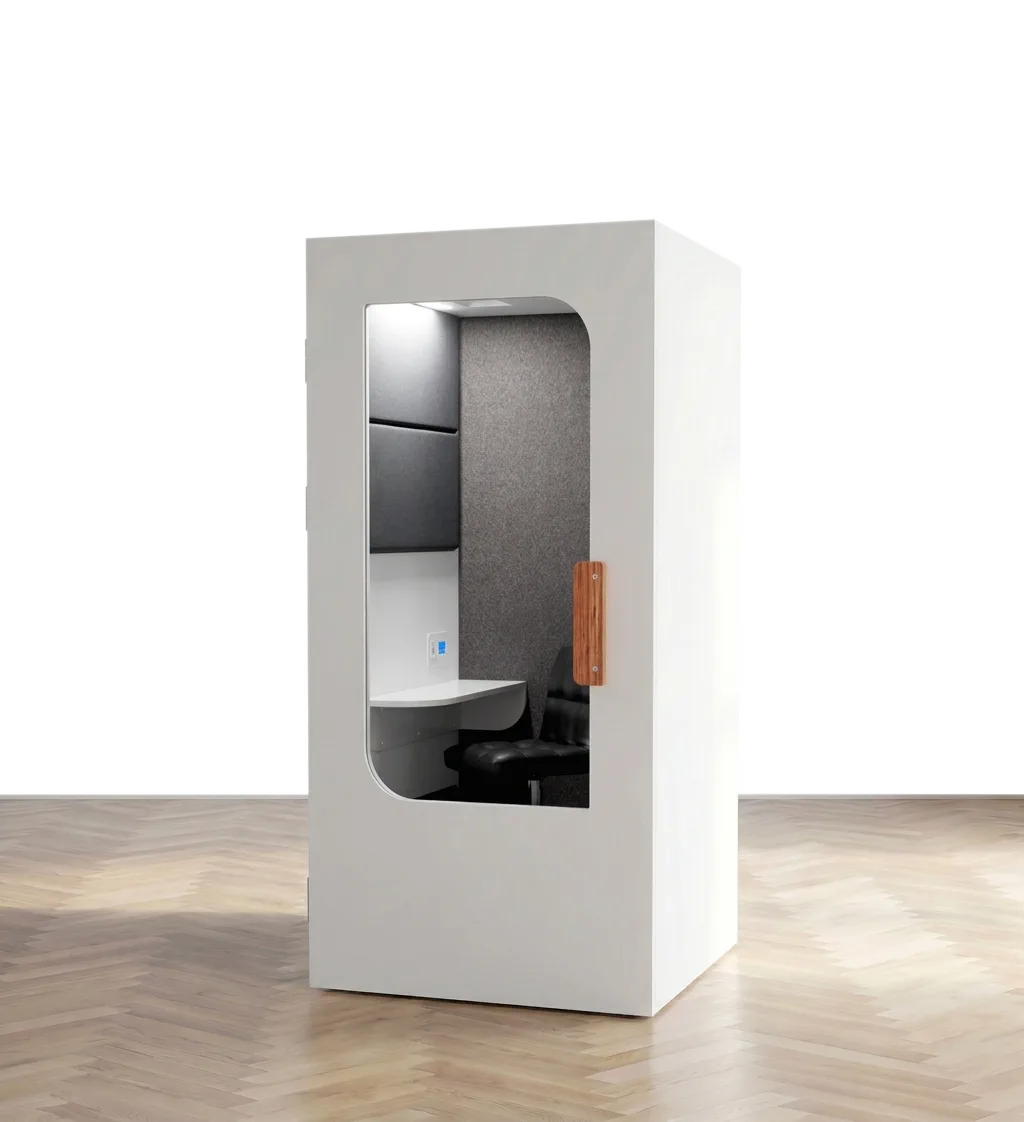
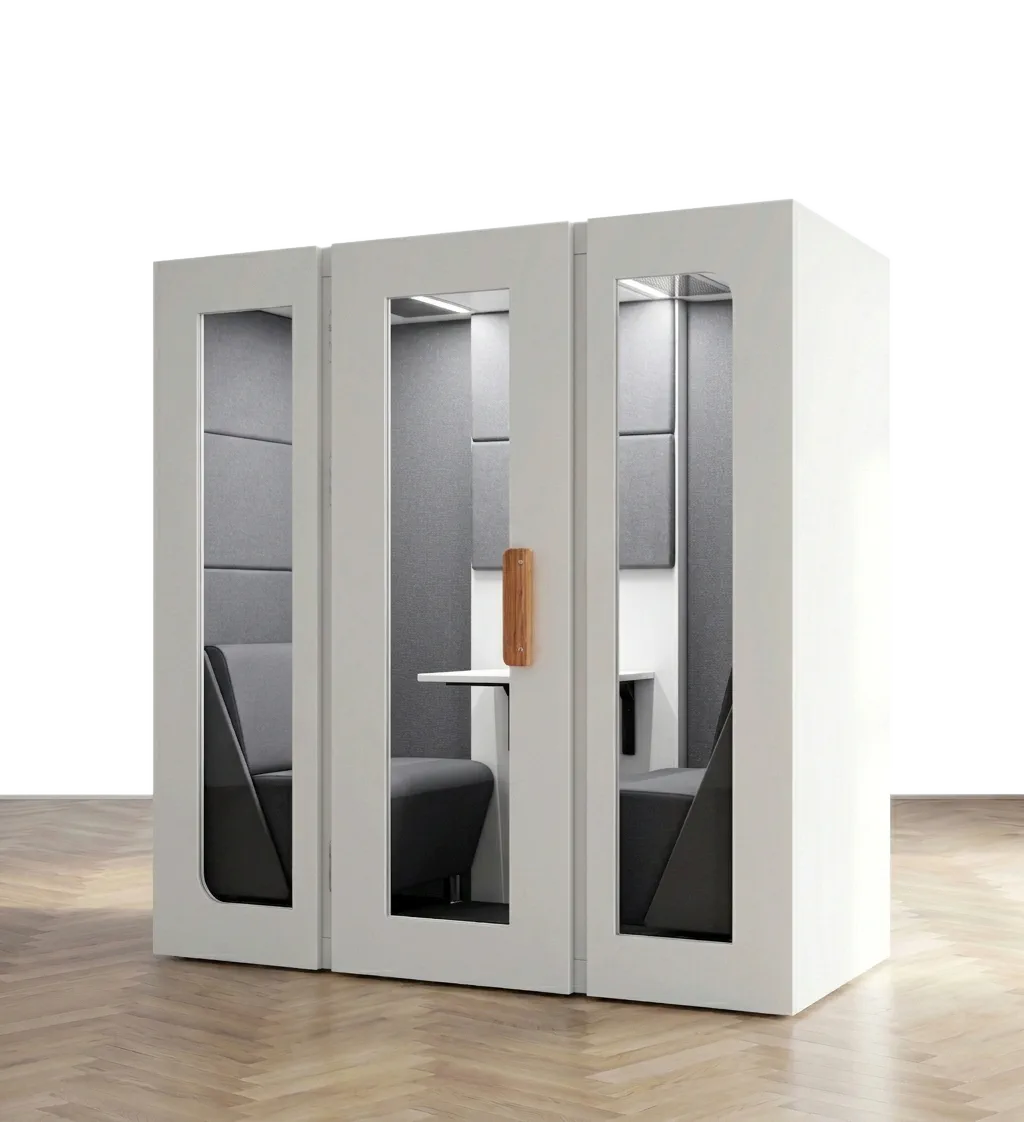
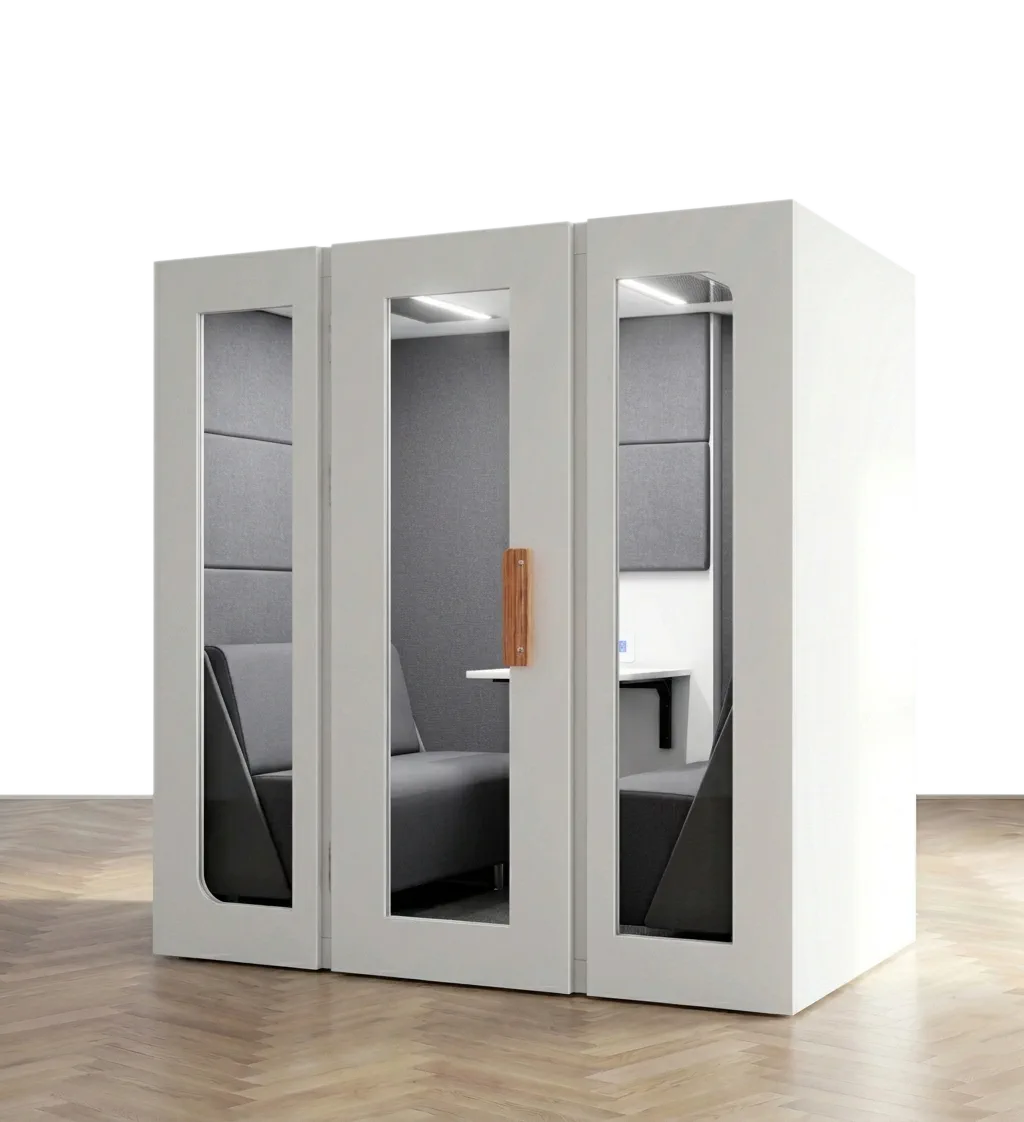
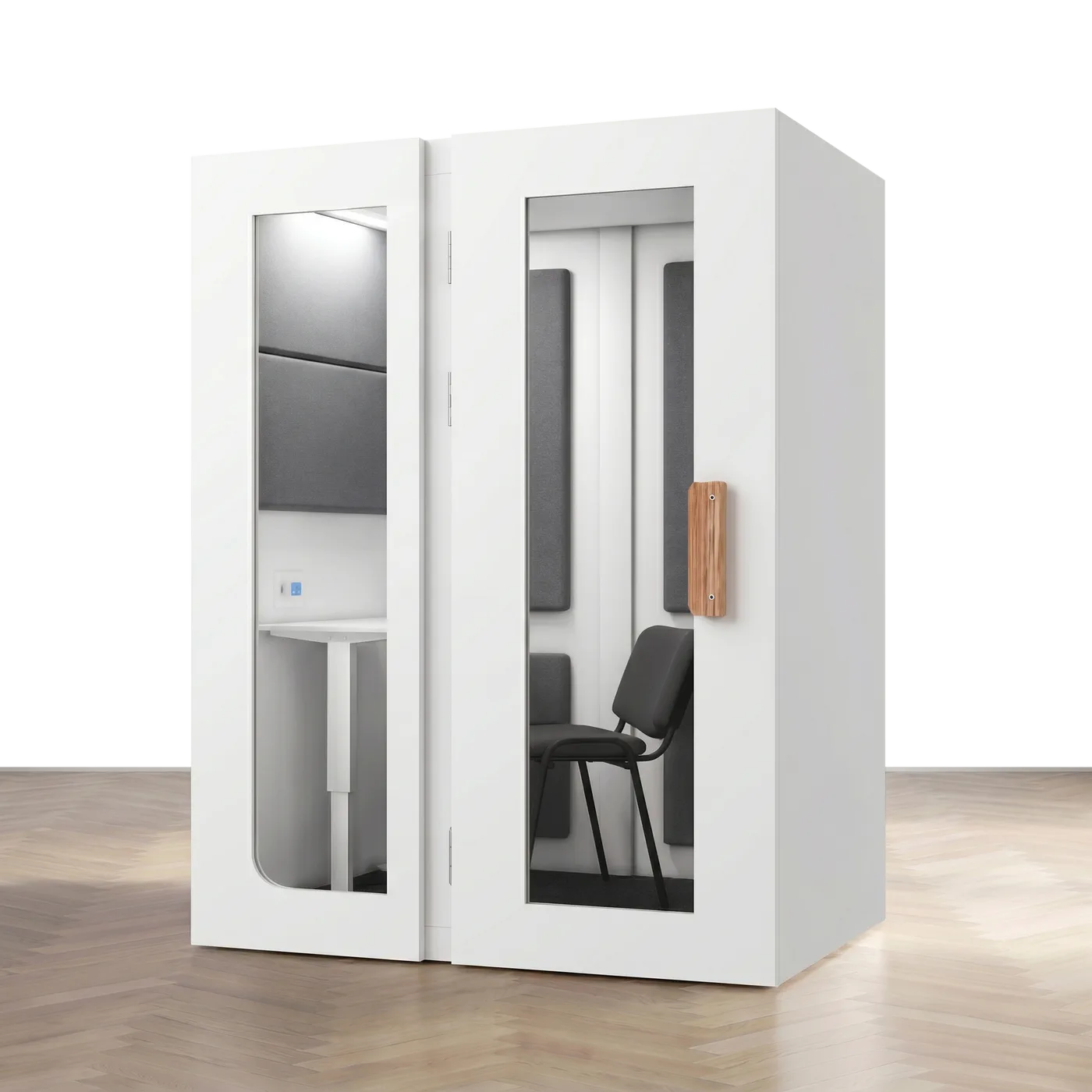
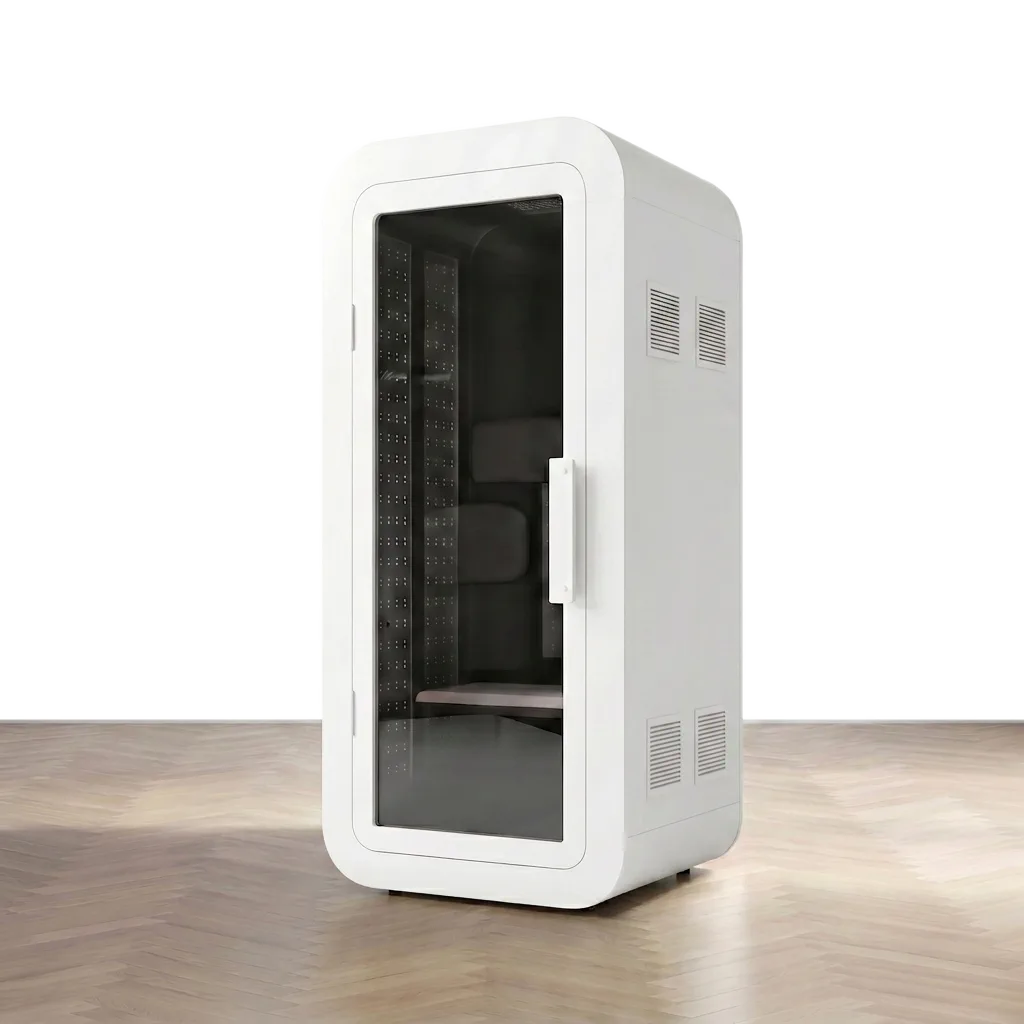
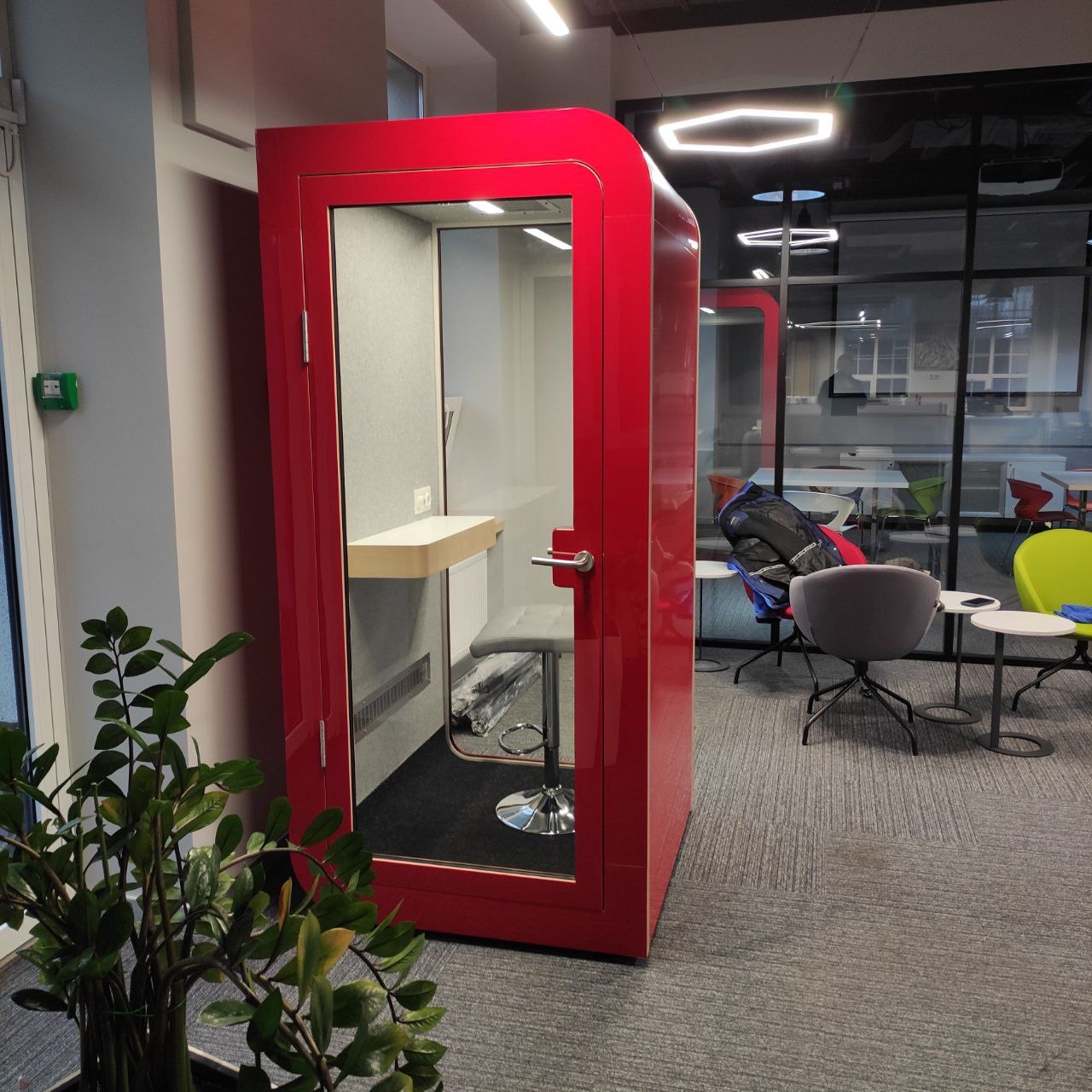
An acoustic booth is an investment rather than an expense because it changes what a team can do. It gives people a quiet place for calls, short meetings and focused work on an open-plan floor; it moves when the company changes; and it shows that the working environment is taken seriously. The payback arithmetic is in our ROI guide; this article covers the four levers behind it.
On the budget, a booth sits on the furniture line. In use it behaves like equipment: people can do things in it that the open floor does not allow, such as a private call or an hour of uninterrupted work.
1. A place to concentrate inside the open space
Open-plan offices make collaboration easy and concentration hard. A booth gives people somewhere to take a call, hold a short meeting or work on something demanding without interruption, and it takes those conversations off the open floor, so colleagues outside are disturbed less.
The sound insulation is what makes this real rather than symbolic: the Premium series reaches 35 dB of noise reduction, tested to ISO 23351-1 and ISO 11957, while the Lite series gives 25 dB — enough for calls in a moderately busy space.
Interruptions cost more than minutes. In a laboratory study by Mark, Gudith and Klocke (CHI 2008), people whose work was interrupted reported significantly higher stress, frustration, workload, effort and pressure after only 20 minutes. Speech is also the yardstick for open-plan acoustics: the international standard for measuring open-plan offices, ISO 3382-3, centres on the spatial decay of speech, meaning how quickly a voice fades with distance.
2. Flexibility that matches how companies change
Businesses reorganise faster than buildings do. Unlike partition walls or a fitted meeting room, a booth is free-standing: it is not fixed to the floor, walls or ceiling and needs only a standard 220 V socket. It adapts to the floor plan instead of locking it in.
- Assembly on site in a few hours, with no building work
- Movable if the team grows or the layout changes
- Solo and WorkPod for one person, Duet for two, Quartet for up to four
- Ventilation and lighting fitted as standard
- Warranty of up to 10 years on the Premium structure, 3 years on Lite and WorkPod
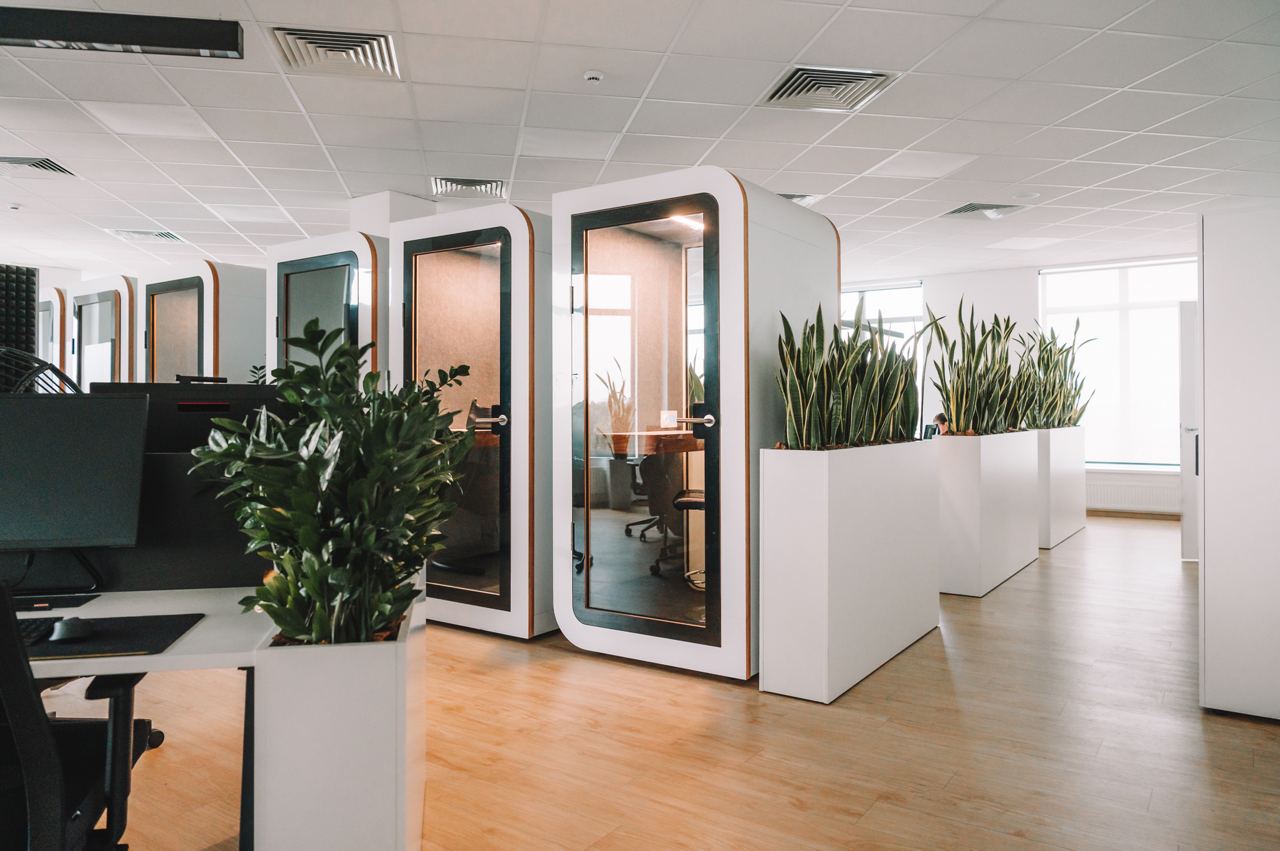
This matters especially in leased offices: the booth can be installed and removed without building work, because it is not fixed to the floor, walls or ceiling. If the company moves when the lease ends, the booth can be dismantled and moved with it. In hybrid work, when the number of people in the office changes from day to day, booths give everyone who comes in somewhere to take calls and video meetings without booking a meeting room.
3. A tool for attracting and keeping people
Noise is one working condition people clearly notice. In Savills' survey What Workers Want: Europe 2019, 58% of workers in private offices were satisfied with the level of noise at work, against 47% of those in open-plan offices. A booth does not turn an open floor into private offices, but it gives people a quiet option when a task needs one.
Well-made booths also show that the company considers the working environment worth spending on, which can support staff satisfaction and the employer brand. That effect is hard to price, so our ROI guide counts only recovered time.
4. A return you can actually observe
Before anyone puts a figure on it, a booth's effect shows up on the floor. The signs to look for: calls that used to be taken at desks moving into the booth, fewer meetings interrupted by noise, and occupancy that shows whether people actually use it. If a booth stands empty, the payback question answers itself. A booth also gets more out of floor space you already pay for: an unused corner can become a place for calls.
Four levers of a booth investment: what changes and how to check it
| Lever | What changes | How to check it in your office |
|---|---|---|
| Focus | Calls and focused work leave the open floor | Count calls taken at desks and meetings interrupted by noise, before and after |
| Flexibility | The layout can change without building work; booths move with the company | List the office moves and layout changes planned for the next few years |
| People | Quieter conditions for calls and concentration | Ask the team about noise, before and after |
| Observable effect | Fewer interruptions, more booth use | Track how often the booth is occupied |
Qualitative levers. Payback arithmetic, salary inputs and the worked example are in the ROI guide.
Booth or a fitted meeting room?
For calls and short meetings, a booth and a fitted meeting room solve the same problem in different ways. A booth is modular furniture: no building work, no permits, a standard 220 V socket, and the office keeps working while it is installed. Production takes 3–6 weeks, then delivery takes 10–25 days via the logistics hub in Wrocław (25 days to the UK); installation takes from 2 hours, depending on the model.
A meeting room still suits larger groups and longer sessions. The choice depends on how often a space is needed, by how many people, and whether the layout is likely to change: booths cover one person (Solo, WorkPod), two (Duet) or up to four (Quartet).
Guidance, not law: where the decision sits in the UK
In the UK, design guidance for noise inside buildings, offices included, is set out in BS 8233:2014, Guidance on sound insulation and noise reduction for buildings. BSI lists it as current and explains why it is published as a guide:
…it was decided to publish this edition as a guide because the text largely comprises guidance that does not support claims of compliance.
BSI, BS 8233:2014 catalogue page
Great Britain's noise law, the Control of Noise at Work Regulations 2005, exists to protect hearing and sets no separate figure for offices; our guide to what 35 dB of insulation means covers it. So a quiet office is a management decision, not a compliance purchase, which is why a booth belongs on the investment side of the ledger.
Summing up
A booth is bought like furniture and judged like equipment: by whether people use it, and by what it lets them do that a desk on the open floor does not. Focus, flexibility, people and an observable effect are the four levers; the ROI guide turns the first of them into a number. Silentbox manufactures its own booths in Ukraine in three to six weeks, then delivers them across the EU in 10–25 days via its logistics hub in Wrocław, and has more than 500 booths installed in 28 countries.
Questions about a booth as an investment
Is a booth worth it if we already have meeting rooms?
It can be, because the two do different jobs: meeting rooms suit larger groups and longer sessions, while booths take calls, short meetings and focused work off the open floor without tying up a room. Our ROI guide shows how to check whether it pays off.
Can we take the booths with us if we move offices?
Yes. The booths are free-standing and not fixed to the floor, walls or ceiling, so they can be dismantled and moved when the office relocates. The new office needs only a flat, solid floor and a 220 V socket nearby.
Do booths need building work or a permit?
No. Silentbox booths are modular furniture, not building structures. There is no drilling into walls, no cable routing and no re-planning permits, and the office keeps working during installation.
What service and warranty come with a booth?
Service comes from the manufacturer: Silentbox responds within 48 hours of a request. The warranty depends on the series. Premium: 10 years on the frame, 5 on electronics, 3 on moving parts; Lite and WorkPod: 3 years.
How do we know whether the booths are paying off?
Compare before and after: how many calls still happen at desks, how often meetings are interrupted by noise, and how often the booth is occupied. For a figure in money, use the formula in our ROI guide.