
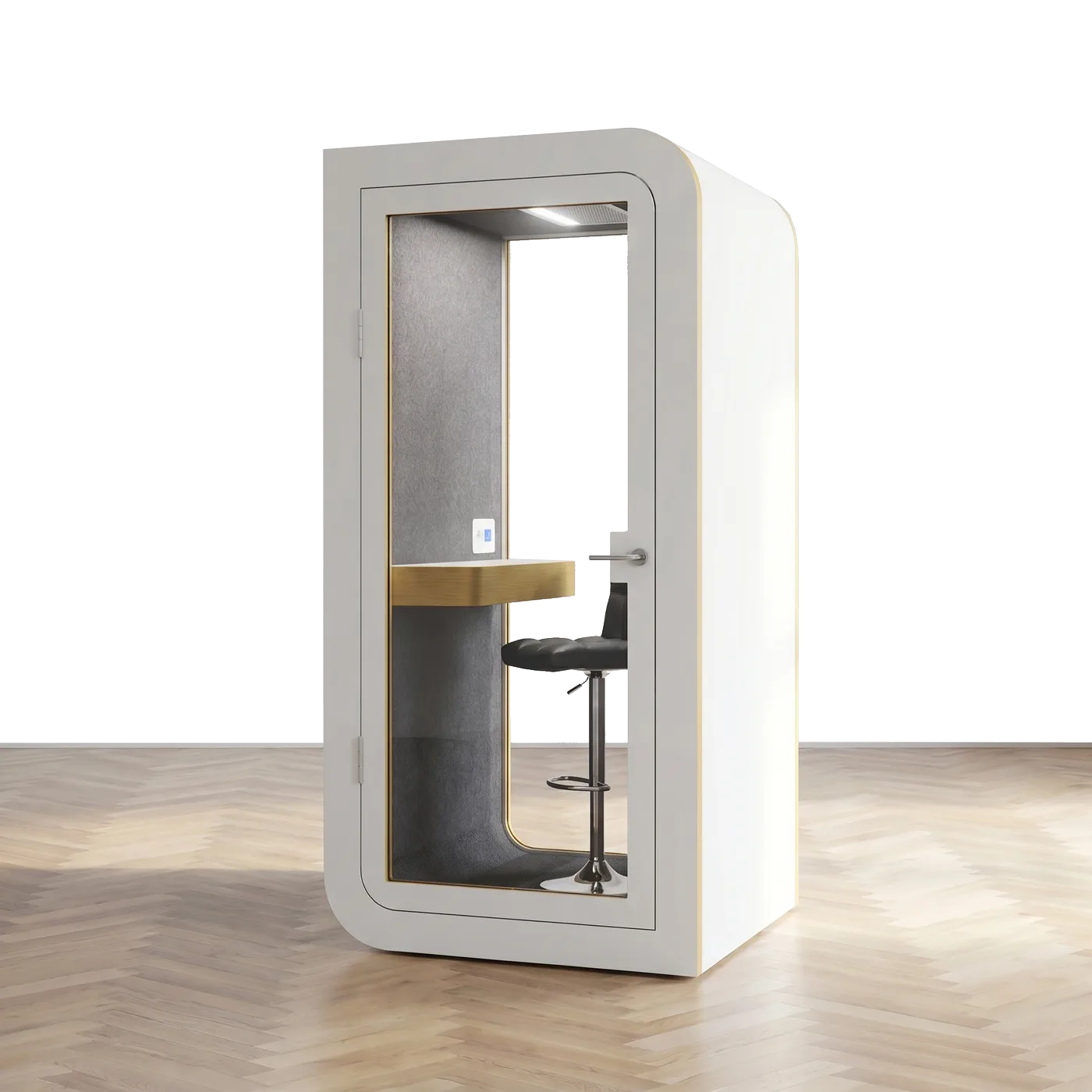
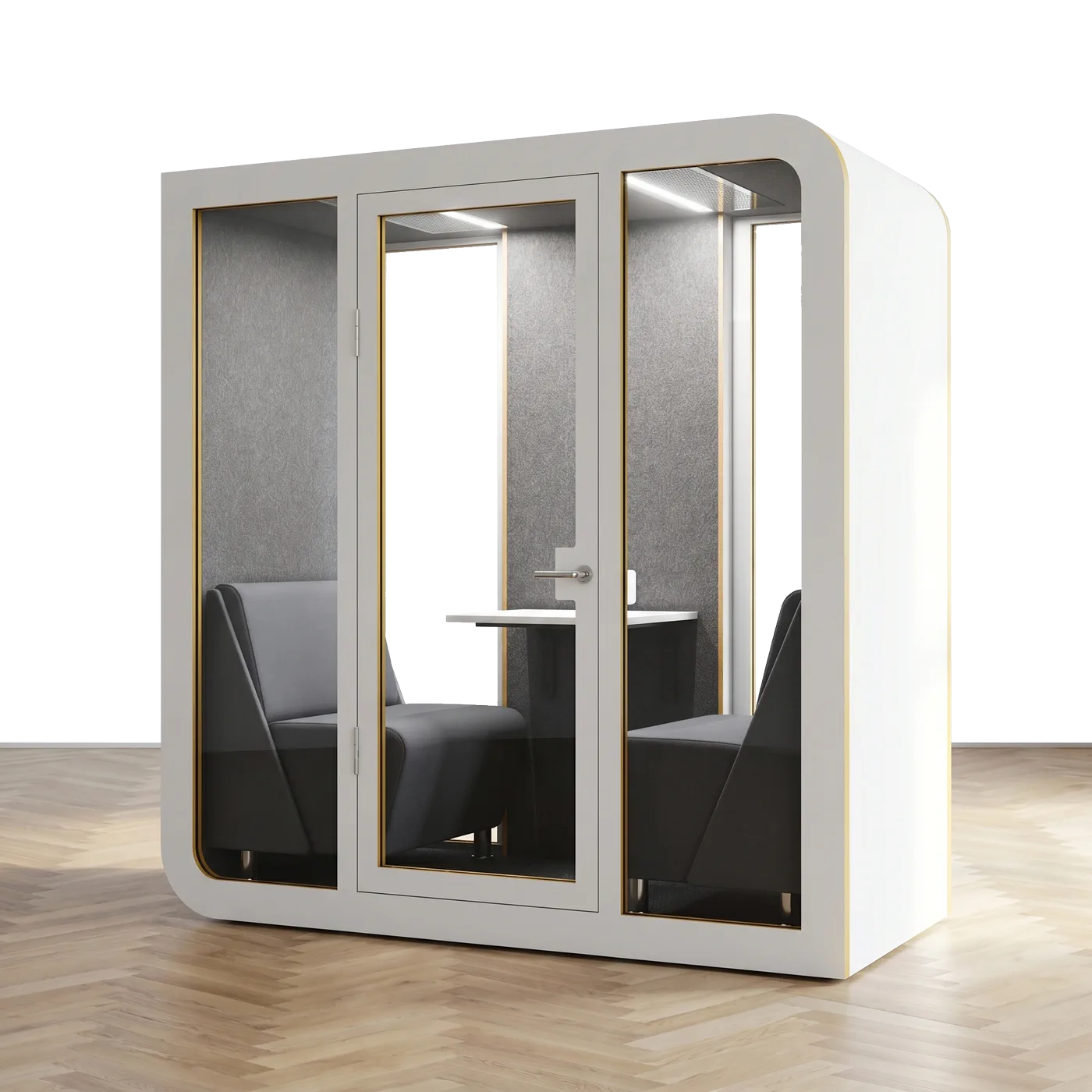
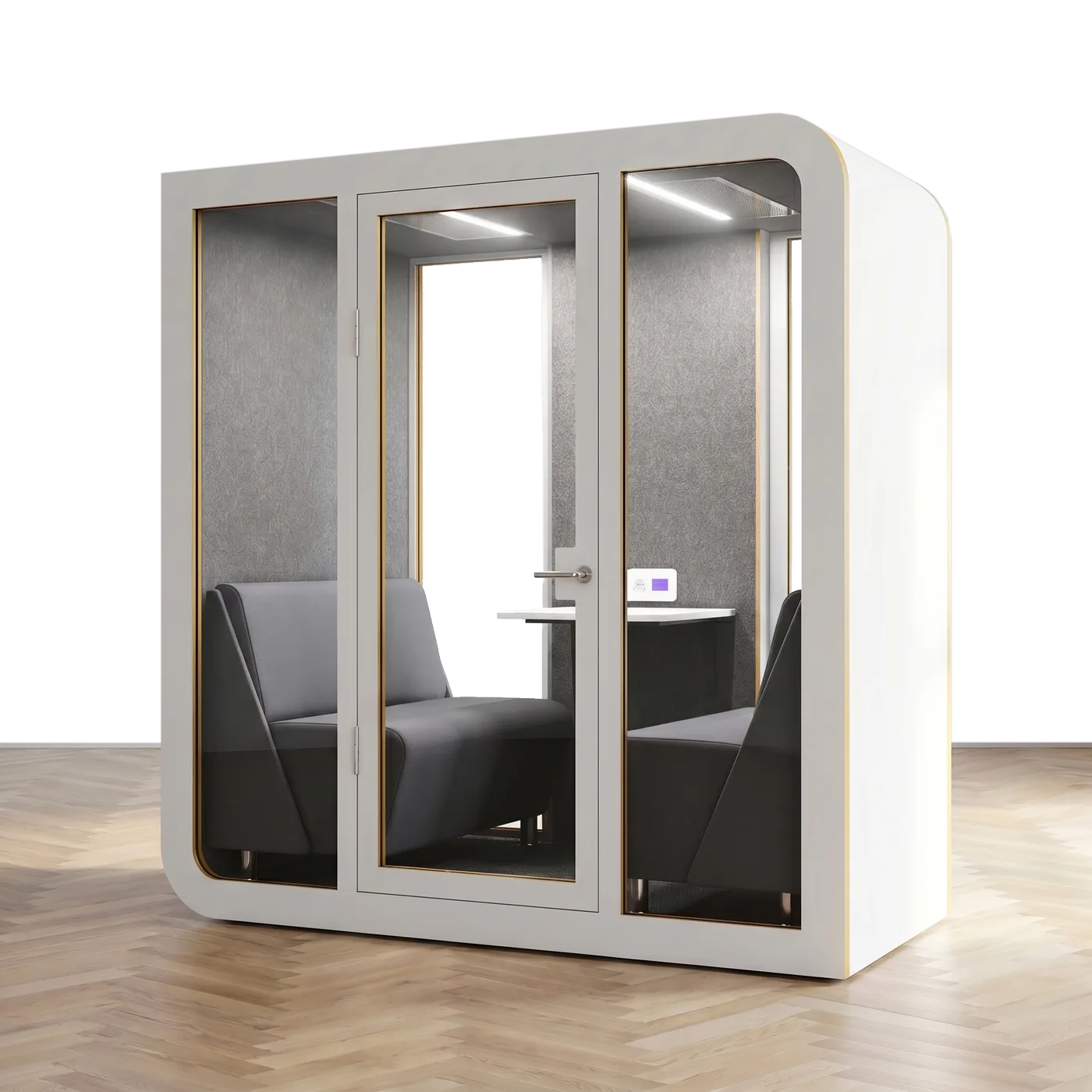
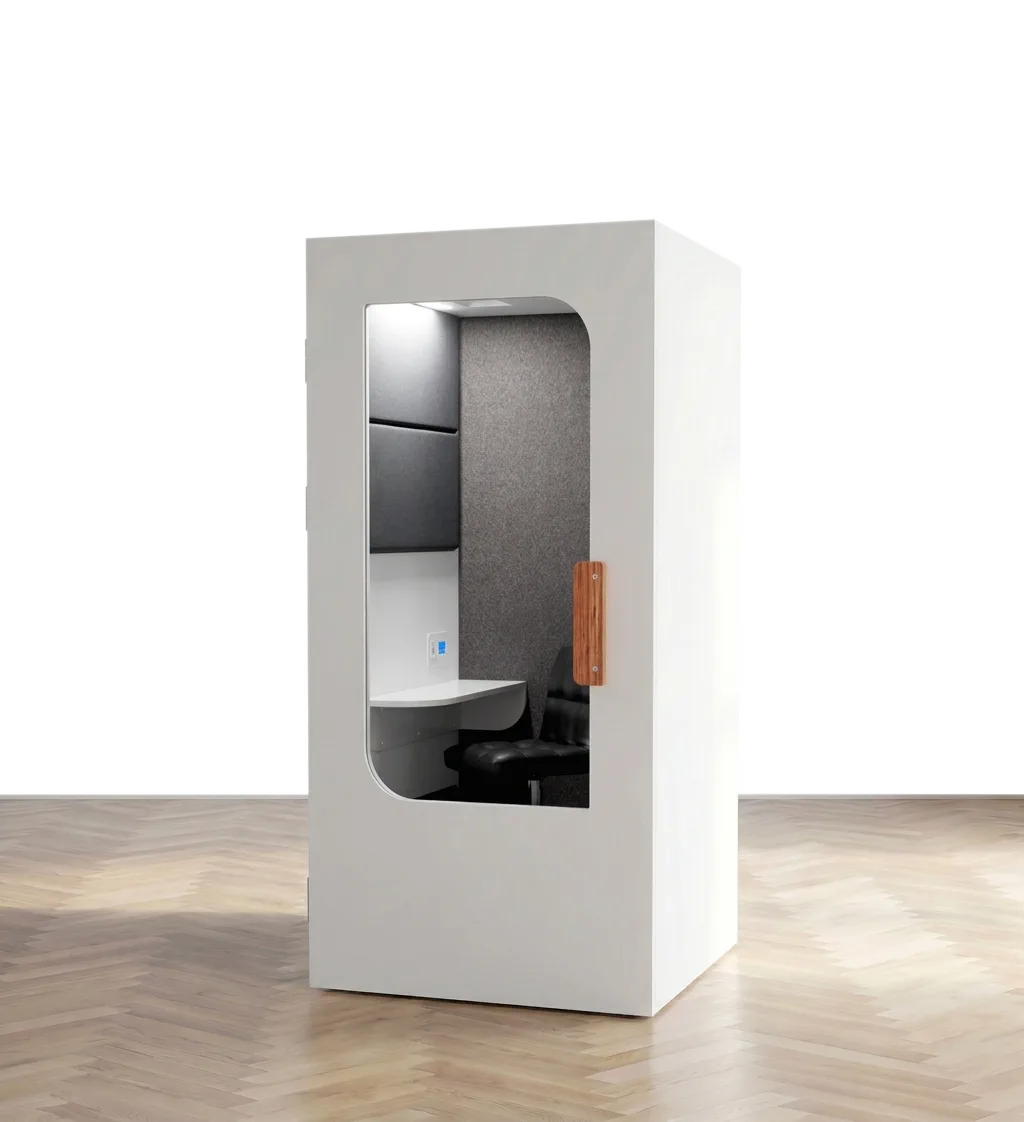
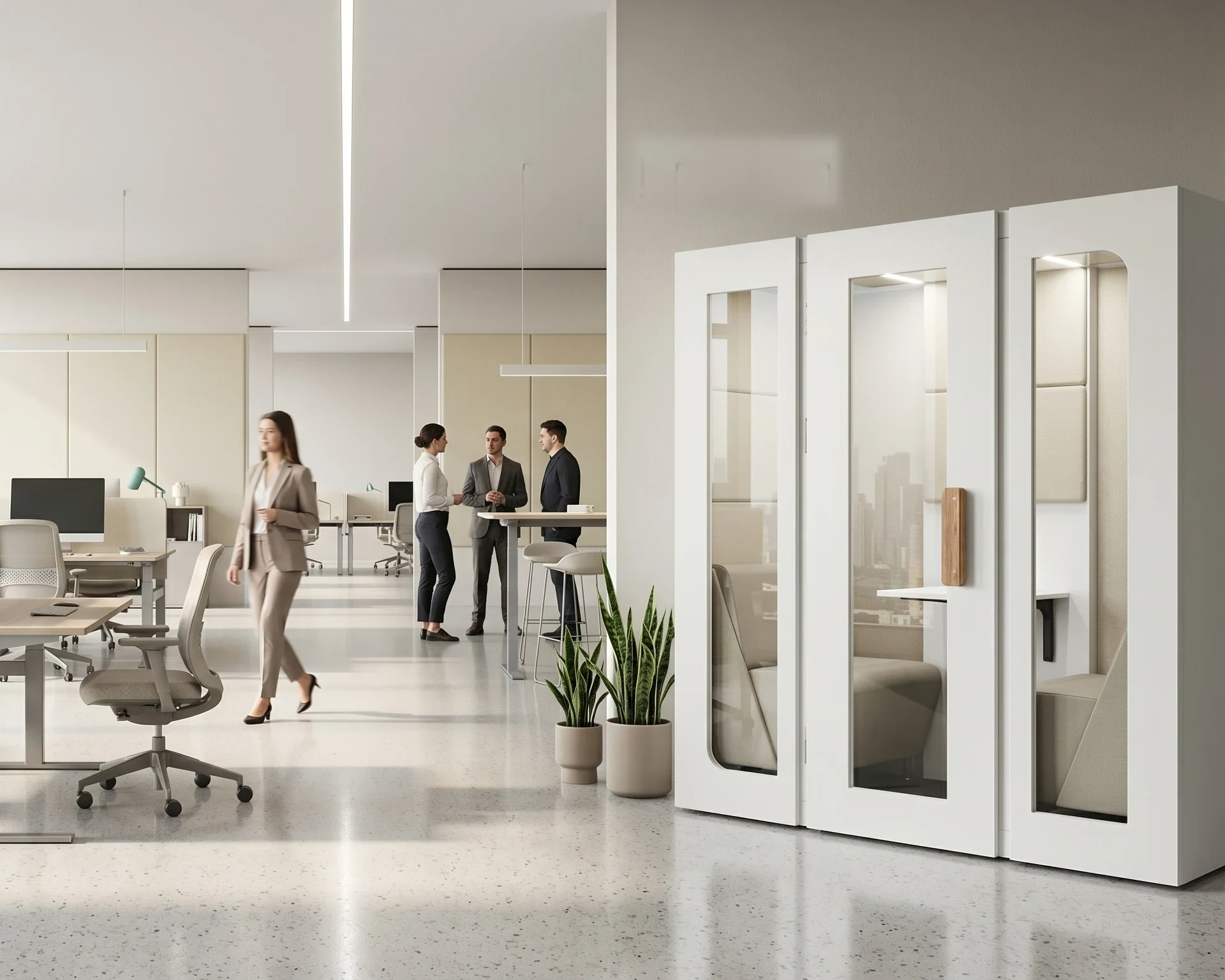
Insulation of up to 35 dB means a booth reduces the sound passing between the office and its interior by up to 35 decibels: it is a reduction, not a loudness level. As a rough illustration, a 65 dB conversation outside arrives inside at about 30 dB or more, but what you actually hear depends on the frequencies, the background noise and the distance.
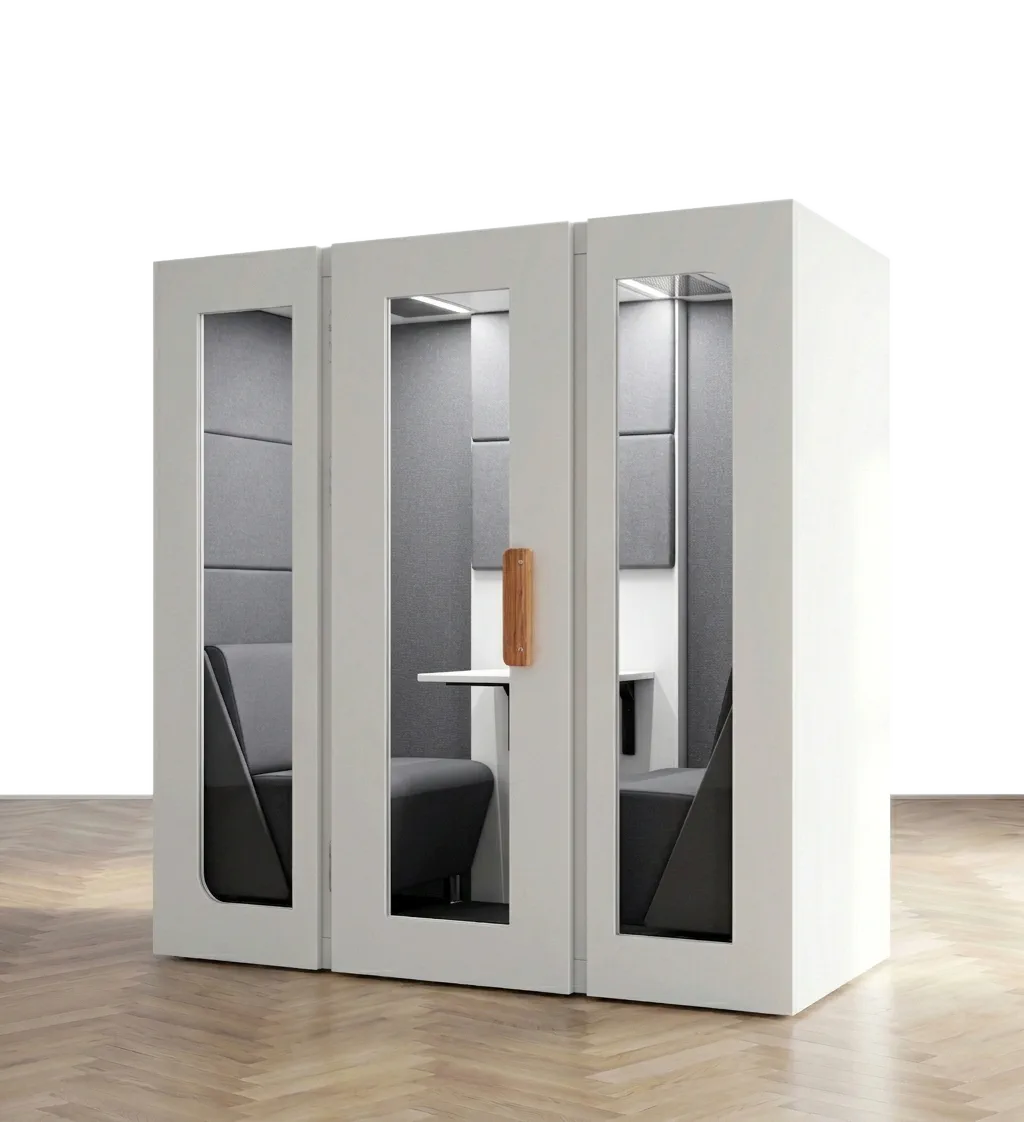
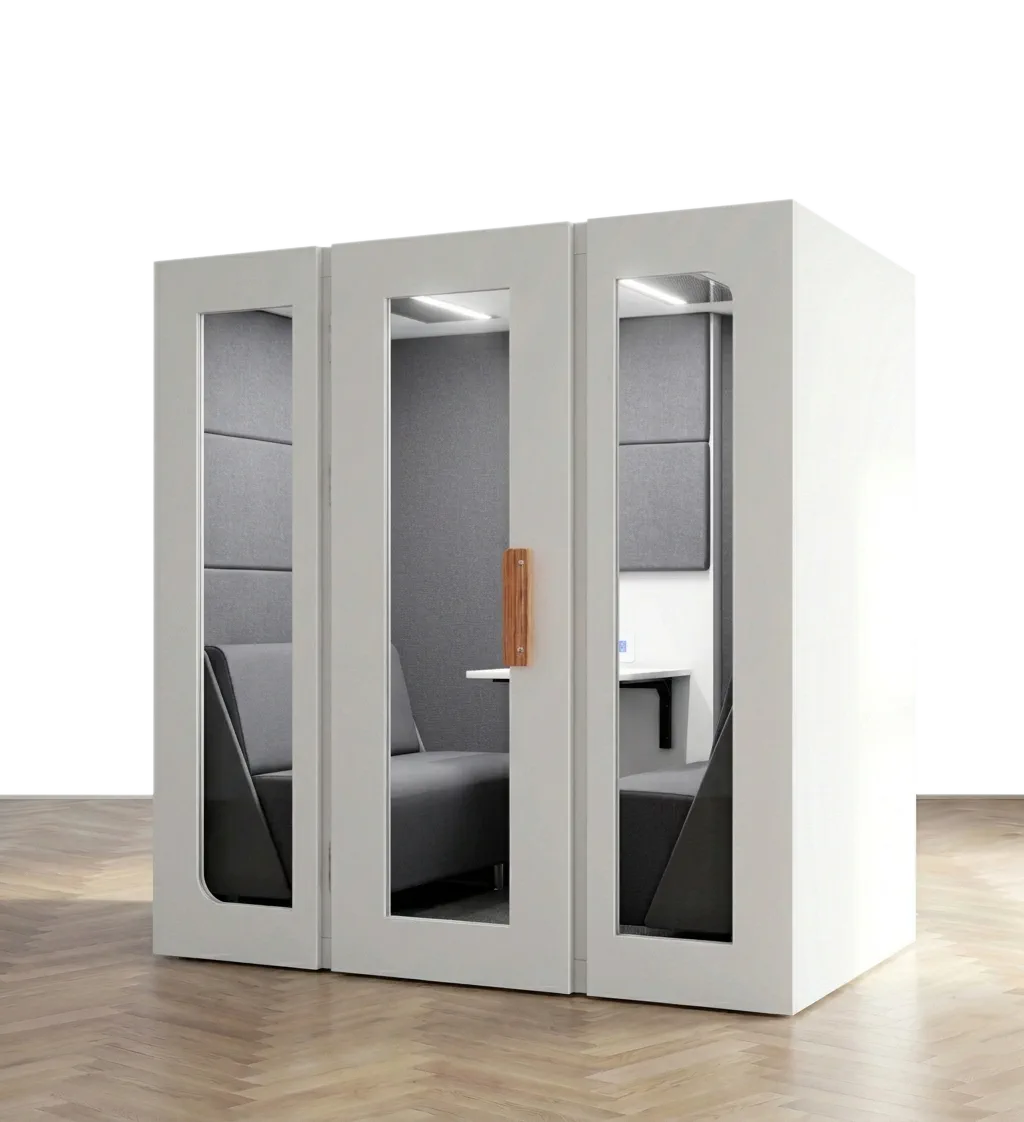
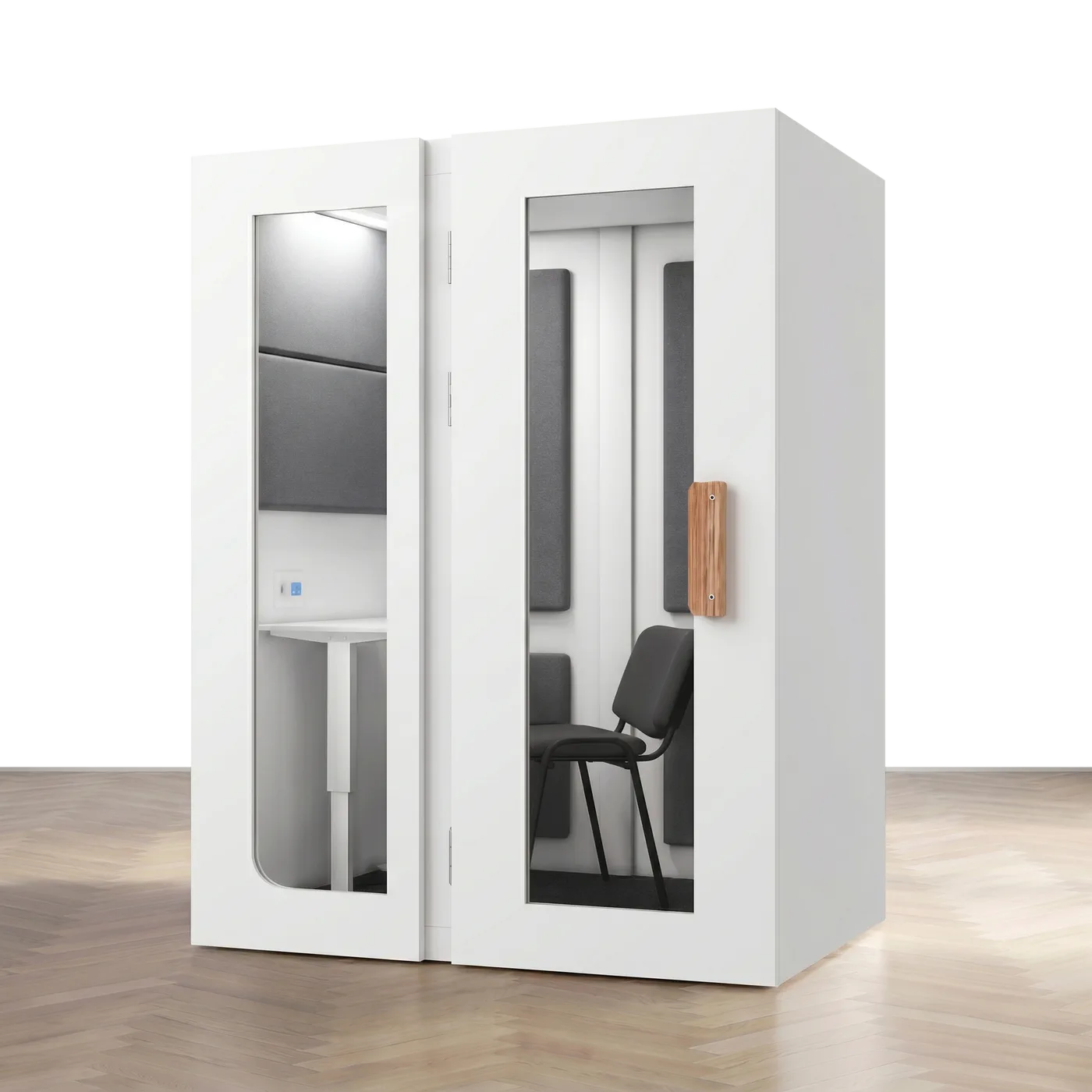
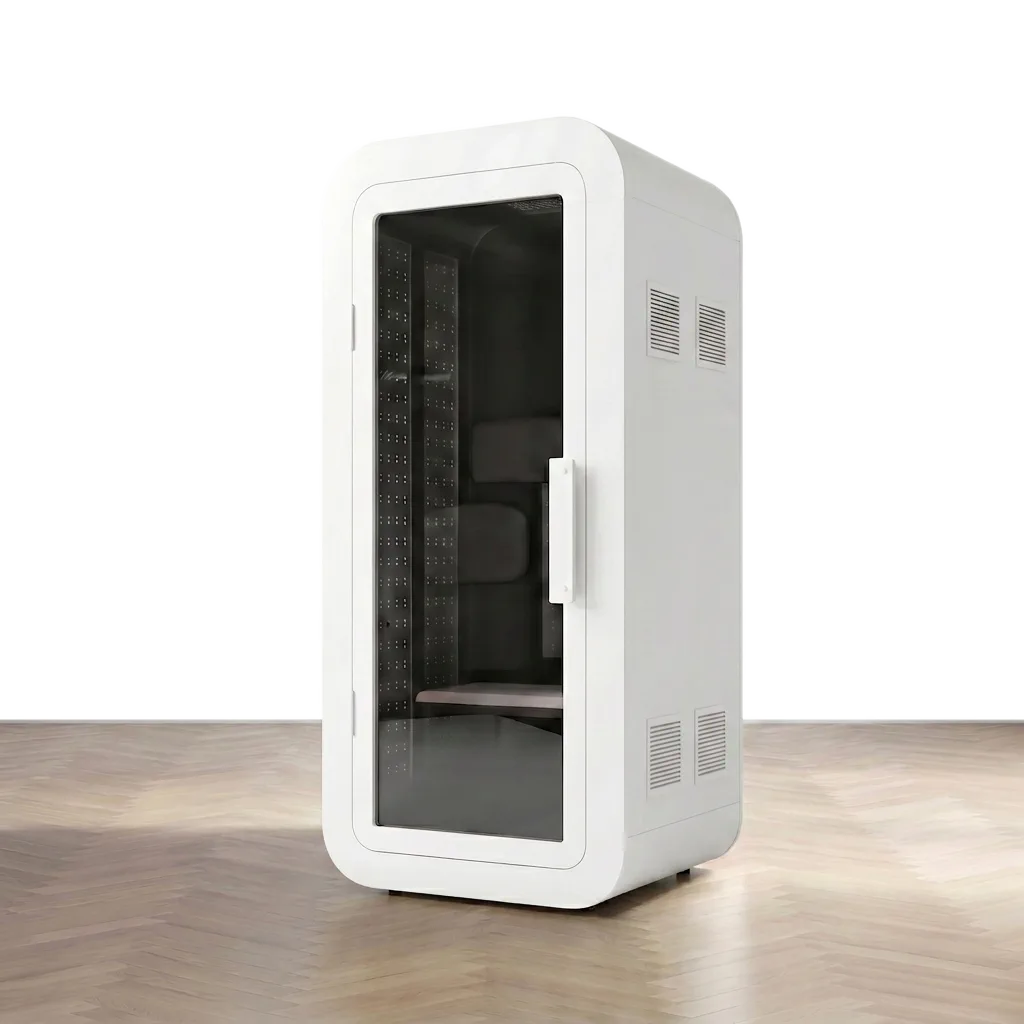
Silentbox lists up to 35 dB for the Premium series (Solo, Duet, Quartet) and ~25 dB for the Lite series and the WorkPod. This guide explains how to read such figures and what the law in Great Britain covers.
A level or a reduction: what the number describes
A decibel figure is either a level, which says how loud a sound is, or a difference, which says how much quieter something becomes. Normal conversation is a level: the US National Institute on Deafness and Other Communication Disorders (NIDCD) puts it at 60–70 dBA. A booth's insulation is a difference, applied to whatever sound reaches its walls. It is also a single number that sums up many frequency bands; for buildings and building elements, ISO 717-1 sets out how such single-number ratings of airborne sound insulation are formed. So 35 dB of sound reduction means 35 dB less on the way through the shell, not 35 dB inside. The level inside depends on how loud it is outside, which is why comparing two booths means comparing two reductions.
Why 10 dB is a big step: the logarithmic scale
The decibel scale is logarithmic: every 10 dB of reduction leaves one-tenth of the sound energy, and 20 dB leaves one-hundredth. Between Lite at ~25 dB and Premium at up to 35 dB, the gap is up to 10 dB, so a booth with up to 35 dB lets through as little as a tenth of the sound energy that a ~25 dB booth does. The ear does not follow this arithmetic one to one, but a common rule of thumb in acoustics is that 10 dB less sounds roughly half as loud. That makes the step from Lite at ~25 dB to Premium at up to 35 dB far more than “a little better”.
What a reduction in decibels does to sound energy
| Reduction | Share of sound energy that gets through | Where you meet it at Silentbox |
|---|---|---|
| 10 dB | 1/10 | — |
| 20 dB | 1/100 | — |
| ~25 dB | about 1/316 | Lite series and WorkPod |
| up to 35 dB | about 1/3,162 | Premium series: Solo, Duet, Quartet |
Rounded arithmetic from the definition of the decibel. Perceived loudness is not proportional to energy, and a booth does not damp every frequency equally. Series figures are taken from the Silentbox model cards.
Can you subtract 35 dB from office noise?
Only as a rough illustration: a 65 dB conversation outside arrives inside at about 30 dB or more. The single number averages performance across frequencies, and a booth does not damp a low hum and speech equally. What you hear also depends on factors outside the booth's specification: the listener's distance, how loudly the person inside speaks and the background level of the office. On a busy floor, that background masks part of what gets through; in a very quiet room, the same sound is easier to notice. Use the figure of up to 35 dB to compare booths whose figures describe the same quantity, not to calculate an exact level.
What ISO 11957 is
ISO 11957 describes how to measure the sound insulation of cabins, in a laboratory or on site. When a manufacturer states “up to 35 dB to ISO 11957”, it means the insulation was measured in an independent laboratory following a defined method — not a marketing figure someone made up. Our separate guide to the two standards explains how ISO 11957 differs from ISO 23351-1, the speech-level standard.
How loud is an office allowed to be? What the law in Great Britain covers
In Great Britain, the Control of Noise at Work Regulations 2005 set exposure action values of 80 and 85 dB(A) and an exposure limit value of 87 dB(A), all expressed as daily or weekly personal noise exposure. Regulation 4 opens with the lower action values:
The lower exposure action values are— (a) a daily or weekly personal noise exposure of 80 dB (A-weighted); and (b) a peak sound pressure of 135 dB (C-weighted).
The Control of Noise at Work Regulations 2005, reg. 4(1)
These values exist to protect hearing. HSE's advice for workers asks two questions. Is the noise intrusive, “like a busy street, a vacuum cleaner or a crowded restaurant”, for most of the working day? Do you “have to raise your voice to have a normal conversation when about 2 m apart for at least part of the day”? An ordinary office is nowhere near that. The regulations set no separate figure for offices; comfort targets for open-plan offices come from guidance and standards such as BS 8233:2014 and ISO 22955, not from law. In an office, the problem is distraction rather than hearing damage, and distraction is what a booth addresses.
Where sound gets through: wall, glass, door and air path
Acoustically, a booth is only as good as its weakest point: a gap at the door, thin glazing or an unsilenced air opening can undo much of what a thick wall achieves. In the Premium series, Silentbox specifies a patented design on an aluminium frame and a five-layer wall. The glazing varies by model: three-layer laminated tempered glass on the Solo Premium, and three-layer laminated glass on the Duet Premium and Quartet Premium. A closed booth also needs fresh air, and every air opening is a potential sound path, which is why the air runs through acoustic silencers.
How to check a dB figure before you buy
Five questions help you compare manufacturers' figures:
- Which quantity is stated? The sound insulation of a booth and its speech level reduction are different quantities, both given in decibels, so ask which one a figure describes.
- Which model is it for? A figure belongs to that product and does not automatically cover a whole range.
- Does it apply to your configuration, with the same glazing, door and ventilation?
- Is the difference meaningful? Two or three decibels between two brochures say little unless both figures describe the same quantity.
- Can you hear it? The Sound Lab on the Silentbox site has 12 real office noises and 6 booths to compare, including Premium (up to 35 dB) against Lite (~25 dB); listening at an installed booth is the other good test.
Questions about insulation of up to 35 dB
Does 35 dB mean nobody outside can hear me?
Insulation of up to 35 dB is a reduction, not silence: sound becomes up to 35 decibels quieter on its way through the booth's shell. Whether someone outside hears you depends on how loudly you speak, how far they are from the booth and the background noise in the office, which masks part of what gets through. As a rough illustration, a 65 dB conversation outside arrives inside at about 30 dB or more.
How big is the difference between 35 dB and ~25 dB?
It is up to 10 dB: a booth with up to 35 dB lets through as little as one-tenth of the sound energy that a ~25 dB booth does, and, as a rule of thumb, 10 dB less sounds roughly half as loud. Silentbox lists the Premium series at up to 35 dB and the Lite series and WorkPod at ~25 dB.
Can I subtract the booth's decibels from the noise in my office?
Only as a rough guide. The figure is a single number across many frequency bands (ISO 717-1 describes how such ratings are formed), and background noise, distance and the speaker's voice all change what you hear. Use it to compare booths, not to calculate an exact level.
What noise levels does the law set for offices in Great Britain?
The Control of Noise at Work Regulations 2005 protect hearing, with action values of 80 and 85 dB(A) and a limit of 87 dB(A) of daily or weekly personal exposure. They set no separate figure for offices; comfort targets for open-plan offices come from guidance and standards such as BS 8233:2014 and ISO 22955.
How can I hear the difference before buying?
Use the Sound Lab on the Silentbox site, with 12 real office noises and 6 booths to compare, or listen at an installed booth with the door closed and someone speaking at a normal level inside.
Sources
- NIDCD (US National Institutes of Health): Noise-Induced Hearing Loss (last updated 16 April 2025)
- The Control of Noise at Work Regulations 2005, regulation 4 (legislation.gov.uk)
- HSE: Noise — advice for workers (“Am I at risk?” questions)
- ISO 717-1:2020 Acoustics — Rating of sound insulation in buildings and of building elements — Part 1: Airborne sound insulation (catalogue page)
- ISO 11957:1996 Acoustics — Determination of sound insulation performance of cabins (catalogue page)