
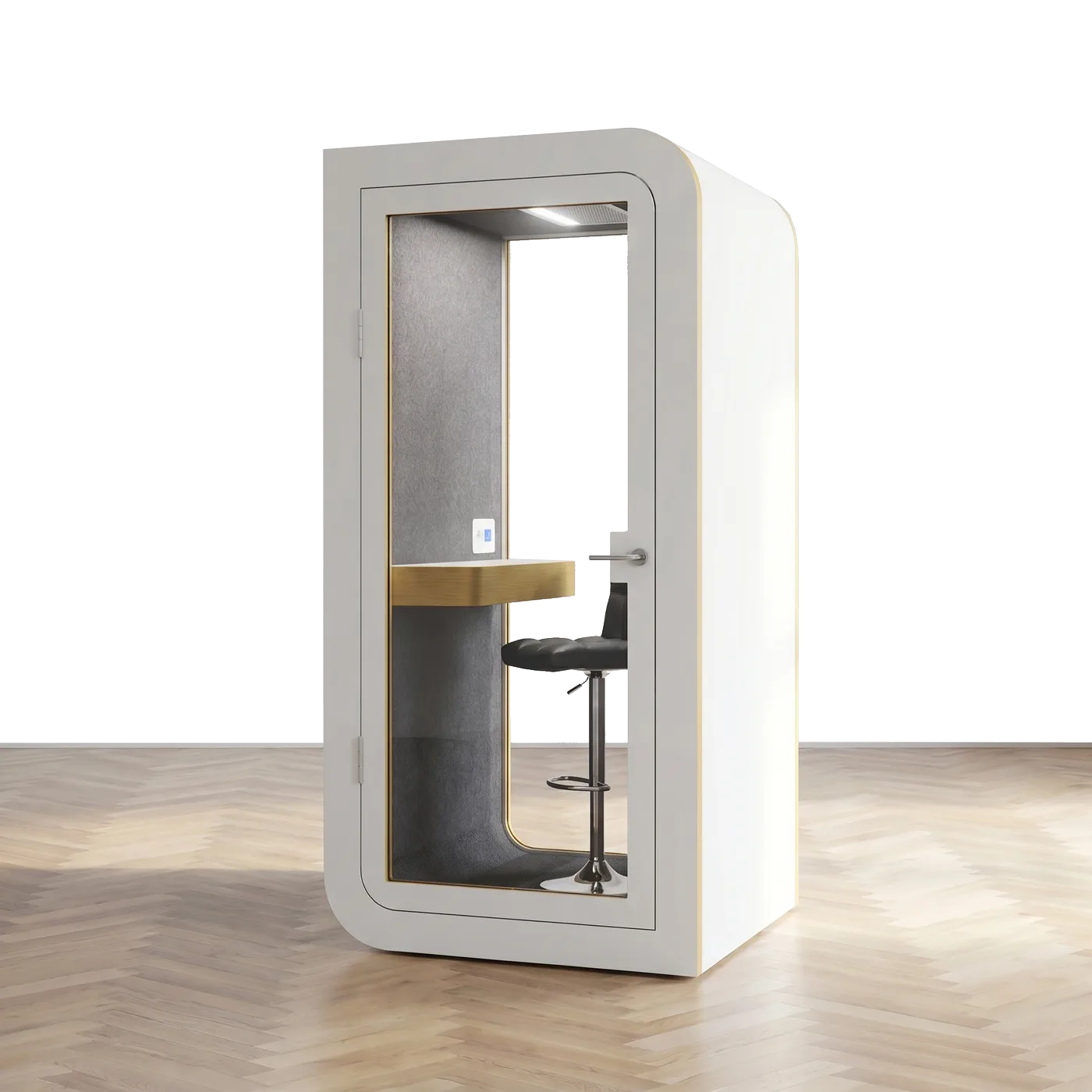
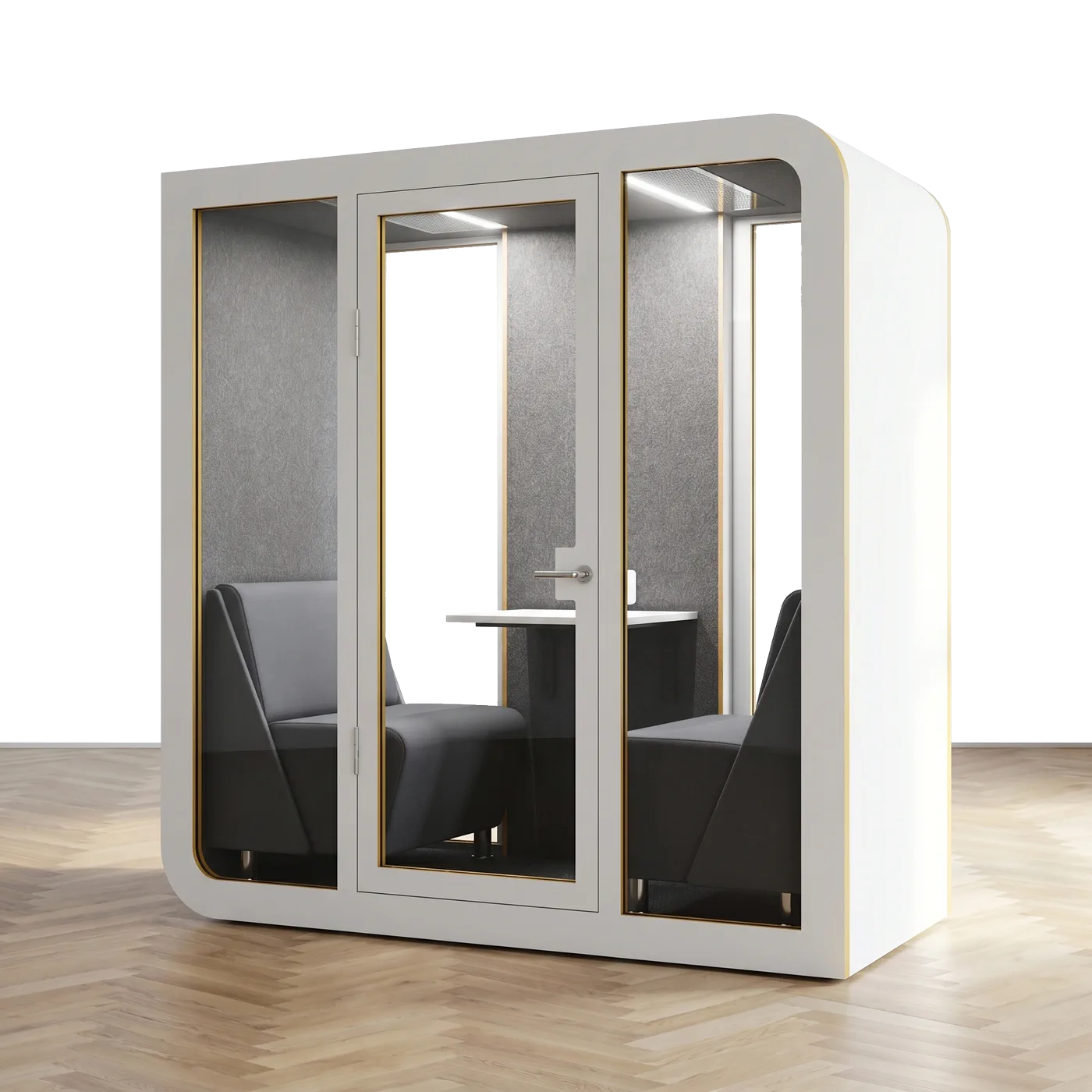
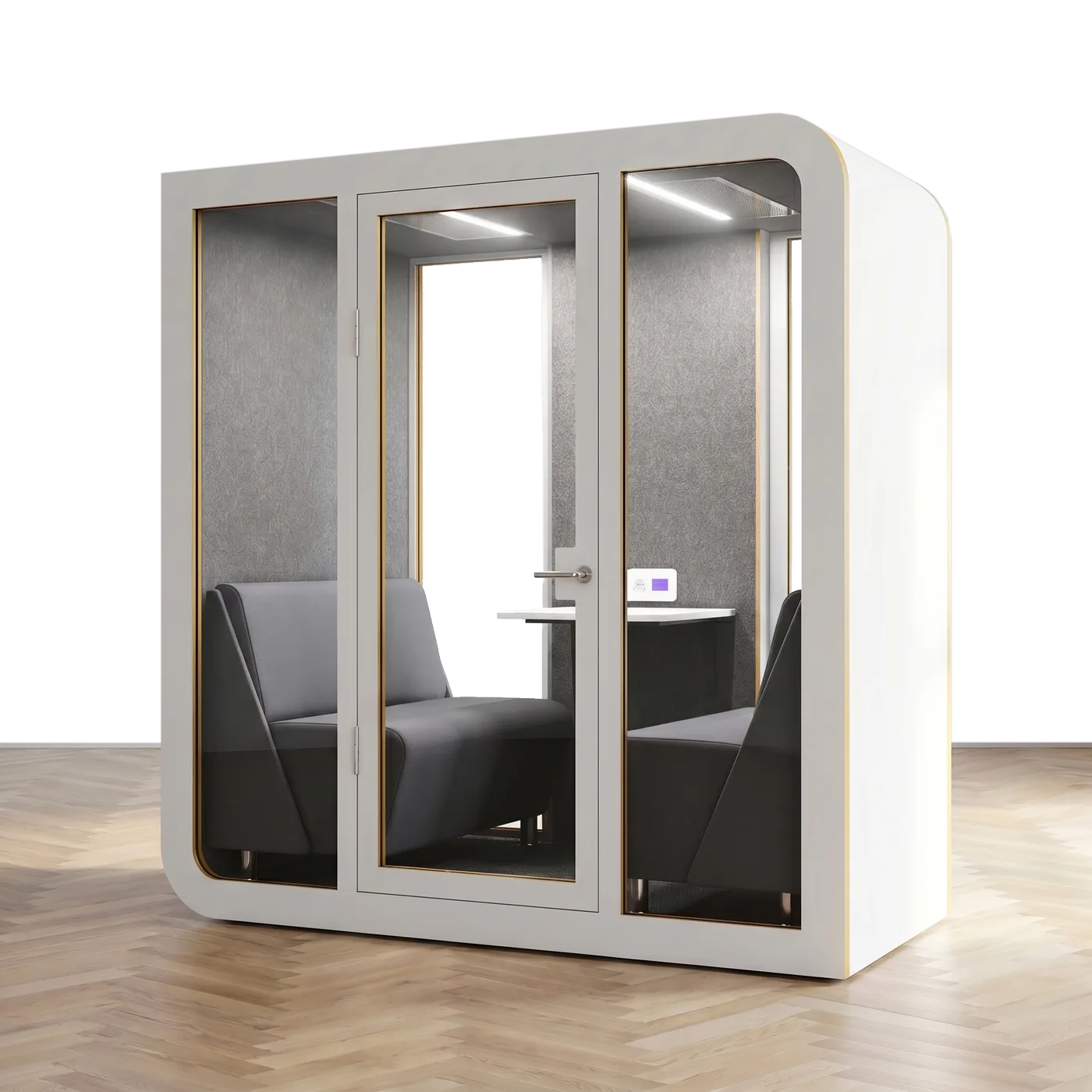
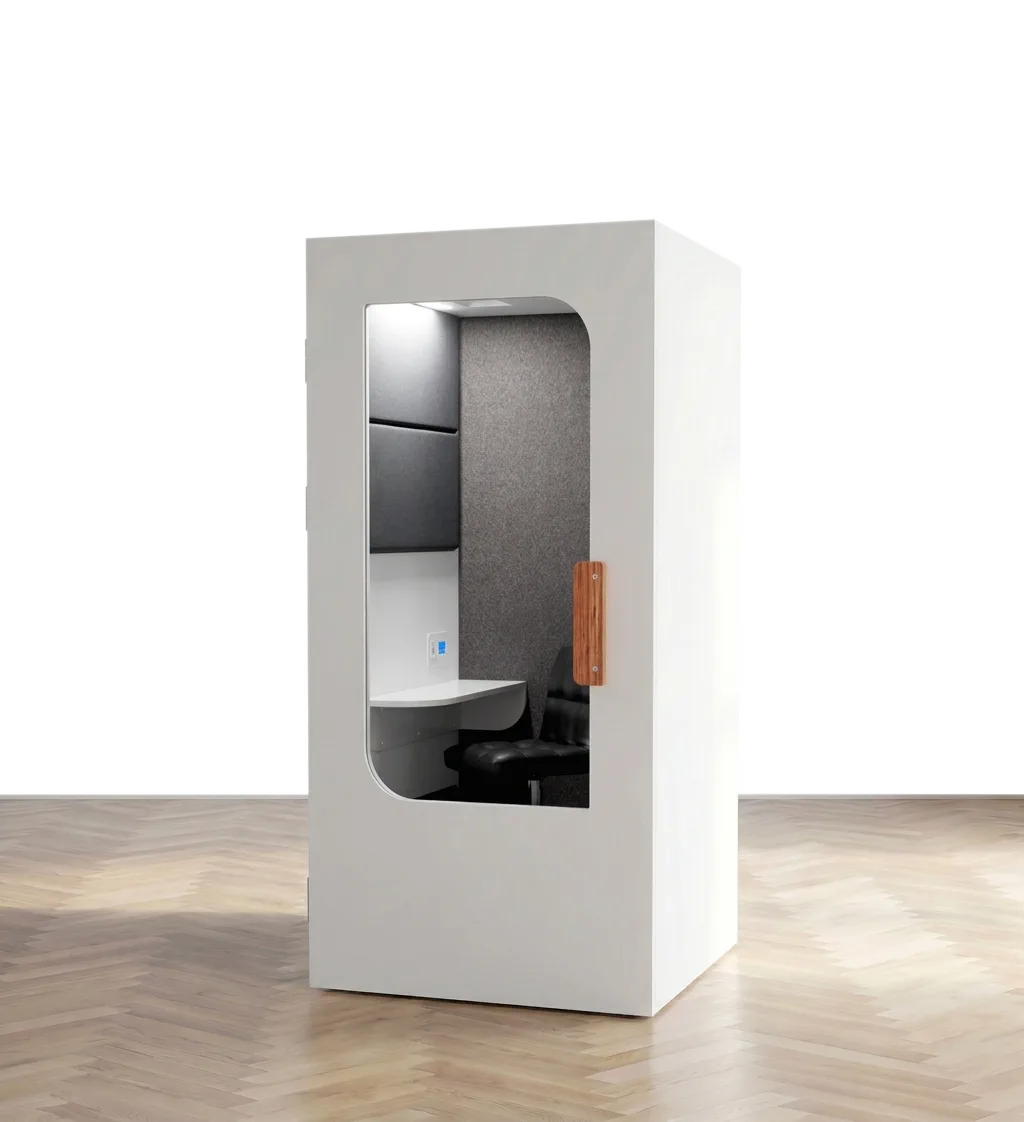
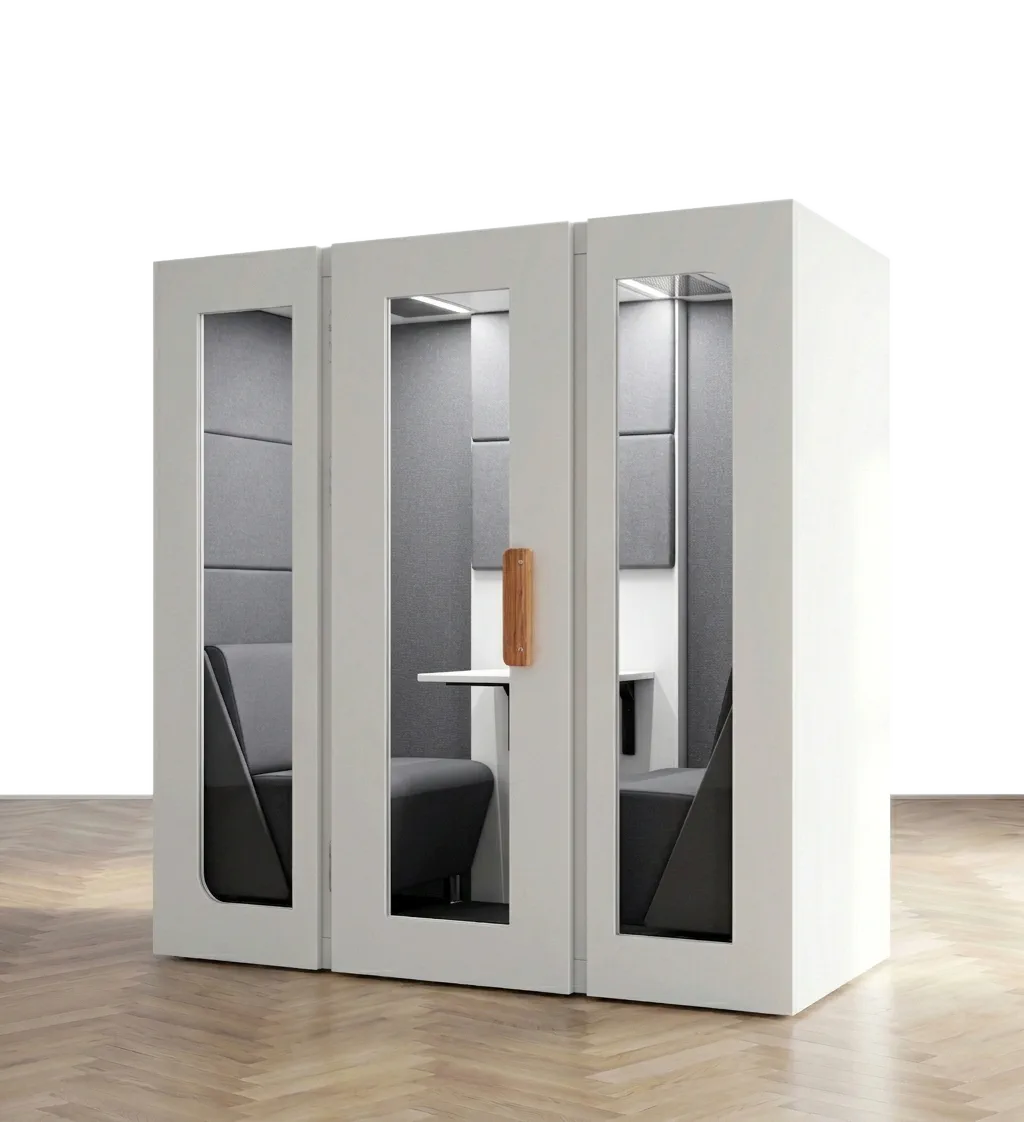
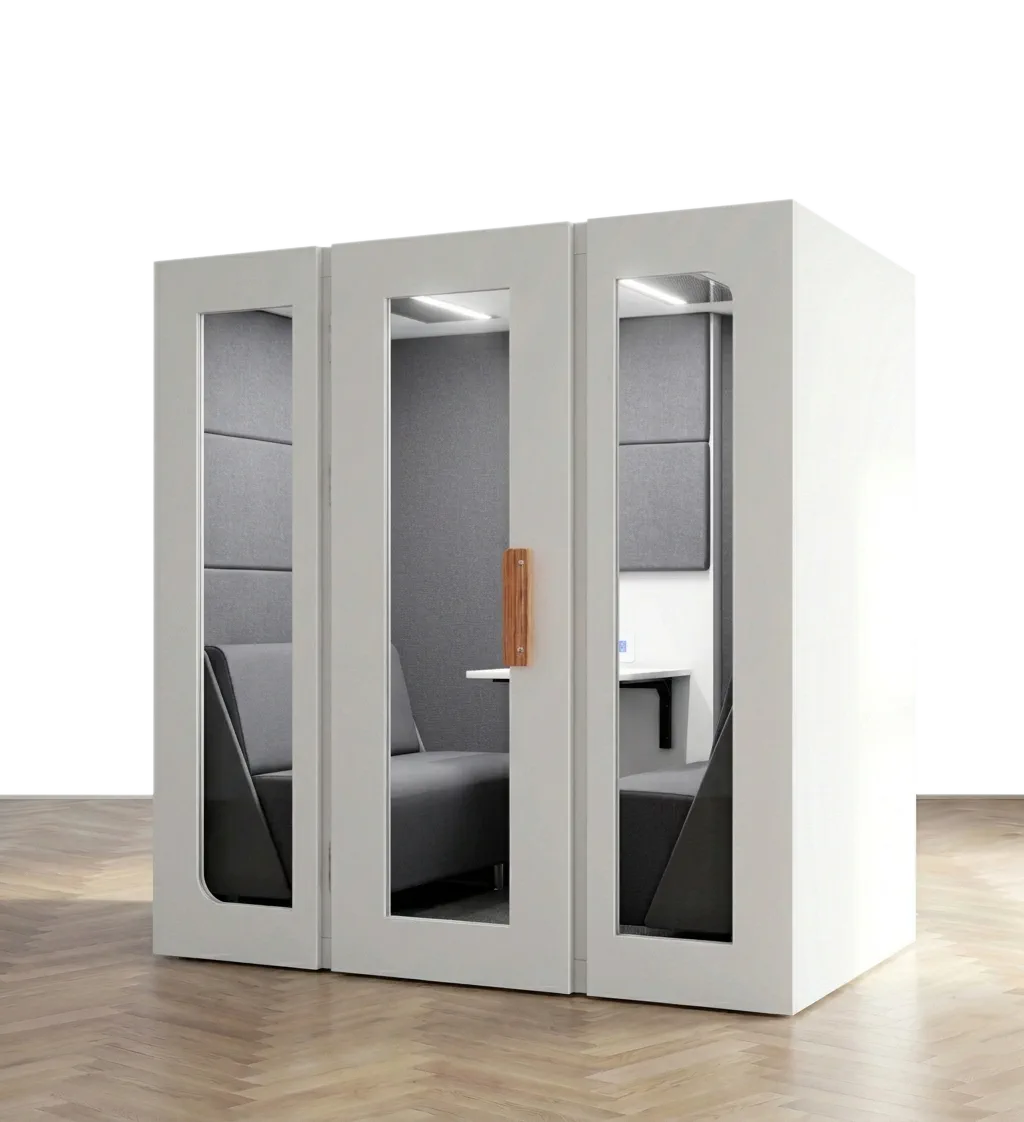
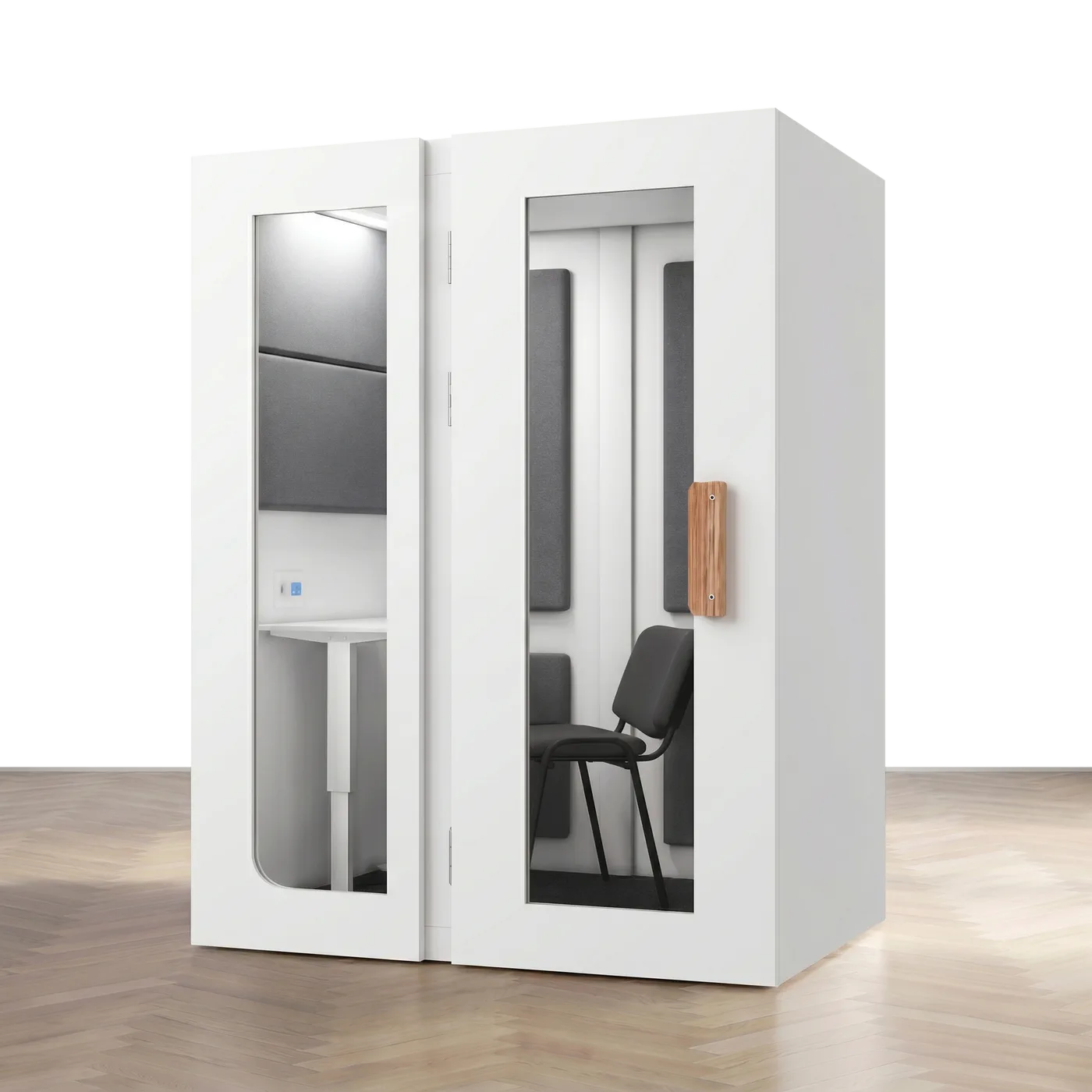
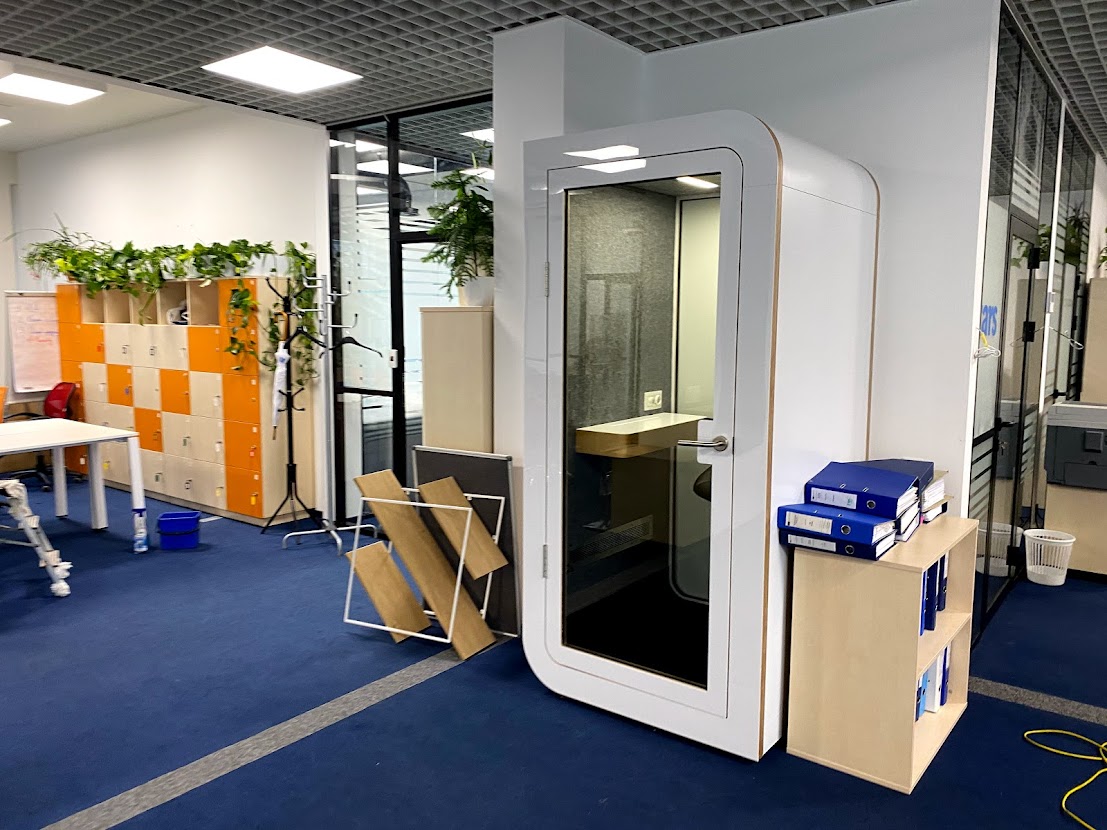
An acoustic booth pays for itself when the working time it wins back is worth more than its price. In our worked example, six people share one Solo Premium (€5,690 for a single booth, excl. VAT) and each regains an assumed 20 minutes a day, valued at the EU-27 average full-time salary of €39,808 (Eurostat, 2024). On those figures, payback takes about 7 months.
The 23-minute figure is a starting point, not an input: it is how long interrupted work takes to resume, not how much time a booth saves. The calculation below states every input, so you can rerun it with your own numbers.
Where the 23-minute figure comes from
The number traces back to Gloria Mark (UC Irvine) in a 2006 interview with Gallup. For work that was interrupted and picked up again on the same day, she put the average gap at 23 minutes and 15 seconds, during which people worked on about two other tasks before returning to the original one.
Her peer-reviewed field study with González and Harris (CHI 2005) found that 57% of working spheres, the separate strands of work people juggle, were interrupted. Where interrupted work was resumed on the same day, the average gap was 25 minutes and 26 seconds.
A later laboratory study by Mark, Gudith and Klocke (CHI 2008) shows the human cost: after only 20 minutes of interrupted performance, participants reported significantly higher stress, frustration, workload, effort and pressure.
None of these studies measured a booth, which is why the minutes regained in the formula below are an assumption, shown at three levels.
The ROI formula
Three lines are enough, and every input can be replaced with your own:
- Value of recovered time per person per year = annual salary × M ÷ 480
- Team value per year = N × value per person
- Payback in months = booth price ÷ team value per year × 12
M is the minutes each person regains per working day, N the number of people sharing one booth, and 480 the minutes in an 8-hour working day. The 8-hour day is also an assumption: if your team works different hours, change 480 to match.
The assumptions, in the open
Only the salary and the prices are published figures; the rest are choices to check against your own office:
- Salary: €39,808 a year, Eurostat's average full-time adjusted salary per employee for the EU-27 in 2024, the latest year available (dataset nama_10_fte).
- People per booth (N): six, sharing one booth for calls and focused work. This is an assumption.
- Minutes regained (M): 10, 20 or 30 per person per working day. These are assumptions, not measurements.
- Price: one Solo Premium at €5,690 for a single booth, excl. VAT. In larger orders a Solo Premium costs €5,190 per booth for three or four booths and €4,790 per booth for five or more, excl. VAT.
- Left out: VAT, logistics, installation and employer social charges (see “What the calculation leaves out” below).
Result: how many months to pay back one Solo Premium
At 20 minutes a day, six people recover time worth €9,952 a year, so a Solo Premium bought as a single booth (€5,690, excl. VAT) pays for itself in 6.9 months.
Worked example: six people share one Solo Premium (prices excl. VAT; salary €39,808, Eurostat, EU-27, 2024)
| Time regained per person per day | Value per person per year | Value for six people per year | Payback, Solo Premium at €5,690 excl. VAT (single booth) | Payback, Solo Premium at €4,790 excl. VAT (five or more booths) |
|---|---|---|---|---|
| 10 minutes | €829 | €4,976 | 13.7 months | 11.6 months |
| 20 minutes | €1,659 | €9,952 | 6.9 months | 5.8 months |
| 30 minutes | €2,488 | €14,928 | 4.6 months | 3.9 months |
Assumptions, not measurements. Formula: salary × minutes ÷ 480 × 6; payback = price ÷ annual value × 12. Logistics (from €300) and installation are quoted separately and are not included; with logistics the 20-minute case takes 7.2 months. Employer social charges are not modelled.
If the order contains five or more booths, a Solo Premium costs €4,790 per booth, excl. VAT, and the 20-minute case falls to 5.8 months. Adding logistics (from €300) to the single-booth price stretches it to 7.2 months. Halve the minutes and the payback roughly doubles.
Several booths: how the volume tier shortens payback
The price tier depends on the total number of booths in one order, not on how many of one model it contains. The “from” price on each model card is the tier for five or more booths; in an order of one or two booths, each costs more. If every group of six people gets its own booth, N stays at six while the price per booth falls, which is why the last column of the table is lower.
Office noise in Great Britain: what surveys show
Open-plan offices are more common in Great Britain than across Europe as a whole. Savills' survey What Workers Want: Europe 2019 found that 73% of British workers work in open-plan offices, compared with 51% of workers across Europe. The same survey links layout to output:
Employers will be concerned that 30% of workers in open plan offices feel that their workplace layout has a negative impact on their productivity levels, against only 11% of workers from private offices.
Savills, What Workers Want: Europe 2019
A survey answer is not a measured loss, so this guide does not turn it into money. Salaries stay in euros because the booth prices are in euros excl. VAT; if you use British pay data, convert it to euros first and note the exchange rate you used.
What the calculation leaves out
- VAT: all prices in this guide are excl. VAT.
- Logistics and installation: logistics start from €300, and delivery and installation are quoted separately.
- Lead time: the payback clock starts only when the booth is in use, after 3–6 weeks of production and, for the UK, 25 days of delivery.
- Employer social charges: the salary is the employee's pay, so an hour of work costs the employer more than the salary alone suggests, and the result errs on the cautious side.
- Qualitative effects: privacy for calls, flexibility when the layout changes and the effect on hiring are real but not priced here; our guide “A booth as an investment” covers them.
Cloud: a booth that earns in public venues
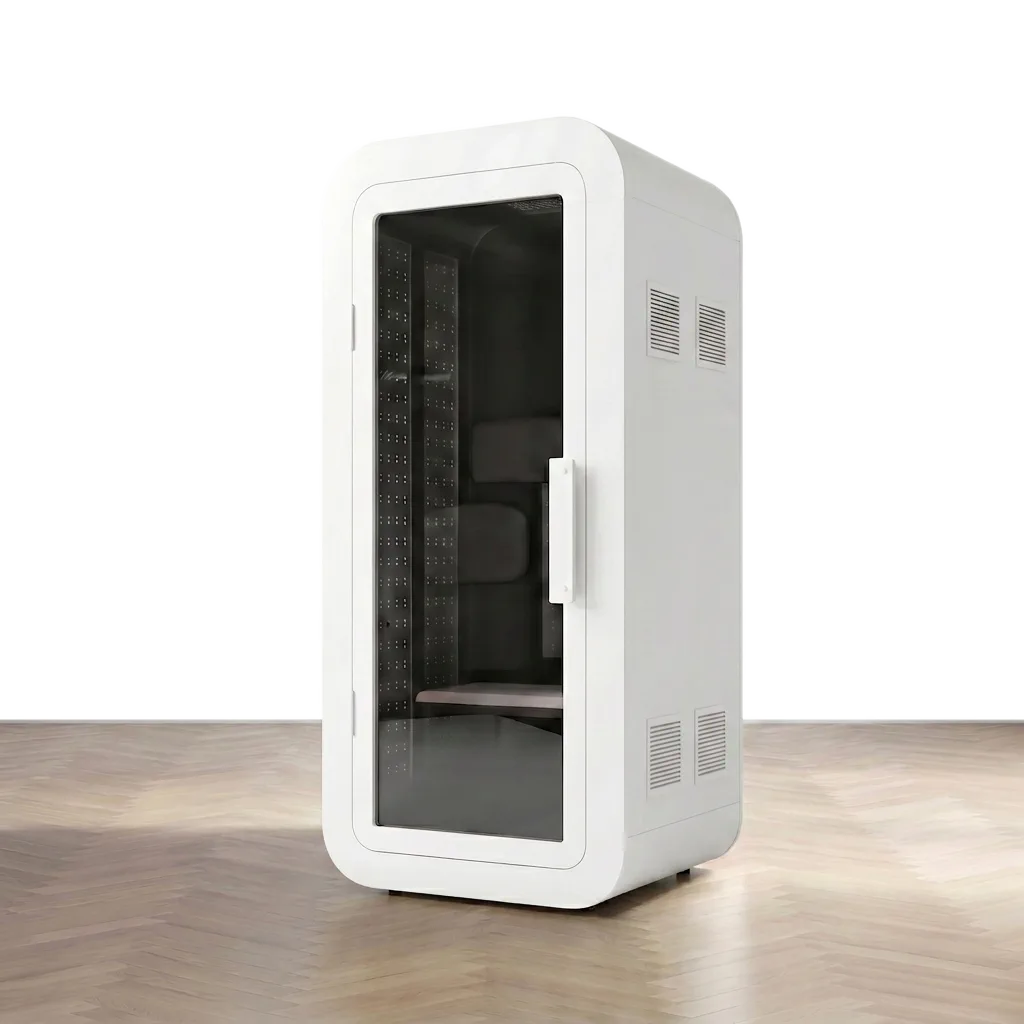
In shopping centres, airports and coworking spaces the calculation works the other way round: instead of saving staff time, a Cloud booth earns rental income, charged at hourly, daily or monthly rates. By Silentbox's own estimate, payback depends on venue traffic: from 6 months with footfall of 200+ visitors a day, up to 12–18 months at an average occupancy of 60–70%. Each venue gets a tailored calculation.
Questions about calculating booth ROI
Does it really take 23 minutes to refocus after an interruption?
The figure comes from Gloria Mark (UC Irvine) in a 2006 interview with Gallup: work resumed on the same day took 23 minutes and 15 seconds on average. Her peer-reviewed field study (CHI 2005) reports 25 minutes and 26 seconds. Neither measured a booth, and people work on other tasks during that gap.
How do I calculate payback for my own team?
Multiply the average annual salary in your team by the minutes each person regains per day, divide by 480 and multiply by the number of people sharing the booth. Then divide the single-booth price by that annual value and multiply by 12 for months, keeping salary and price in one currency.
Which price should I use: the “from” price or the single-booth price?
For one booth, use the single-booth price: a Solo Premium costs €5,690 for a single booth, excl. VAT. The “from” price of €4,790 for a Solo Premium applies when the order contains five or more booths in total, excl. VAT. The tier follows the total number of booths in the order.
Are VAT, delivery and installation included in the price?
No. Catalogue prices are excl. VAT, delivery and installation are quoted separately, and logistics start from €300. Installation can be booked with Silentbox's own specialists, or you can assemble the booth yourself using the detailed guide.
Can a booth earn money rather than save it?
Yes, in public venues such as shopping centres and airports: the Cloud model rents booths by the hour. Silentbox estimates payback from 6 months with footfall of 200+ visitors a day, up to 12–18 months at an average occupancy of 60–70%.
Sources
- Gallup Business Journal (8 June 2006): Too Many Interruptions at Work? Q&A with Gloria Mark
- Mark, González, Harris: No Task Left Behind? Examining the Nature of Fragmented Work (CHI 2005, PDF)
- Mark, Gudith, Klocke: The Cost of Interrupted Work: More Speed and Stress (CHI 2008, PDF)
- Eurostat: Average full time adjusted salary per employee (nama_10_fte)
- Savills: What Workers Want: Europe 2019